Search Episodes
Search for podcast episodes by title, guest, or topic.
From Disassembling Computers in West Africa to Building AI That Reads CAD Files
A deep dive with Serge Kadjo, hardware veteran across four continents, exploring how 15 years of building medical devices, agricultural sensors, and robotic production lines led to an AI that understands engineering like humans do, and why being human matters more than being a machine
Most software engineers have never held a soldering iron. We've never watched a manufacturing run fail because a part took three months to ship. We've never navigated supply chains or seen hardware designs collapse under real world constraints.
Serge Kadjo has spent 15 years doing exactly that across four continents. He built medical devices for women with menopause in France. He deployed thousands of agricultural sensors across Moroccan deserts where temperatures hit 49°C. He built robotic production lines in Shenzhen where manufacturers sit 15 minutes away and collaboration replaces waterfall processes. He ran Kickstarter campaigns that raised six figures.
That journey taught him something most of us building AI miss: while we race to make smarter models or build the next ChatGPT wrapper, nobody is teaching AI to understand how you actually build hardware. The constraints. The parameters. The unsexy paperwork that turns prototypes into products.
So he built ProductFlow, an AI platform trained on almost 700,000 engineering files to think exactly like a hardware engineer. It reads CAD files, understands materials, generates design intent trees, and automates the documentation that slows every product down.
But this conversation isn't really about hardware or AI. It's about a kid in West Africa who disassembled his dad's computer, got ordered to put it back together, and learned that curiosity plus capability unlocks potential nobody expected. It's about spending 15 years as "the special forces guy" corporations call when something breaks, only to realize the biggest failure wasn't technical at all.
Key Takeaways: What 15 Years Building Hardware Across Continents Teaches You
The Geography of Innovation:
- Morocco taught social impact at scale, farmers growing watermelons in deserts with sensor networks
- France taught empowering underserved communities, building medical devices for women post menopause
- Shenzhen taught speed and thinking ahead, manufacturers as collaborators not just executors
The Corporate to Startup Playbook:
- Spend three months in corporate learning processes, not doing them forever
- Follow the money when automating, don't save time, save dollars
- Startups need speed and execution, join by proving depth in their specific vertical
The Founder Philosophy:
- Think like a scientist: be the contrarian, test assumptions nobody else will
- Build like an engineer: prove principles with cardboard before carbon fiber
- Execute like a founder: no luxury of time or resources, move fast and cheap
- Be a human: the missing piece that took 15 years to learn
Q: How did a kid in West Africa end up building hardware across four continents?
Serge: Funny enough, I was born and raised in West Africa. My first relationship with hardware was me breaking down the RC cars and trying to understand what is happening inside. Why, if I push a button, the car moves forward? I push a button, move backward.
We all went through this thing, but it seems like I took this curiosity a little bit further. My dad brought me a computer at home, a desktop computer. And funny enough again, I disassembled this entire desktop computer, from top down to the SOC, and then tried to understand what's happening inside.
My dad asked me to put this thing back because at that time he was really mad. It was like, okay, this is expensive. I work so hard to get your computer and then you tear down the computer, put it back.
So that challenge taught me that yes, you can learn through adversity. You can learn from failure. But when you reach the level where you're able to put it back, because this is what I did, I put it back, I turned it on, and it was working, he also told me that when you reach that level too, there is so much learning, so much potential that your parent, your folks around you can see inside of you that they didn't even expect.
And yourself, you set yourself up for this track. So it's that fire that I kept on me. I keep the leader inside. Every time, every challenge that we face, every adversity that we face, it's like what would that kid have done? That's everything that I keep in mind and then I try to move forward between continents, between adversities, between experiences.
🔥 ChaiNet's Hot Take: Most of us stopped at breaking things. Serge learned to put them back together. That's not just curiosity, that's the engineering mindset in action. The kid who disassembled a desktop computer in West Africa and reassembled it working is the same person who now builds AI systems that understand hardware at component level.
Q: You moved from Abidjan to Paris to Morocco to Shenzhen to Atlanta. What lesson did each city teach you about building products?
Serge: That's the first time somebody asked what hardware lesson I learned through those countries.
Morocco: It was more about having real social impact. Morocco farmers want to grow stuff but they have this limitation of water. So how do we enable access to farming while having this limitation of resources?
When we deployed our first sensor network in the desert in Tata, which is northeast of Morocco, it's hot, roughly 49°C, really hot. After six months of farming, you go and you can see the watermelon on the ground, huge, straight and watery watermelon, and you see the farmer smiling, proud of what's happening.
That is the first impact that I saw. How can you impact people's life? How can you make sure that they can be sustainable? They can have revenue stream. They can take care of their family. That's the first thing that I learned.
France: It was the same thing too. I tried to keep that social aspect. There was this issue of women past menopause period where no one understood what it is at that time. It was really taboo. The domain was really closed. And it was the same thing. How can we help? How can we empower? How can we drive knowledge?
Shenzhen: There was more speed and thinking out of the box. In China it was more like, if you have the chance to think ahead of everyone, what would you have done? That was the question we were asking ourselves back in China.
🔥 ChaiNet's Hot Take: Geography shapes product thinking in ways most founders never experience. Morocco taught impact at resource constraints. France taught serving underserved markets. Shenzhen taught speed at scale. Each continent added a layer most builders learn from books, if they learn it at all.
Q: There's this wrong view that China is about copying, not innovation. What's the reality?
Serge: It was the case but not anymore. 2010, 2012 until 2015, 2016, yes. China set itself as a manufacturer of the world. So people by definition brought all of the IP there and were expecting the product to go out.
If you have the machine, if you have the skill set, if you have the tooling, the question you ask yourself, why can't I just copy it and make more for me to make more money? So if you take that capitalist brain, of course they will have to do it to increase the revenue.
Then as they were doing it, as they grew on the production side, they realized that the next generation, the generation of young Chinese that came out of school, were trained on occidental culture, how MIT teaches, how Europe teaches design. So they also now have this new way of thinking that connects with the internet. Internet gave them access to a lot of experience that European people have.
So that enabled them the capabilities of now being able to create by themselves, to innovate and then use the manufacturing lines that they have internally now to overpass or to overcome everyone.
The second factor is geopolitics. They have a government that actually subsidizes all these things, pouring money, pouring resources, pouring incentives on robotics, machine learning and AI, renewable energies. If the government is giving you money to go try something for free, of course you will have innovation there.
🔥 ChaiNet's Hot Take: China went from copying to innovating by combining three things: manufacturing infrastructure already in place, a new generation trained in design thinking, and massive government subsidies. That's not copying, that's strategic leapfrogging. The West is still catching up to what happened five years ago.
Q: How did your assumptions about manufacturing change in Shenzhen versus previous experiences?
Serge: When you manufacture something out of China, you have this assumption of making everything right before sending it to the manufacturer. That is how everything works because you know that if you send it to the manufacturer, you have at least three months delays shipping for the part to arrive. If there's anything wrong, you have to tweak it. We're only talking about time, not cost, not delays, just time.
However, when you manufacture in China, the fact that you guys are so close, the manufacturer is maybe on the second floor in the same building or 15 minutes away by walking. So the idea of having everything right is not the right way of thinking. It's more like a collaboration aspect.
Okay, I want to do this. I want to achieve this goal. You go to the manufacturer and say, hey, what's the best way for me to achieve that?
Instead of you nailing down everything in the engineering aspect, what we call having a pack and go version ready, where you have the entire drawing, your entire CAD file, maybe assembly instruction, and then you grab this pack and go to the manufacturer, the OEM, and say, here's my drawing, here are my CAD files, here's how you do things, go do it.
These are the type of manufacturers you have here in the US. If you don't have this entire plan, they are not working with you. They would tell you that you're not ready, go find somebody else that can do minimum small batch manufacturing with you, and when you have this entire documentation, come to us, now we can scale.
This is a totally different scenario in Asia. In Asia, you can just go nearly with the prototype, something that you 3D printed, and now you can go talk to the CNC manufacturers like, hey, I have this in plastic, how can I do it in metal?
They will sit with you and say, okay, change this chamfer or add a draft angle because it's not 3D printable. All of this knowledge, all of this learning, you might not have it, but the manufacturer is willing to co-work with you and to help you gain that.
So this is that relationship that you have in Asia.
So manufacturing is not a waterfall model like in software engineering. If you're in Asia, you're actually in an agile sort of environment where you're collaborating.
Exactly. Exactly. In Europe it's waterfall. In Asia it's more like an agile process. Main reason why, since you have access to so many manufacturers, they need you. They need resources, they need production. So there's way more time, they're willing to sit down with you to work through the process.
🔥 ChaiNet's Hot Take: US manufacturing is waterfall. China is agile. That's not just semantics, that's the difference between needing perfect CAD files upfront and iterating with manufacturers who become partners. Speed beats perfection when manufacturers are 15 minutes away and willing to collaborate on design.
Q: You built a six figure revenue company in West Africa, then sold it to move continents. How did walking away from something you built with sweat and blood feel?
Serge: The real story, we did acquire some companies too. So for us it was like, okay, being acquired too is the entire flow of the company.
That company was a consulting firm, consulting services. We did cross some software shops, DevOps shops in Africa, to actually start scaling. We scaled from West Africa to actually have customers in Europe, France, and also in Poland. And then we just got acquired by a bigger consulting firm. Like, okay guys, yes, you guys have the capability, you guys are really good in tech, come work with us.
For me it wasn't working out of that. It was more like, you know, it's all about impact. You will see that in my career, it's more like if we enable the impact, if we are able to, if the impact is right there, if I can see the impact, if I can measure it, at that time I feel like I did my job. I feel like this has been opened, this has been enabled, then I can move to the next one.
🔥 ChaiNet's Hot Take: Most founders measure success by exit multiples. Serge measures it by impact delivered. When the mission is complete and measurable, moving on isn't quitting, it's progression. That mindset shift explains how someone can walk away from six figures to chase the next hard problem.
Q: What's been your biggest failure in 15 years?
Serge: I would say I should have connected with people more. This has been my biggest bottleneck. I'm a geek nerd. We stay in our corner. Give us a problem, we try to fix it. Don't ask us any question. Just give us the problem, you come back two days later, you have the solution.
When I was working in big companies, I was more like an IC, individual contributor. People called me the special forces. If something is going wrong, just call Serge, he will fix it and then disappear. You will not see him around. He can fix it and then move on.
During those 15 years, I would say if I would have been more leaning in my network, leaning more in the people, having solid relationships, building relationships early on, that would have opened way more doors to actually have better impact or bigger impact.
🔥 ChaiNet's Hot Take: Being the special forces guy who fixes everything and disappears sounds cool. It's actually career limiting. Technical brilliance without relationships caps your impact. The geek who solves every problem alone will never have the distribution to change the world.
Q: You really want to double down on networking advice?
Serge: I really want to double down on that again. In the current era where we are, oh, internet is so wide open, connections, I would say noise are everywhere.
So being able, in the past people said build and then people will find you. I was like, no. Or be good and then somebody will discover you. Yes, that was in the past. Nowadays you can't. The noise is everywhere. People can fake everything.
So you need to go out and you need to develop your network. Somebody needs to reference you. Somebody needs to talk about you. Somebody needs to say, hey, I vouch for this guy because yes, he did that.
This is your main challenge right now. That's why even in startups, people will say distribution is the new problem. It's not the technical aspect anymore. Everyone can spit out lines of code. Everyone can spit up a website.
Who do you know that will actually take that thing and bring it to the next level? How can you spread it wide? And this is all about network. This is all about collaboration, connection, and this is all about being outside.
So you can be the best geek ever, you can be the best nerd, you can be the best developer ever. Of course you will be good at what you're doing, but the impact, again, the word is the impact that you have will be so small. And if you want to have the impact, then open your network, go build that.
🔥 ChaiNet's Hot Take: Technical skills are table stakes. Distribution is the differentiator. You can be the best engineer in the world, but if nobody knows you exist, your impact caps at whatever you can build alone. Network isn't networking events, it's people who vouch for your work because they've seen it.
Q: You've worked in corporates and startups. What's the playbook for each?
Serge: I got the chance to be in these three environments. I didn't spend a lot of time in corporate because again, I was a troublemaker. That's what they call me, the troublemaker.
You know when you have this devotion for asking why? Because that curiosity makes you ask why every time. And in big corporations, most of the time everything is already set in stone. They already have the processes, they already have the way of doing things. Everything is already standardized.
So you come in and you ask, why do we do that? Why do we do that? Why can't we do this thing like this? Now you start being frustrating. You frustrate people now because they all, they want, if you're in big corporate, you have those old guys, they are there for six years, they don't want to stress. They just want to run the engine, have the same outcome, and then get out.
So young Serge joining those companies was like, oh, hello guys, thank you for the learning you guys gave me. I used to joke that if I can spend three months in the corporate and then understand my role precisely, I can literally go in depth in three months and then literally just understand the task. After the three months, whatever I'm doing, I would call it networking because the learning is not there. You can draft the entire knowledge in three months.
So that would be the first learning. Now, since we're in the era of AI, if anyone wants to be, if you're a young guy, a young engineer getting out of school, you want to build an AI company or you want to have an AI service, I would say go to enterprise, go there, spend these three months, and then focus on that. Really, you understand that your goal during these three months is to grab as much processes, knowledge, execution that you can do.
Because they would not do it. Those old guys would not change anything. They have, it's already running, it's already working. They won't change it. However, they also have the obligation or the necessity to improve the system. So they'll always be looking out for new tools, for new ways to improve it. They won't do it internally. They prefer to buy it outside.
So you come in, you sit down, you do your job for three months as best as possible. During those three months, grab your notebook, just sit down and write down those processes. Literally copy, if you can copy and paste, copy and paste everything.
Now you go back home, you sit down after your 9 to 5, and then you start automating this stuff. Just use AI agents or build your own system. Just find a way to automate it.
The second thing I would say there, follow the money. When you try to automate things, don't automate the task. Don't think that, oh, I will save you this amount of time. Instead of clicking on Excel, I can replace Excel. No. Follow the money. What I mean by that, where does the money go? Who is the highest spend? Where is the biggest expense? That is what you need to do.
🔥 ChaiNet's Hot Take: Three months in corporate is a data extraction mission, not a career. Learn their processes, document everything, then automate it from outside and sell it back to them. Don't save time, save money. CFOs buy cost reduction, not productivity gains.
Q: What about joining startups? What's the playbook there?
Serge: If you work for a startup, I can give you tips on how to get there. Find a place or find a space where you're really excited. If you're a dev, find maybe it's a tech stack that you really love. Find something that is, maybe it's video streaming, you really like codecs, you're really passionate about ffmpeg. Find that.
Then go look on LinkedIn or write a bunch of projects, a bunch of code. Spend your time to push projects in that vertical only. When you push those projects in those verticals, think about a company that might use that, maybe internally.
I'll give an example. If you are doing video analysis, and there's this startup, they are really dedicated in video processing with ML, you can just spend, same thing, three months. But during those three months, instead of building portfolio websites, just build projects in video processing. Literally implement them. Go deep.
Start with high level, maybe JavaScript. Go after that Python. Then you can go down to the C architecture and write this. Literally go as deep as possible. And then your entire resume or your entire GitHub page is literally being the expert. You cannot be expert in three months, but have deep knowledge of expertise in this domain.
What you do after that, send this link, this GitHub link, to somebody in the company, maybe the CTO or the head of engineering. Like, hey, I'm at this level, I'm at this phase. What would be the best way for me to move from there? Don't ask for a job. Just send this.
What's happening, since they are doing a lot of things internally, they might find a piece of code in your stack that might be useful for them. Or they might find a way that you thought that is different, or maybe thinking the same way that they're thinking internally.
So with those two things, they might come back to you like, oh, you can do this thing, and if you enable that or if you're able to do that, come later, we might have a position for you.
Now you're in his radar. Now he can see you. He can see the stack. He can see that you spent time there. When you join the company, you won't be a load for them anymore. Because that's the thing in startups. We need resources but we don't want load.
The best weapon for a startup is speed and execution. If a startup is able to execute faster with great execution, they have a higher chance of success. So you thinking about joining the company is, how am I able to increase these two levels, speed and execution?
If you come as a junior, your speed might be higher but execution won't be there. So you need to actually be able to mitigate these two levels.
🔥 ChaiNet's Hot Take: Don't apply to startups with generic resumes. Become undeniably deep in their specific vertical, document it publicly on GitHub, then show it to their CTO. Not asking for a job, asking for feedback. That's how you get in the door without being dead weight that slows execution.
Q: What does ProductFlow actually do?
Serge: At the core, ProductFlow is an engineering platform that empowers engineering teams, currently on our enterprise side, to build products faster. We focus on what I call the rather than tasks or the ineffective tasks in the process by reducing them by 65%.
What are those tasks? It's mainly documentation, design generation, CAD files, PCBs, and code base for firmware. While streamlining the entire collaboration.
It's mainly guided toward the project manager or the product owner or the engineering manager because those guys, most of the time, they have to collaborate with all of the engineering disciplines.
The idea behind is, how am I able to create a detailed product requirements document that encapsulates the customer needs, and then from that I can branch it or I can serve it to engineers precisely?
On the engineering side, if I'm a mechanical engineer, the software will sync straight with your SolidWorks or your Fusion 360 or Onshape, and then bring the data back to the application, understand it, add the information, add the context, extract the data, and then share it to the entire team.
So this proactivity enables things to go way more faster. There's no more questions like, what's the latest update? How far are we on this? This is what we do.
🔥 ChaiNet's Hot Take: ProductFlow isn't just CAD file management. It's eliminating 65% of the busywork that slows hardware development. Documentation, design generation, collaboration overhead. The unsexy stuff that turns prototypes into products is exactly where AI can have massive impact.
Q: Walk me through using ProductFlow if I'm building a drone IC part.
Serge: Our onboarding flow works like this. You come in and we will ask you, is it a new part or is it a new product that you're developing? If it's a new product, we will assume you don't have data. But if you already have data, great.
What we call data is literally everything. If you have engineering drawings, if you have CAD files, if you have design documentation, if you have meeting notes, if you have all of these things, it's called a data dump.
When you do that data dump, our model can process all of these things, extract knowledge, understand the connection between them, and then we design what is called a design intent tree.
A design intent tree, we go from the main product concept, and then from that we extract what's called technical functions. So the technical function is how do you solve this thing. It's having a visual aspect, literally visualization on how you achieve this product.
As you mentioned, a drone IC part. If that IC part needs to include IMU, this IC part needs to include motor controller and speed, all of those, you have a function that says, okay, let's control IMU. Now a function that says control speed. Another function that says control temperature.
And then those functions are breaking down again into technical solutions. Okay, control IMU, you need an accelerometer and a gyroscope. Control speed, we need an ESC. Control temperature, you need a temperature sensor.
So all of these are breaking down again, and you go down, and all of these now need parameters. So parameters will come down again. Your drone, your IMU alignment, you need this and that, you need this amount of power, you need this amount of input output, you need all of these things. Those are now parameters that will go for it.
When all of the parameters are identified, again this is model based, so the model can output all of these. And then as it outputs that, you as an expert can go back and tweak all of these things. So these are all generated as it goes.
As I mentioned, we go down, we break, we break, we break until the last layer. The last layer is, okay, it might be this IC or it might be this connection or it might be this op-amp to do this thing. We break all of this down.
And then at that time now, you can assign this, maybe a group or maybe a part, to an engineer. So okay, now you're taking care of this. Now when this engineer takes care of that, he has all of these design parameters, all of the design intent, the reason why it needs to be done. For him, it's just now go do execution. It's just purely execution.
🔥 ChaiNet's Hot Take: Most hardware tools manage files. ProductFlow manages intent. Breaking down a drone IC into a visual tree of functions, technical solutions, and parameters means engineers aren't guessing why something needs to be done. They're executing with full context. That's the difference between CAD management and design intelligence.
Q: Your philosophy is think like a scientist, build like an engineer, execute like a founder. Which one caused you the most pain when you got it wrong?
Serge: I would say there's two ways. Let me first explain these three aspects because it's kind of counterintuitive.
Think as a scientist: When you think as a scientist, most of the time you have postulates that you try to prove or things that, you know, you think out of the box. This might be a contrarian way to do that, but let me prove it.
When you think as a scientist, most of the time you don't agree with everyone. It is the first part of the process. You go do something that people will not do it or you do it totally differently. So you need to be an outsider. You need to be a black cow in the herd.
Until you prove it right or until you prove it wrong, you will be on a path to do something that no one did it. So don't expect people to understand what you're doing. And this is painful. This is really, really, really painful. Every day, every time, people will challenge your assumption.
Be willing to not only defend yourself, but put your assumption outside and have the good ear to understand, to hear what people are saying. Not trying to defend your idea, just trying to tell your ideas and see how people react to that.
Build as an engineer: Whatever you're doing, start with the principle. If you start from the problem and you put your principle down, you already have a possible solution. That possible solution, try it as early as possible.
Even if we're talking about this drone, if you can just use cardboard instead of building the chassis, just use cardboard, just plain use foam, test that thing, and just prove your principle and make sure that you solve your problem. That is building as an engineer.
Execute as a founder: You don't have the luxury of time, neither resources. If you put yourself these two things, you cannot wait three, six months, three years to do something. If you have an idea, go do it. It doesn't matter.
I don't have money is not an excuse. I don't have time is not an excuse. We all have 24 hours. Elon Musk has 24 hours a day. He has Starlink, he has Neuralink, he has SpaceX, he has X, he has Tesla, he has the solar company. This guy has 24 hours a day. He's doing all of that. What are you doing?
Think as a founder, put yourself in this spot. Understand that you don't have the luxury of time and resources, and you need to execute accordingly. How am I able to prove my solution as fast, as cheap as possible? Get to the money as fast as possible, or prove the solution as fast as possible.
Now you ask me what are the things that cost me a lot. I would say it's even not between the three one. The one that cost me a lot, it is at the end, be a human.
I don't mention this thing all of the time because I take it for granted. But when I say be a human, it is when you think as a scientist, when you build as an engineer, when you execute as a founder, you execute as a founder, you don't have time, you go fast, you do all of this thing, you execute.
You build as an engineer, you break things faster, break things every time, easier. And when you think as a scientist, you're almost contradictory. If you look at you, you are isolated. There's no one around you to understand what you're doing. They don't know where you're going because even yourself, you don't know where you're going.
So the only thing that remains is be a human. Be a human means give yourself some slack. Understand that you're not a machine.
And that is the main, this is the biggest thing that actually I failed personally. I thought that I was a machine. I thought that I can cut through those things. I can put family on the side. I can be focused. I can be dedicated to the mission, to have the impact on the world, to change the world.
And I realized that while I'm doing all of this thing, the people that matter the most are really around me, and I'm not there and I'm not present. I don't have this impact with them.
So that is the last thing. It took me 15 years to understand that. Now today it's like, you can do all of that, but if you're not a human, if you're not a brother, if you're not a son, if you're not a dad, if you're not a friend, who are you?
People, we can go back to the same example. Elon Musk is changing the world, but no one wants to have this behavior. Steve Jobs, he changed the world with the entire market. But if you ask people, do you want to be the Steve Jobs kid, a kid of Steve Jobs, when we were building this thing, he even was like, I don't want kids because I'm focusing on the mission.
The person that will be able to unlock all of these, being able to build all of that while at the same time being a human, I would say you'd be the next person, you'd be the next GOAT, you'd be the next OG. Because in the era we are right now, we understand this is the most complicated stuff. There's a trade-off to make in all of this thing.
And that is the thing that I'm learning the most, being a human, being your father, being a brother, being a man, being friends, being you, being me.
🔥 ChaiNet's Hot Take: The founder who can think like a scientist, build like an engineer, execute like a founder, AND remain human will be the next legend. Not Steve Jobs who rejected his kids for the mission. Not Elon who nobody wants to work for. The person who changes the world without sacrificing the people who matter most. That's the final frontier.
Final Thoughts: The Unsexy Parts Matter Most
Serge's journey from disassembling computers in West Africa to building AI that reads CAD files isn't about hardware or software. It's about understanding systems deeply enough to know what needs fixing.
Most of us building AI are chasing the sexy problems. Smarter models. Better chatbots. The next viral wrapper. Serge spent 15 years in the trenches learning the unsexy parts. Manufacturing delays. Supply chain constraints. The documentation that turns prototypes into products.
That's where the real opportunity lives. Not in making LLMs slightly better, but in teaching them to understand domains nobody else is touching. Hardware engineering. Manufacturing processes. Design intent trees that bridge concept to execution.
For founders, the lessons are brutal and necessary. Think like a scientist and accept you'll be the contrarian nobody understands. Build like an engineer and prove principles with cardboard before carbon fiber. Execute like a founder and stop using time or money as excuses.
But the most important lesson took Serge 15 years to learn: be a human. All the impact in the world means nothing if the people who matter most don't have you present.
The future belongs to founders who can change the world without sacrificing their humanity. Not despite being human, but because of it.
Q: How can people connect with you and learn more about ProductFlow?
Serge: You can find me and ProductFlow at productflow.io. We're building this platform to help engineering teams move faster by eliminating the documentation and collaboration overhead that slows down hardware development.
If you're working on hardware products and spending too much time on documentation instead of actual engineering, or if you're trying to coordinate across mechanical, electrical, and firmware teams, reach out. We'd love to show you how we're using AI to think like hardware engineers actually think.
And for anyone who wants to connect personally, I'm always open to conversations about hardware, manufacturing, building across continents, or just trading stories about the unsexy parts of product development that nobody talks about.
Final words: The lesson here isn't just about hardware or AI. It's about understanding the unsexy parts of any domain deeply enough to know what needs fixing. While everyone races to build the next chatbot, the real opportunities live in the problems nobody else is solving. The documentation that slows hardware teams down. The collaboration gaps between disciplines. The knowledge that lives in experienced engineers' heads but never gets captured. That's where AI can have real impact. Not by being smarter than humans, but by thinking the way humans already think, just faster and more consistently. Serge spent 15 years learning how hardware engineers think. Now he's teaching AI to do the same. And he's doing it while remembering to be human, because changing the world means nothing if you lose yourself in the process.
Similar Episodes
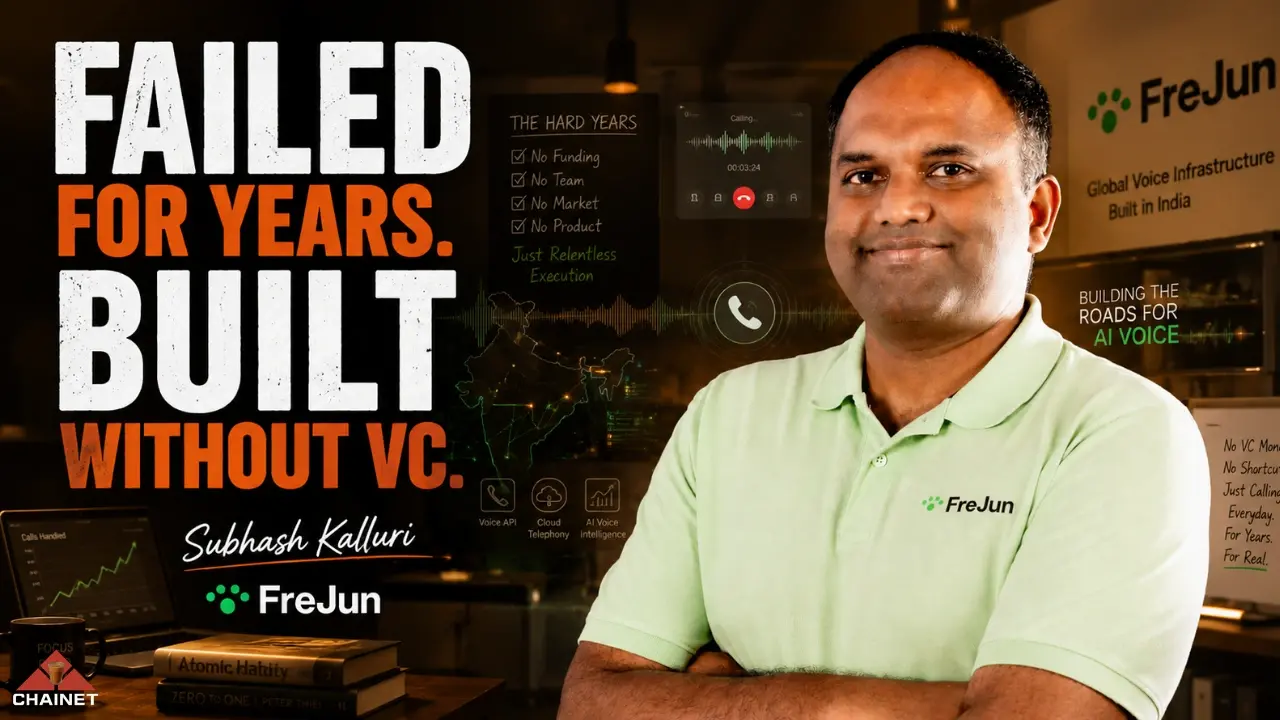
Subhash Kalluri Built FreJun's Voice Infrastructure Without a Single VC Round
Subhash Kalluri, founder of FreJun, on failing to raise funding, building his own telephony infrastructure after a 40-50% margin hit, and why he believes the AI agents will keep changing but the infrastructure carrying them never will.
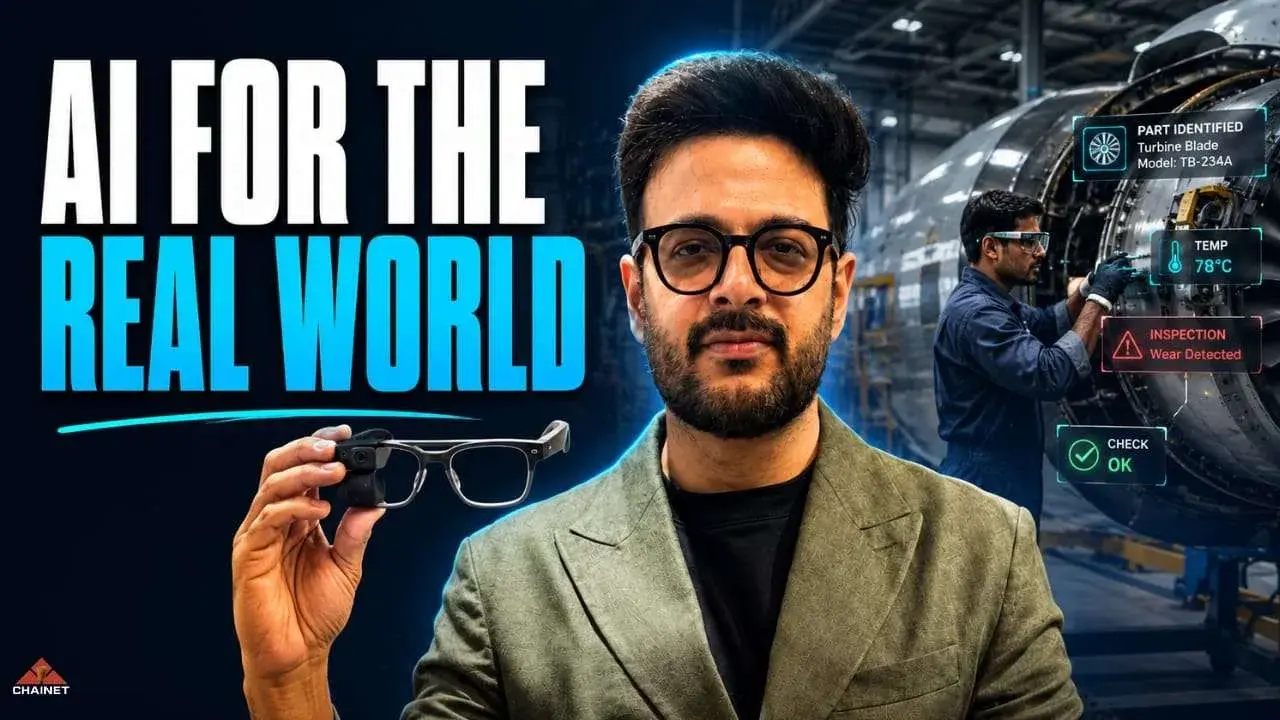
Why 80% of the World's Workforce Never Got an AI Product, and What Ankush Jagga Is Doing About It
Ankush Jagga, co-founder and CEO of Unfold XR, on why smart glasses and vision computing are about to change how frontline workers like windmill technicians, airport ground staff, and repair technicians do their jobs. A candid conversation on hardware fragmentation, pricing in India, and 23 years of founder lessons.
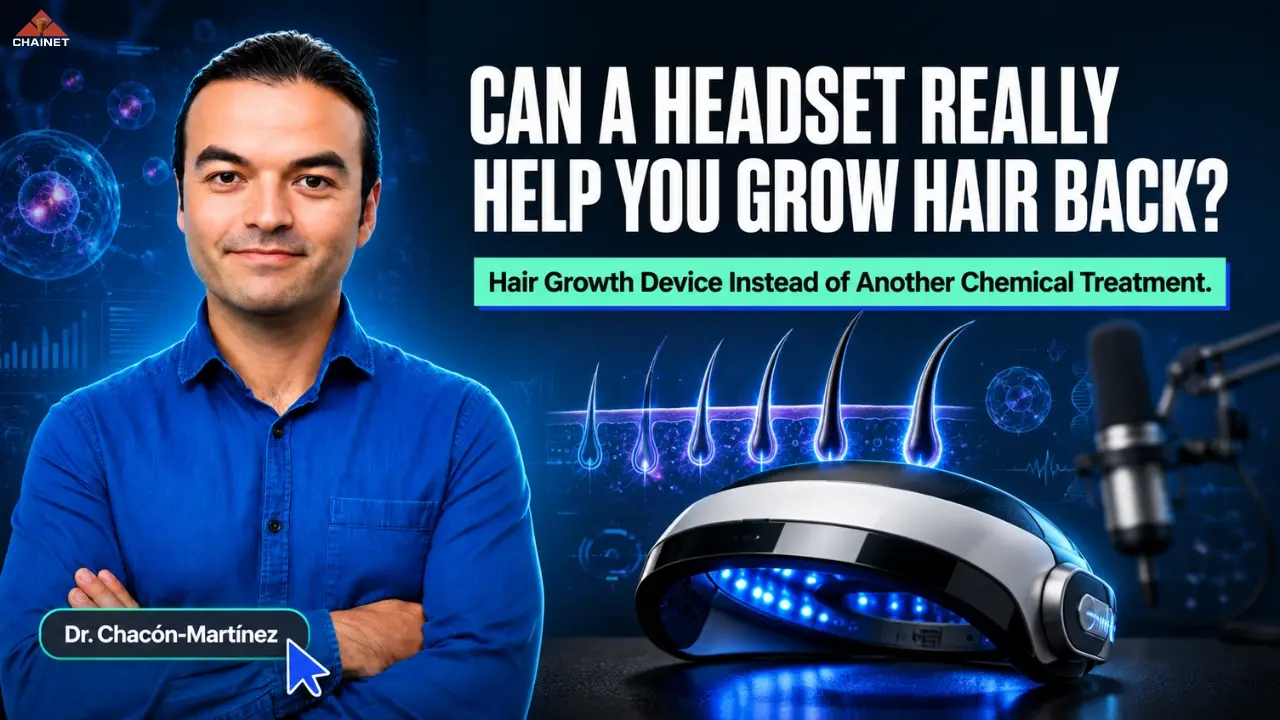
Growing Hair Without Chemicals: How Niostem Turned a Cancer Lab Discovery Into a Wearable
Dr. Chacón-Martínez spent 15 years studying stem cells at the Max Planck Institute before co-founding Niostem, a wearable that uses low-level electrical stimulation to reverse hair loss. In this ChaiNet conversation, he unpacks the science, the founder journey, and why he skipped the billion-euro drug path entirely.
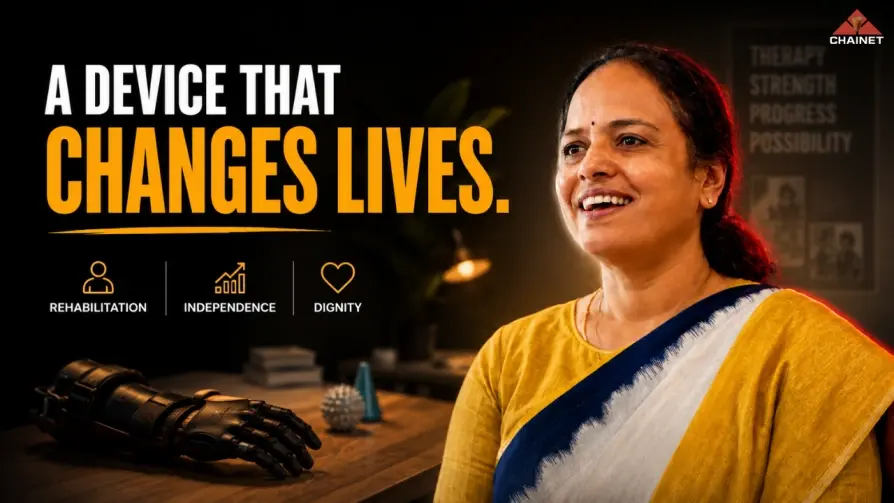
From Therapy Room to Startup: How Dr. Kanan Doshi Is Rebuilding Independence, One Hand at a Time
Dr. Kanan Doshi spent 32 years as a pediatric occupational therapist before co-founding The Able Company. She talks about building Hands-On, a patented battery-free adaptive hand device incubated by IIT Madras, and why awareness, not tech, is the real hurdle in India's disability sector.