Search Episodes
Search for podcast episodes by title, guest, or topic.
What Your Genes Reveal That Made Him Start Over At 40
Masroor Lodi had it figured out - Unilever, entrepreneurship school, consulting. Then a DNA test revealed why 27 years of migraine medication never worked. At 40, he walked away from teaching entrepreneurship to become a student again, building Unlock.fit.
Why does your friend lose weight on keto while you gain it? Why do generic wellness programs fail for most people? Why does the same diet work miracles for one person and nothing for another?
Masroor Lodi spent 27 years asking these questions. Not academically - personally. He suffered from migraines for nearly three decades. Developed hypertension. Struggled with gut issues. The medical answer was simple: medication. The problem? Medication managed symptoms but never solved anything.
Then someone suggested a DNA test. Masroor jokingly said, "DNA tests? Don't we use those for paternity?" That joke changed everything. The DNA test revealed one specific gene marker out of 9.5 lakh markers that was creating chaos in his life: iron levels.
Not stress. Not diet alone. Not lifestyle. Iron absorption. One marker explained 27 years of suffering.
At 40, after building enterprises across FMCG, pharmaceuticals, and consulting, after founding an entrepreneurship school that mentored thousands, Masroor walked away. He became a student again. He founded Unlock.fit - combining DNA testing with AI to build wellness programs personalized to your genetic code, not your preferences or behavior patterns, but your biology.
This is what happens when you stop managing symptoms and start reading the manual your body came with.
Key Takeaways: Your DNA Is Your User Manual
The Behavior Myth:
- Most wellness advice assumes behavior change solves everything - it doesn't
- DNA testing reveals why certain diets, exercises, or supplements won't work for you specifically
- Example: A woman was advised against physical activity because high inflammation meant exercise would make her gain weight
- Blood tests show "what" is happening today; DNA shows "why" it's happening
What DNA Testing Actually Does:
- One DNA test (lifetime), one blood test (current state) = complete picture
- Tests 9.5 lakh gene markers, delivers 85-450 page reports with actionable items
- Not just diagnosis - specific solutions you can act on immediately
- Reveals both risk factors and strengths, eliminates need to experiment with diet/fitness
The Real Business Model:
- Started during COVID lockdown (July 2020) with corporate sector, not D2C
- No dollars for mass marketing - grew through conversations, one user at a time
- Validation: Within 2-3 months of someone joining, family members (not friends) join
- Competition isn't other DNA testing companies - it's customer mindset about what's possible
Q: You had a successful career - FMCG, pharmaceuticals, entrepreneurship school. Why walk away at 40 to build Unlock.fit?
Masroor Lodi: The journey started back in 2010 when I left the corporate world to pursue entrepreneurship. I did one venture in London focused on educational mobile games for children - the solution was solid, but mobile apps barely existed then, so it didn't fly.
I came back to India and set up the entrepreneurship school in 2013 with friends. We helped a number of ventures, ran it for about 8 years. But all through this entire decade, I was deteriorating my own health.
I was struggling with migraine for 27 years. Then hypertension started. Then gut-related issues. The answers were simple - go to a doctor, get medication, fix your issues. But that "fix" was not the solution I was getting through medication. I said no, medication is not the path, but I still wasn't getting answers.
I was lucky to have someone guide me on the DNA test. I jokingly said, "DNA test? Don't we use it for paternity?" But that was a reckoning for me. The DNA test revealed a lot about my health condition. From there, it solved a lot of issues for me. I don't have any pills now - no hypertension medication, no migraine medication, gut issues all in control.
I decided if it could help me, why shouldn't it help many more people? That's why Unlock.fit.
🔥 ChaiNet's Hot Take: Most founders start companies to solve other people's problems. The dangerous ones solve their own first, then realize millions have the same problem.
Q: How does a DNA test actually work? What happens from saliva sample to actionable report?
Masroor Lodi: When we started, the purpose was to serve users in the convenience of their drawing rooms. They don't have to come to a center or meet anyone in person. Remember, we launched in July 2020, thick of lockdown. That's why the name - unlock your fitness during lockdown.
You come to our mobile app or website, book your program. DNA test kit gets delivered. You collect your saliva sample in a specialized tube, go to the app, schedule pickup. Someone knocks on your door and picks it up. We also do blood tests because DNA tells your entire story - how your body responds to food and exercises. Blood tests tell current health condition.
For example, if someone is predisposed to low vitamin D or B12 levels, we check current levels first. If current levels are fine, the recommendation is clear: "You're predisposed to lower levels, but right now you're doing fine. You don't have to do anything, but be cautious."
DNA test is once in a lifetime. Blood test shows current state. Together, you know exactly what will work for you.
🔥 ChaiNet's Hot Take: Most health advice is "here's what works for most people." DNA testing is "here's what works for your specific biology." That's not incremental improvement - that's a different game.
Q: What surprised you most about your own DNA test results?
Masroor Lodi: I love milk. I've been drinking milk all my life since childhood. Then I got to know I'm lactose intolerant. You can figure out lactose intolerance conclusively with DNA testing - not indication, but conclusion.
I realized, my god, I'll have to leave milk now. I connected this back to my gut health. As I'm aging, I have less capacity to tolerate lactose. I need to be conscious - I can have lactose-free milk, it's not that I remove milk from my life, but I need specific choices.
The second thing, and this was the single most important marker for me out of 9.5 lakh gene markers - iron levels. My iron levels used to remain low. I realized I would feel lethargic and less energetic in the second half of the day.
When I have an important meeting, I'd need strong coffee by my side. Otherwise, I wouldn't have concentration and alertness. If I have ten conversations in the second half, I'd have ten cups of coffee. That was creating problems for my gut, hypertension, cardio risk.
The moment I got to know about iron, I figured out a way to address it. I don't consume iron pills. Our nutritionists helped me achieve required iron levels without any pills. Those were the surprising elements for me.
🔥 ChaiNet's Hot Take: Coffee isn't always about loving coffee. Sometimes it's about compensating for a genetic marker you didn't know existed.
Q: What's the tech stack behind going from saliva sample to 85-page actionable report?
Masroor Lodi: There are multiple layers. It looks simple - saliva gets collected and goes to testing. But DNA tests take 3-4 weeks because the process is time-consuming.
Your DNA saliva sample has a barcode linked to your profile when you schedule on the app. It can go anywhere across the world but remains linked to you - complete privacy, no confusion.
In our lab, we do DNA extraction. Saliva has strands of your DNA - we collect it, then sequence it. This is where real technology kicks in. Your DNA saliva sample runs on a software chip. Imagine - software, a chip, and biology all coming together to deliver your DNA report.
The raw data that comes is huge, unreadable in raw form. It needs to be converted into a readable report. The minimum report we deliver is 85 pages. It can go up to 450 pages because that's the extent to which we uncover about you.
The DNA test we do - the nutrigenomic test - brings out actionable items. It's not that you get to know something and we say you can't do anything about it. We tell you specific things you can do so you can act upon it.
🔥 ChaiNet's Hot Take: The hard part of biotech isn't the science. It's translating science into actions a normal person can take without a PhD.
Q: People worry about DNA data privacy. How do you handle that?
Masroor Lodi: You can do DNA reporting with saliva or blood sample. Every day, millions of people give blood tests anyway. There's no issue with DNA as such.
Just like blood tests where you say what sort of test you want - diabetes, sugar level, whatever - same with DNA. The DNA test we do is a nutrigenomics test. It looks at how your body responds to various food items.
We don't do paternity testing, so those risks don't exist. Leading brands in India, their employees and families already use us. It's a very pertinent question, but there's no risk whatsoever. It's just like a blood test, but looking at different markers.
🔥 ChaiNet's Hot Take: Privacy concerns are valid until you realize you're already giving more sensitive health data to hospitals every year. The question isn't privacy - it's trust in who's handling it.
Q: Building Unlock.fit is your journey "back to being a student." What are you learning now that you couldn't learn mentoring thousands of founders?
Masroor Lodi: I could have worked with other founders in this space. But I realized unless I do it myself, I'd just be at a distance. I wouldn't be able to contribute the way I'd love to contribute. I experienced it myself firsthand, so I thought I should jump in. That's the most commitment I can give to this space.
The learning? Behavior is only one part of the puzzle. We always say if you change behavior, you can solve health problems. It's only true to an extent.
There's a lady who wanted to lose weight. Ideal advice? Do physical activity, have fewer calories. We advised her against physical activity. The reason? She's running on high inflammation. We said we need to calm your body down first. Your inflammation is very high. Physical activity now will work against you. The more you do, the more you'll gain weight because of inflammation.
Behavior is only one part. Trackers, blood tests - they tell you what is happening today, the "what" part. They don't tell you "why" it's happening. DNA helps you understand why, then you can address the rest.
🔥 ChaiNet's Hot Take: Behavior change without biological understanding is guessing. DNA testing turns guessing into precision. That's not better advice - it's a different category of advice.
Q: What's been your most difficult challenge building this?
Masroor Lodi: I thought we're building something that solves problems because I experienced it myself. I thought we should easily crack things. The best learning? My competition was not other brands in this space - general nutrition programs, fitness companies. They're not my competition.
My competition is customer mindset.
I have to change the mindset of my customers. That can only happen not through mass marketing, but convincing them one user at a time. We figured this out early. We said no, we're not going to burn our energies in that direction. We need to have more conversations.
Because of these conversations, we've been able to create a very thriving WhatsApp community. The knowledge is available, we keep sharing. We chose health integrity over speed.
🔥 ChaiNet's Hot Take: When you're changing mindsets, not solving acknowledged problems, your go-to-market is conversations, not campaigns. Scale comes later.
Q: Can DNA testing predict future health issues, or is that science fiction?
Masroor Lodi: DNA gives you various possibilities and probabilities, but it's not your destiny. Because you know possibilities, you can take care well in advance.
In my case, I'm a poor absorber of iron. I'm essentially going to be low on iron. Because of being low on iron, I'll have issues - including creating risk for my cardio profile. Whereas my genetics say I'm very strong on cardio. But because of iron, I'm creating unnecessary problems.
If I don't have DNA data, the world would say, "Poor Masroor, he had iron issues, couldn't do anything, that led to cardio problems." But I actually knew about the iron issue and could take care of it. Now there's no iron issue, hence I'm able to reverse that possibility of cardio problems, gut issues, hypertension, migraine.
While DNA gives you clear direction, it gives you power to arrest it.
🔥 ChaiNet's Hot Take: Knowing your genetic predispositions isn't fatalism. It's the ultimate unfair advantage - seeing around corners before they exist.
Q: You started with corporate sector, not D2C. Why?
Masroor Lodi: We wanted to make more people aware of DNA testing. I myself had the question - DNA test for paternity? That was the case with many more people.
We had to do a lot of education. During lockdown, we started with corporate sector. We said we don't want to go to D2C because we didn't have dollars to burn on marketing. Bootstrapped venture. We're spending a lot on technology and product already.
We started doing conversations with small groups within corporates, giving them the value. They saw it. One fact I'd highlight - when someone joins our program, in the next two-three months, we have more family members (not friends) from the same person join. That's the power of DNA-based personalizing.
That's the proof what you're doing works. Only then would you recommend to a family member.
🔥 ChaiNet's Hot Take: Family referrals over friend referrals is the ultimate validation. Friends are polite. Family needs proof.
Q: What about people in tier 2/3 cities or those who prefer traditional approaches?
Masroor Lodi: It's actually a preconceived notion that it's a hush-hush topic. Between Nikki (my co-founder) and me, we speak to over 100 customers every month. Women across tier 1, tier 2, tier 3 cities are comfortable sharing their health journey.
It's about how they relate, what kind of difference we're creating in their life. We've had customers say, "I don't believe this will work." We've said, "Let me send this to you. If it doesn't work, I'll take it back. But if it works, you replace your existing approach."
These conversations happen. Customers come back saying it made a difference. We recently did an experiment with regional content - understanding local challenges. The response was amazing. People are willing to engage when they see it's about them specifically, not generic advice.
🔥 ChaiNet's Hot Take: The resistance isn't to new science. It's to being treated like a statistic. Make it personal, and tier 2/3 adopts faster than tier 1.
Q: Would bigger players entering this space help or hurt you?
Masroor Lodi: I would really like them to start it. Because if they come, they'll talk about it, and my job is done actually. I'm going to get users coming in anyway.
I've invited leading brands myself - one or two - expected them to partner with us. But for them, economics is there. They say it'll take a lot of time to build the business, we'll just go for blood testing platforms, that's good enough. They've not chosen the other path.
The other thing - it's not just that we're giving DNA tests. The knowledge we've built and preserved in Unlock.fit is unmatchable. There are two sciences: genomics and nutrition science. You'll hardly have people who understand both DNA/genomic science as well as food/nutrition science.
We've nurtured such talent from the very beginning. The first client who said yes - I didn't even have a mobile app at that time. Leadership members said yes because they believed in the value of genomics and DNA-based wellness. It's not easy to replicate.
🔥 ChaiNet's Hot Take: When your moat is talent that understands two deep sciences, competition creates awareness, not commoditization. Let them spend on educating your market.
Final Thoughts: Reading The Manual You Were Born With
Masroor's closing wisdom: Entrepreneurship is not easy. It's not a career option because you don't like your job. Please remember - entrepreneurship is a difficult thing. It tests your character, not intelligence. It's not a game of intelligence.
If you don't think you fit that slot, don't come into it. You can do far better in jobs or something else. But if you decide to come in, be ready for two things: have patience (you won't have results overnight), and be ready to dirty your hands yourself.
I don't come from genomics or nutrition background. But in the early days, for the first one and a half years, I was the call center executive. I spoke to all my customers. Not because I didn't have a resource - I did - but those one and a half years of insights from directly speaking to customers gave inputs to product development.
I couriered kits to users myself. I'd go to DTDC and Blue Dart. I couldn't ask them to come, but I had to experience it myself. I've experienced all processes in my company myself. No shying away.
The bottom line: Some problems demand more than observation. Masroor could have written about genomic wellness, consulted on it, worked with founders building it. He realized the gap was big enough that it required starting over. Worth building from scratch at 40.
Being a student isn't about being naive. It's about having enough pattern recognition to know when the old playbook doesn't apply. Masroor spent years teaching entrepreneurship. That experience didn't make starting over easier - it made him recognize when starting over was necessary.
Your DNA is your user manual. For decades, we've been troubleshooting our bodies without reading the manual - trying random diets, exercises, supplements, hoping something works. DNA testing is finally reading the manual. Not to accept fate, but to understand the specific rules your biology plays by.
Q: How can people connect with you and learn more about Unlock.fit?
Masroor Lodi: You can find us at unlock.fit. We have a very active WhatsApp community where we share knowledge, insights, and help people understand what's possible with DNA-based personalized wellness. Whether you're dealing with specific health issues or just want to optimize, we'd love to have conversations with you. You can also connect with me on LinkedIn - I'm always open to discussing genomics, personalized wellness, or the entrepreneurship journey.
Final words: The most expensive experiments are the ones you run on your own body without data. Every failed diet. Every supplement that didn't work. Every workout program that gave someone else results but not you. That's not bad luck - that's trying to solve a personalized problem with generic solutions. Your DNA is sitting there with all the answers, waiting for you to ask the right questions. Masroor asked those questions at 40 after 27 years of migraines. You don't have to wait that long. The manual exists. Are you reading it, or are you still guessing?
Related Shorts
Explore short-form videos that expand on the ideas covered in this blog.
Similar Episodes
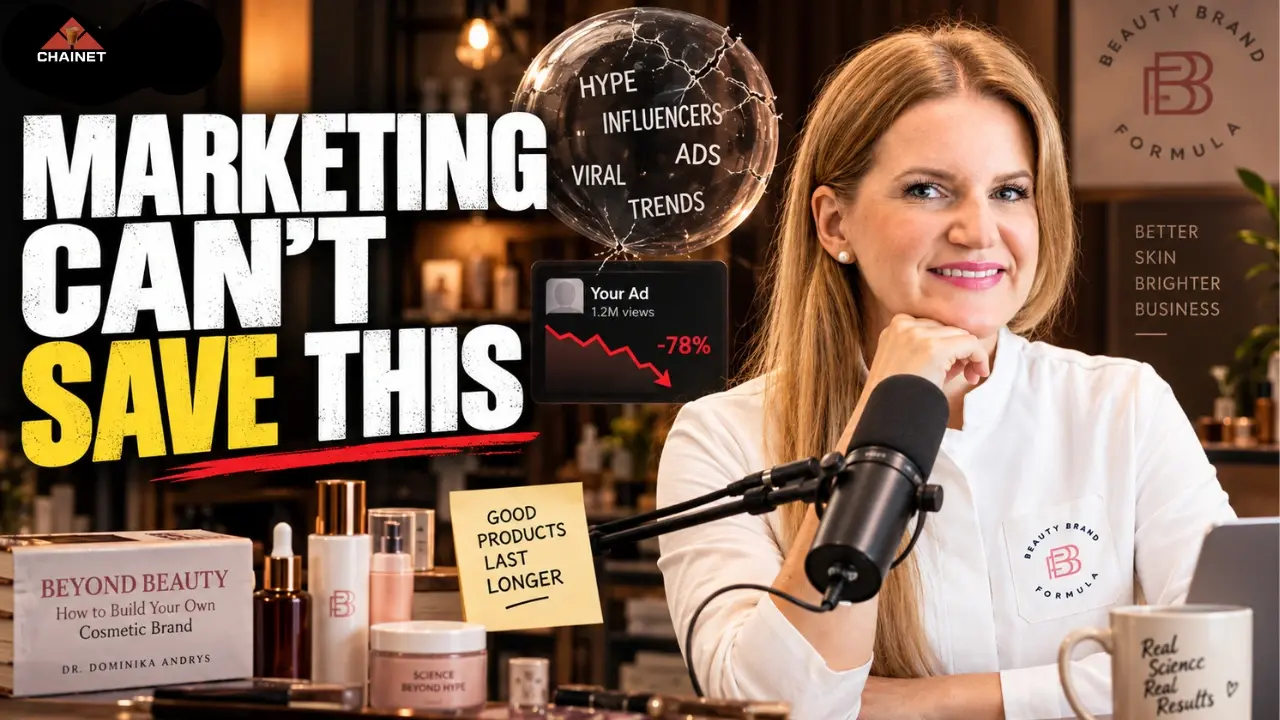
The Chemistry Behind Every Beauty Brand: Dr. Dominika Andrys on What Actually Makes a Product Work
Dr. Dominika Andrys, founder of Beauty Brand Formula and Beauty Brand Hub, has formulated products for hundreds of beauty brands over 15 years. She breaks down what actually goes into a formula, why AI still can't replace a cosmetic chemist, and the launch mistakes that quietly kill new brands.
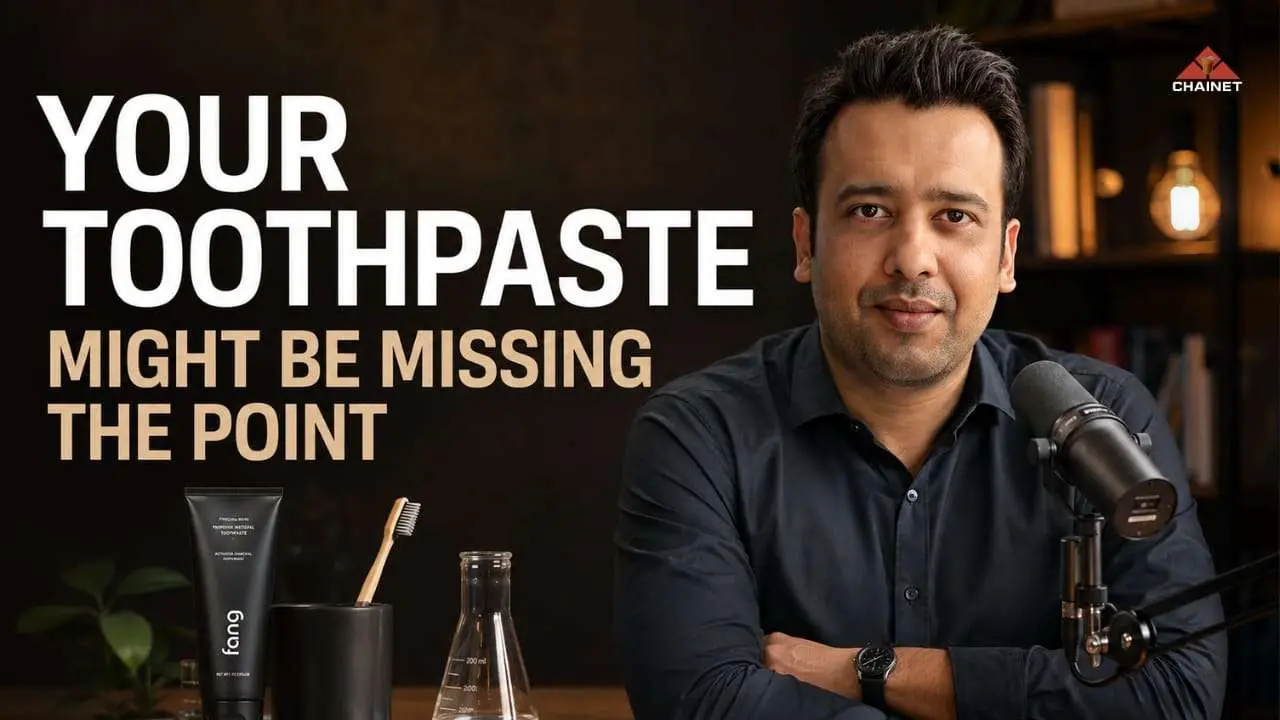
Three Root Canals, Two Implants, and a Toothpaste Brand: Ankit Agarwal's Fang Story
Ankit Agarwal, co-founder of Fang Oral Care, on why oral care has stayed stagnant for decades, what nano-hydroxyapatite actually does to your enamel, and why he thinks toothpaste is about to have its skincare moment.
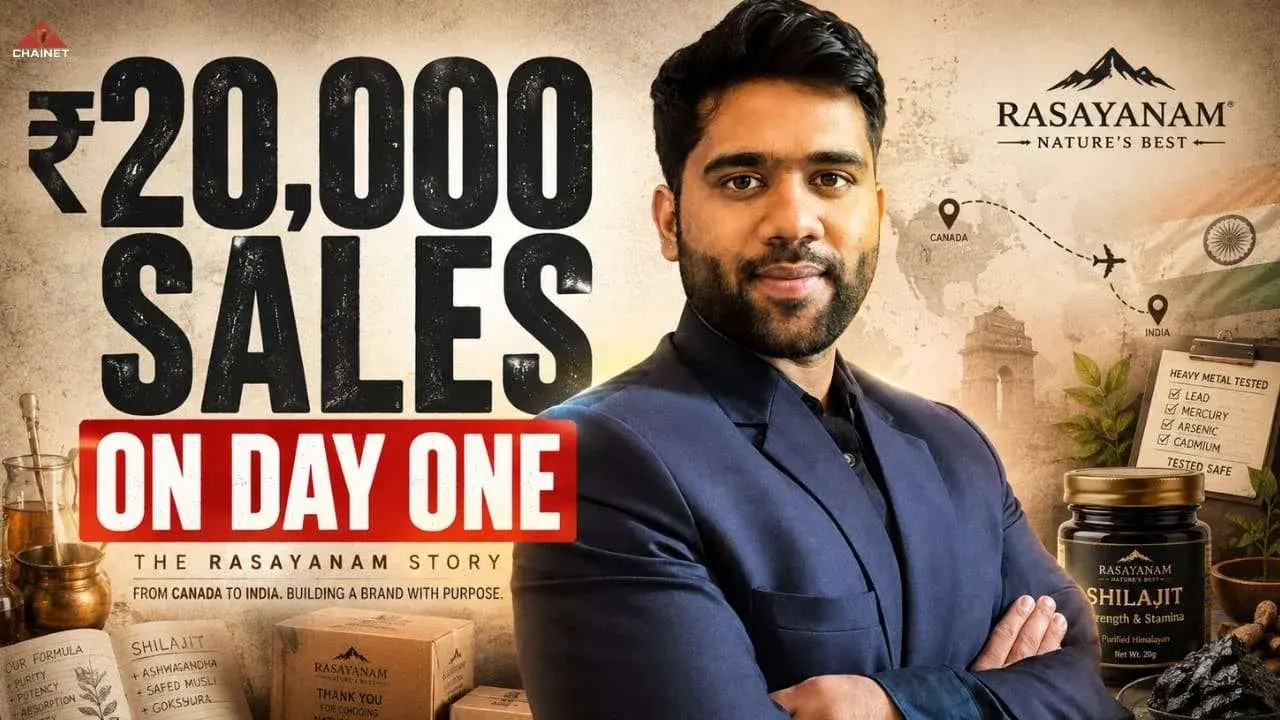
He Left a Stable Life in Canada to Sell Shilajit in His Basement. Now Rasayanam Does 20 Lakh Customers Without a Rupee of Funding
Ayush Agarwal, founder and CEO of Rasayanam, walked away from a stable career and life in Canada to build a science-backed neutraceutical brand from scratch in India. He talks about launching Shilajit from his basement, staying bootstrapped for five and a half years, and why he pivoted from an Ayurvedic identity to a broader neutraceutical one.
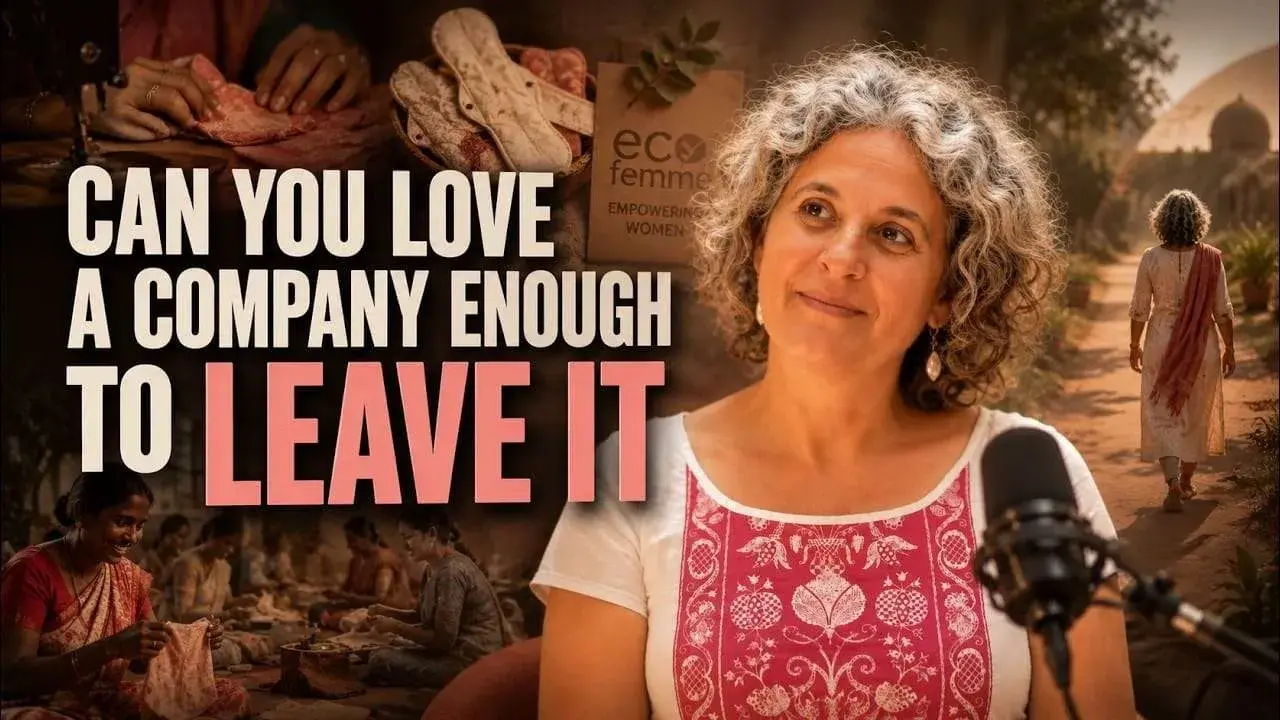
She Built a Movement Around a Taboo, Then Walked Away From It
Kathy Walkling, Co-Founder of Eco Femme, spent 15 years building India's first washable cloth pad brand from a forest in Auroville into a business reaching women in 27 countries. This is the story of that journey, and the harder story of why she chose to hand it over and walk away.