Search Episodes
Search for podcast episodes by title, guest, or topic.
She Built a Gourmet Brand When India Wasn't Ready for One
Apeksha Jain started The Gourmet Jar by accident after her husband brought home a pasta maker from Italy. 12 years later, she's done 60 crores in lifetime sales on just 2 crores of total funding. The journey wasn't glamorous - it was painfully slow.
Apeksha Jain didn't plan to become an entrepreneur. Her husband came back from Italy with a pasta maker, she started experimenting with sauces, friends and family loved them, and someone connected her with Foodhall. That one call changed everything. Twelve years later, The Gourmet Jar has done 60 crores in lifetime sales, sells across 2,500+ retail stores, and supplies to Oberoi Hotels and ITC hotels.
But the numbers hide the reality. Growth was painfully slow. For years, Apeksha was the company - the cook, the packager, the delivery person, the sales rep. She raised just 2 crores total in external funding across the entire 12-year journey. When COVID hit, her entire HORECA (hotels, restaurants, catering) business collapsed overnight, forcing a pivot to online and savory products that ultimately saved the company.
What makes Apeksha's story different from the typical D2C founder narrative is the timeline. This wasn't a two-year rocket ship. It was a decade-long grind building a gourmet food brand in a market that wasn't ready for one. India in 2013 wasn't buying artisan pasta sauces and chutneys at premium prices. But Apeksha kept going, and the market eventually caught up.
This episode dives into what it's really like to build a food brand from your kitchen, why clean labels matter more than marketing budgets, how HORECA relationships actually work, and why raising only 2 crores might have been the smartest decision of all.
Key Takeaways: Building a Gourmet Brand Over 12 Years
The Accidental Entrepreneur Path:
- Started from a pasta maker gifted from Italy, then experimented with sauces
- First break came from a Foodhall connection through a friend of a friend
- Went from making 20 bottles in her kitchen to Oberoi Hotels wanting to list her products
- No formal food science background - learned everything through trial, error, and FSSAI regulations
The Clean Label Pioneer:
- The Gourmet Jar was doing clean labels before "clean label" became a marketing term in India
- No preservatives, no artificial colors, no additives - just real ingredients
- This limited shelf life to 9 months initially, which made retail distribution harder
- Being early to clean labels meant educating retailers and consumers simultaneously
The HORECA-to-D2C Pivot:
- 40% of revenue came from HORECA (hotels, restaurants, catering) before COVID
- When COVID shut down hotels and restaurants, that 40% went to zero overnight
- Forced a pivot to online sales and savory products (chutneys, pickles) that were more accessible to Indian consumers
- The D2C channel went from almost nothing to a significant revenue contributor during and after COVID
Q: The Gourmet Jar started by accident. Walk me through those early days.
Apeksha Jain: My husband went to Italy and got a pasta maker home. I started playing around with it - making pasta, then sauces to go with it. I used to give it to friends and family, and people really liked it. Someone who tried it said, "You know what, I have a friend who works at Foodhall. Why don't you try talking to them?"
That one phone call changed my life. Foodhall said send us samples. I sent them, they loved it, and they placed an order. At that point, I was making maybe 20 bottles at a time in my kitchen. I didn't have a brand name, I didn't have labels, nothing. I literally had to figure everything out in two weeks.
I remember going to a local printer and getting labels made. The first batch went to Foodhall, and they sold. That's when I thought, okay, maybe there's something here. But honestly, I had no grand plan. I was a media professional - I used to work in advertising. Food was just something I loved doing.
🔥 ChaiNet's Hot Take: The best businesses often start when you're not trying to start a business. Apeksha's pasta sauce was never a pitch deck - it was dinner.
Q: Going from 20 bottles in your kitchen to an actual company - what did that transition look like?
Apeksha Jain: It was messy, honestly. For the first couple of years, I was everything. I was cooking, I was packaging, I was labeling, I was delivering. My car boot was my warehouse. I'd cook in the morning, pack in the afternoon, and deliver in the evening.
Getting FSSAI certification was a whole journey. When you're a small operation, the regulations are the same as for a large factory. You need the same certifications, the same lab testing, the same compliance. That took months to sort out. Then finding a commercial kitchen space that met all the requirements - that was another challenge.
The toughest part was pricing. When you're making small batches with real ingredients and no preservatives, your cost per unit is very high. I couldn't compete on price with mass-produced sauces. So from day one, I had to position it as premium and convince retailers that people would pay 350 rupees for a jar of pasta sauce.
🔥 ChaiNet's Hot Take: Every premium food brand founder's first warehouse is their car boot. The glamour starts way after the grind.
Q: You got Oberoi Hotels as a client early on. How does a home cook land a five-star hotel chain?
Apeksha Jain: Oberoi actually reached out to us. They were looking for artisanal, clean-label products for their restaurants and gift hampers. At that point, there weren't many brands in India doing what we were doing - genuinely clean label, small batch, premium quality.
When they tasted the products, they loved them. But the onboarding process was intense. Their quality standards are extremely high. They sent a team to audit our facility. Every ingredient needed documentation. Every batch needed lab testing. The whole process took about three to four months from first conversation to first order.
But once you're in with Oberoi, it opens doors. Other hotels start taking you seriously. ITC came after that. And for us, HORECA wasn't just revenue - it was validation. When Oberoi Hotels serves your product, you don't need to explain quality to a retail buyer anymore.
🔥 ChaiNet's Hot Take: A five-star hotel on your client list isn't just revenue. It's a quality certificate that no marketing budget can buy.
Q: Clean labels before it was cool - was that intentional?
Apeksha Jain: It wasn't a strategy, it was just how I cooked. When I'm making pasta sauce at home, I'm not adding preservatives or artificial colors. I'm using fresh tomatoes, real basil, good olive oil. So when I started the company, I just continued making it the way I always had.
The challenge was that without preservatives, shelf life was limited. Initially our products had about 9 months of shelf life, which is nothing compared to 2 years that mass-produced sauces offer. Retailers would push back - they'd say, "We can't keep restocking this frequently." Modern trade especially wants long shelf life because their supply chains are designed around that.
Over the years we've optimized processes. We've figured out ways to extend shelf life naturally - through proper processing, better packaging, controlled environments. But we've never added a single preservative. That's a non-negotiable.
🔥 ChaiNet's Hot Take: Clean labels weren't a trend for Apeksha. They were just Tuesday. The best brand values are the ones you'd follow even if nobody was watching.
Q: 2 crores of funding over 12 years. Was that by choice?
Apeksha Jain: A bit of both. In the early days, I didn't even know what fundraising was. I was a food person, not a startup person. By the time I understood the ecosystem, I was already generating revenue. The business was growing - slowly, but it was growing.
We did raise about 2 crores from angel investors. But here's the thing - when you're a food brand growing at a steady pace and you don't have those hockey-stick numbers, most VCs aren't interested. Food is a tough category for venture capital because margins are tight, logistics are complex, and scaling requires physical infrastructure.
Looking back, I think the limited funding actually helped us. We had to be very disciplined. Every rupee was accounted for. We couldn't burn money on fancy marketing or rapid expansion. We grew organically - one retailer at a time, one city at a time. And because of that, we never had to make desperate decisions. We never had to dilute heavily or take bad terms.
Sixty crores in lifetime sales on 2 crores of external funding - I think that ratio speaks for itself.
🔥 ChaiNet's Hot Take: 60 crores in sales on 2 crores of funding is a 30x capital efficiency. Most VC-backed brands would kill for that ratio.
Q: COVID hit HORECA first and hardest. What happened to The Gourmet Jar?
Apeksha Jain: Hotels shut down, restaurants shut down, catering was gone. We had about 40% of revenue coming from HORECA, and that went to zero. Literally overnight.
At the same time, retail was struggling because supply chains were disrupted. Modern trade stores had empty shelves for weeks. It was a very dark period. We had inventory that was getting closer to expiry, staff that needed salaries, and revenue that had fallen off a cliff.
But two things happened. First, people stuck at home started cooking more. And they wanted good ingredients. Our online sales, which were negligible before COVID, suddenly started growing. Second, we realized our product range was too Western for the Indian kitchen. Someone cooking daily at home isn't making pasta every day.
So we pivoted hard into savory - chutneys, pickles, Indian-style sauces, spreads. Products that fit into everyday Indian cooking. That pivot probably saved the company. Our savory range now does more revenue than the original Italian range.
🔥 ChaiNet's Hot Take: COVID didn't just test food brands. It told them the truth about their product-market fit. The Gourmet Jar listened.
Q: You're in 2,500+ retail stores now. What's the reality of offline distribution for a food brand?
Apeksha Jain: Retail distribution in India is incredibly fragmented. You have modern trade (BigBasket, Nature's Basket, Foodhall), which is organized but slow to onboard. Then you have general trade, which is millions of small kirana stores that are impossible to reach without distributors. And each city has its own dynamics.
The biggest challenge is shelf space. In modern trade, you're paying for shelf space - listing fees, promotional fees, slotting fees. For a small brand, that's a significant cost. And if your product doesn't move fast enough, they'll delist you. It's a constant battle to stay on the shelf.
What worked for us was starting with premium modern trade - Foodhall, Nature's Basket, Godrej Nature's Basket - where our price point made sense and the consumer was already looking for premium products. Then we gradually expanded to bigger chains. General trade is still a challenge for us because our price point doesn't work in a kirana store next to a 50-rupee sauce.
🔥 ChaiNet's Hot Take: Getting into 2,500 stores sounds impressive until you learn you have to fight every month to stay in them. Offline distribution is a war of attrition.
Q: How do you think about online vs. offline now?
Apeksha Jain: For a food brand, you need both. Offline gives you reach and credibility. When someone sees you on a shelf in a trusted store, it builds confidence. Online gives you direct access to the consumer and much better margins because you're cutting out distributors and retailers.
Right now, online is about 25-30% of our revenue, and it's growing faster than offline. The beauty of online is that you can launch new products quickly and test them without committing to large production runs. If something works, we scale it. If it doesn't, we pivot fast.
What I've also learned is that offline and online are not separate channels - they reinforce each other. Someone discovers us online, then sees us in a store and buys. Or they try us in a store, then order online for convenience. The customers who shop both channels have the highest lifetime value.
🔥 ChaiNet's Hot Take: Online and offline aren't channels. They're touchpoints. The brands that win are the ones that make them talk to each other.
Q: After 12 years, what's the biggest lesson?
Apeksha Jain: Patience. This industry tests your patience like nothing else. There are years when you feel like you're running on a treadmill - working incredibly hard but not moving forward. And then suddenly, something shifts. A new channel opens up, a product catches fire, a market that wasn't ready finally matures.
I've seen so many food brands start after us, raise lots of money, scale fast, and then disappear. Because in food, if your product isn't genuinely good and your operations aren't solid, no amount of marketing can save you. People taste your product once, and they either come back or they don't.
Building slowly forced us to get the product right, get the operations right, get the unit economics right. Is it glamorous? Absolutely not. But 12 years in, we're still here, we're profitable, and we're growing. I'll take that over a fast rise and faster fall any day.
🔥 ChaiNet's Hot Take: In food, the tortoise doesn't just win the race. The hare usually goes bankrupt after year three.
Q: What's your advice for someone wanting to start a food brand today?
Apeksha Jain: Start small and validate first. Don't invest in expensive packaging or a commercial kitchen until you know people actually want what you're making. I started in my kitchen, sold through friends and family, got into one store, proved it worked there, then expanded.
Also, learn the regulations early. FSSAI compliance is not optional and not cheap. A lot of people start making food at home and selling through Instagram without any of the required certifications. That might work initially, but it limits your growth and puts you at legal risk.
And please, don't start a food brand because you think it's easy. It's one of the hardest categories in consumer goods. Margins are thin, shelf life is a constant constraint, and everyone's a food critic. Start because you genuinely love food and you've found a real gap in the market.
🔥 ChaiNet's Hot Take: If you think food brands are easy because everyone eats, you're already wrong. Everyone eats, which means everyone has an opinion.
Final Thoughts: The Decade-Long Grind Nobody Talks About
Apeksha's philosophy: "Building slowly forced us to get the product right, get the operations right, get the unit economics right."
The bottom line: Apeksha Jain's story is the one that doesn't get enough airtime in the startup world. There are no dramatic pivot moments, no million-dollar funding rounds, no viral growth hacks. There's a woman who started making pasta sauce in her kitchen, kept making it better for 12 years, and built a 60-crore business that supplies five-star hotels and sits in 2,500 retail stores across India.
The Gourmet Jar's journey challenges everything the D2C playbook says you should do. Instead of blitzing online, she built offline first. Instead of raising large rounds, she raised 2 crores total. Instead of scaling fast, she grew one store at a time. And when COVID destroyed 40% of her revenue, she didn't panic - she pivoted to savory products that fit the Indian kitchen and came out stronger.
For founders chasing speed, Apeksha's story is a reminder that duration matters. Not everything has to be a two-year exit story. Some of the most valuable businesses are the ones that took a decade to build because they were built to last.
Q: How can people connect with you and find The Gourmet Jar?
Apeksha Jain: You can find us in stores across India - Foodhall, Nature's Basket, and many other modern trade outlets. We're on Amazon, our own website, and most major online grocery platforms. Follow us on Instagram for recipes and new product launches.
Final words: In a startup ecosystem obsessed with speed and scale, Apeksha Jain spent 12 years building something rare - a food brand that's actually profitable. She started with pasta sauce in her kitchen, survived by pivoting to chutneys when COVID killed her hotel business, and grew to 2,500 stores without ever raising more than 2 crores. The Gourmet Jar doesn't have a flashy origin story or a famous investor. What it has is a founder who stayed in the kitchen, kept the labels clean, and proved that in food, the only growth hack that works is making something people genuinely want to eat again. If you're building a food brand and feeling like growth is painfully slow, take comfort in this: Apeksha felt the same way for years, and she just kept going.
Related Shorts
Explore short-form videos that expand on the ideas covered in this blog.
Similar Episodes
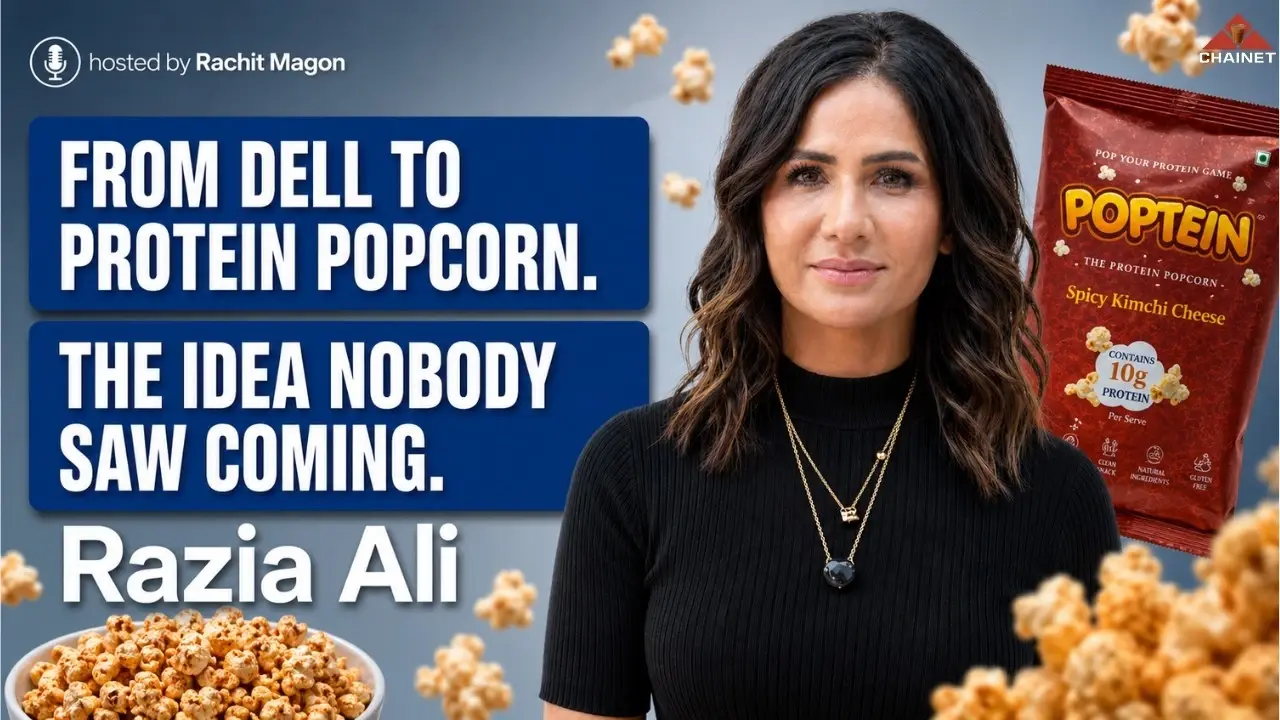
How This Founder Is Bootstrapping a Protein Popcorn Brand in India - Razia Ali, Poptien
Razia Ali spent 19 years building marketing for Dell, AMD, HP and Yahoo. Then she walked away to bootstrap Poptien, India's first whey-free protein popcorn. She talks about why she rejected protein bars, how she set up her own manufacturing line, the reality of getting onto Blinkit and Instamart, and what 90 days of pop-up product testing actually looks like.
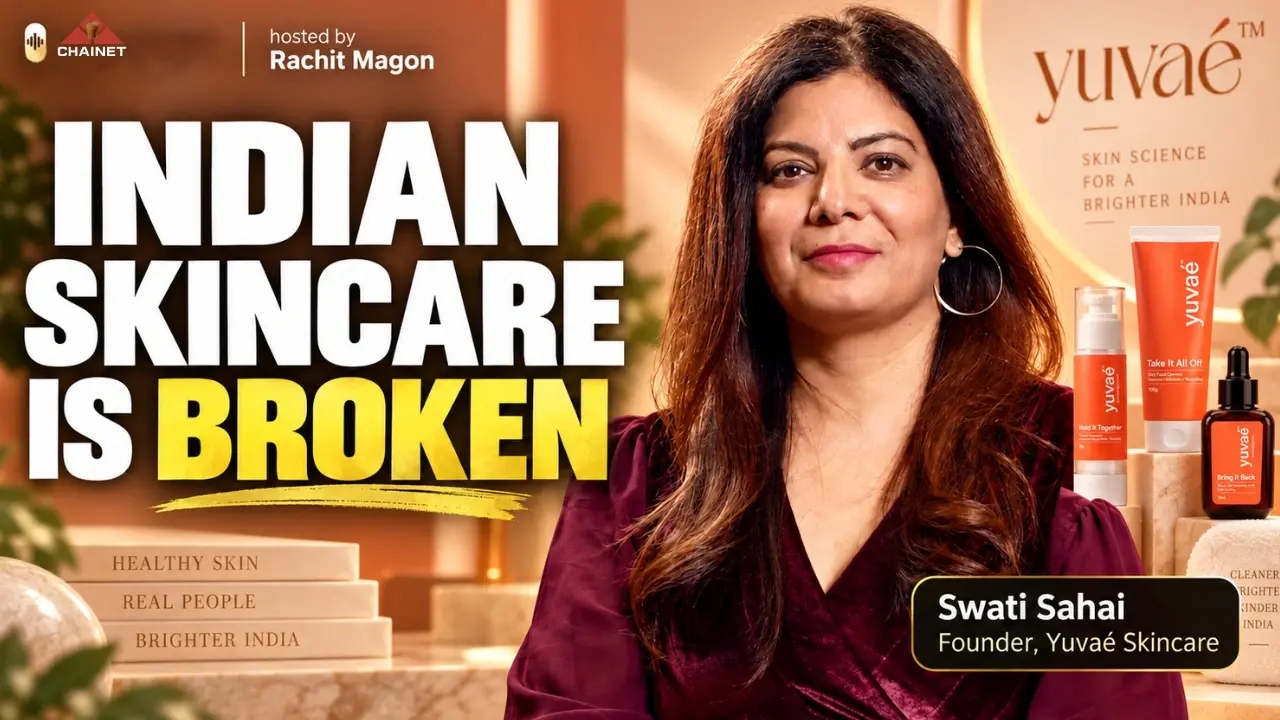
From SAP Dashboards to Serums: How Swati Sahai Built Yuvaé After Two Decades in Enterprise Tech
Swati Sahai spent two decades leading SAS customer analytics teams across Boston, Mumbai, and Asia Pacific before scrapping a finished production batch ten days before launch. Here's how that decision, and a formula that blends ectoin with amla and moringa, became Yuvaé.
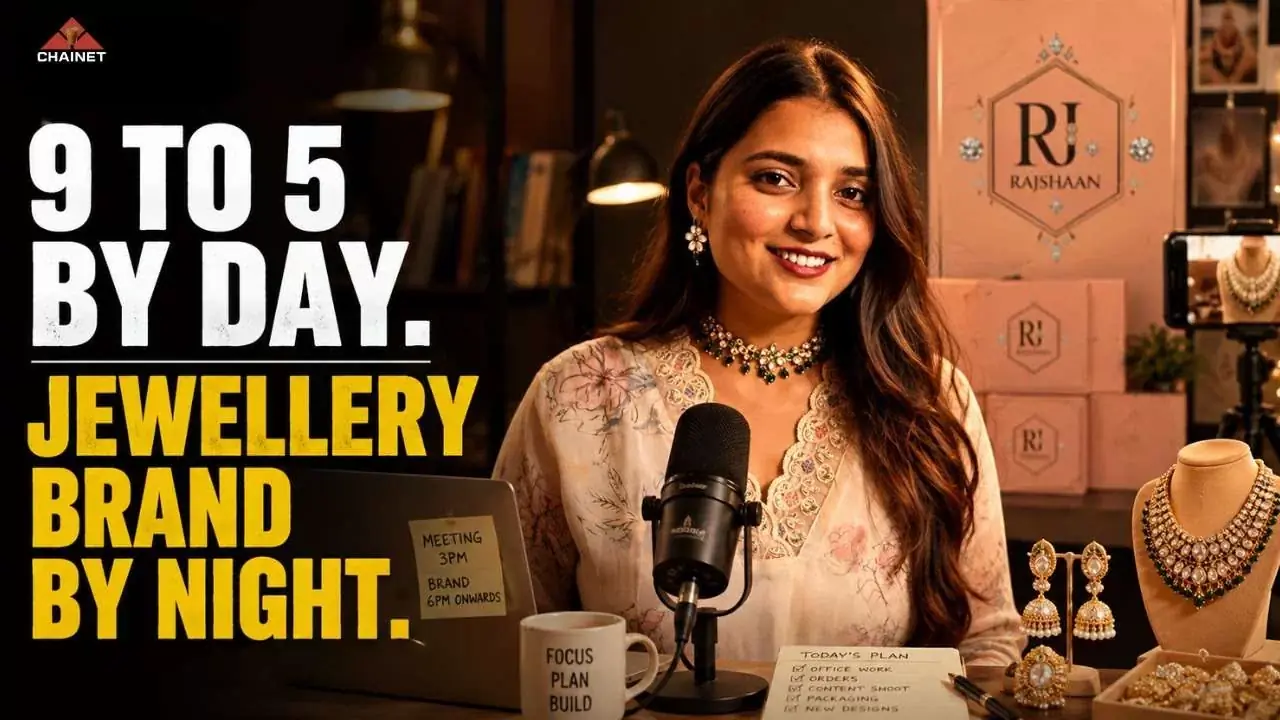
How a 9-to-5 Employee Is Building a Kundan Jewelry Brand One Weekend at a Time
Mahima Daga, founder of Rajshaan, talks about building a handcrafted kundan and fusion jewelry brand alongside a full-time tech sales job. From a Diwali conversation with her dad to her first sale at a stranger's wedding, this is a story about starting messy and staying consistent.
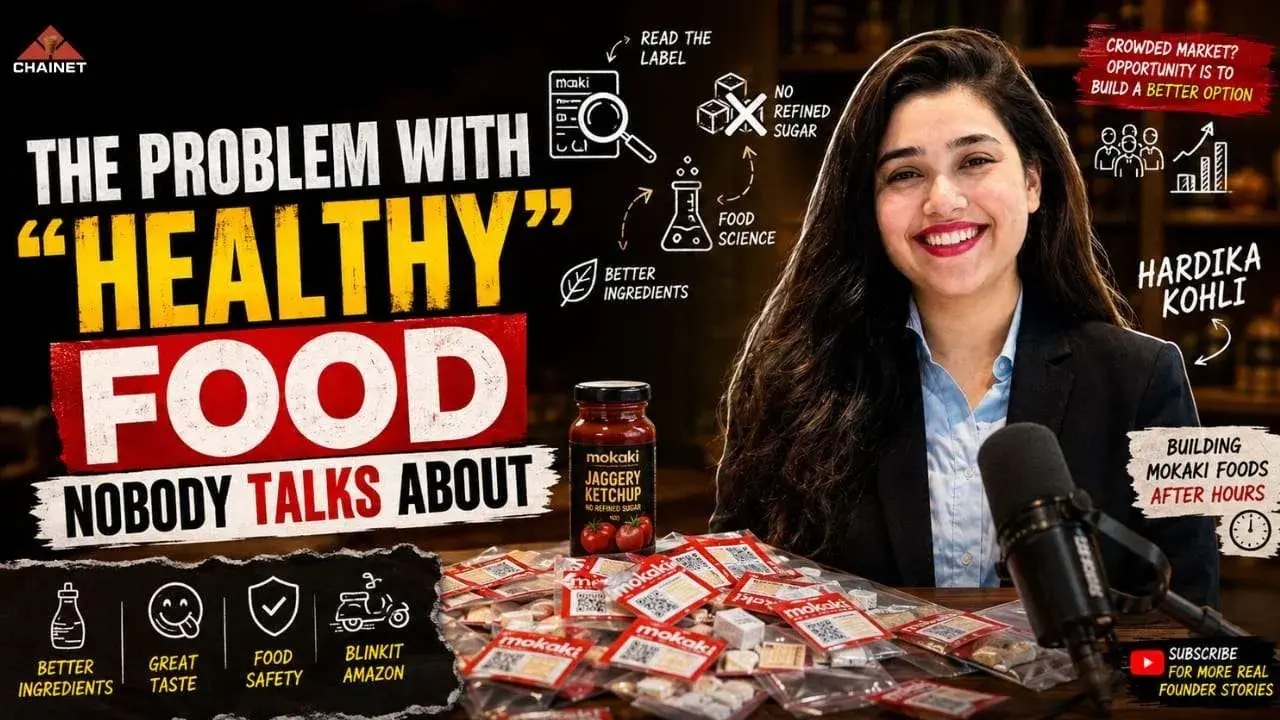
Why Mokaki Foods' Founder Thinks 'Clean Label' Is a Myth
Hardika Kohli, Founder of Mokaki Foods, breaks down why 'clean label' has no legal meaning in India, why a saturated sauce market is actually an opportunity, and what it really takes to get a new D2C food brand onto Blinkit and Amazon.