Search Episodes
Search for podcast episodes by title, guest, or topic.
He Lost His Business to COVID. Then Built a Global Fashion Brand - Samuel Ade, Ilana
Samuel Ade has spent 16 years starting businesses. He had a co-working marketplace called Desk that COVID killed overnight. He recovered, sat on Twitter one afternoon, and decided to build Ilana, a luxury e-commerce store and free expert community for Black fashion designers. He talks about the rhetorical tweet that started it all, why a single Facebook campaign worked better in West Africa than the West, the four C's of building a successful startup, and his vision of becoming the Shopify of West African fashion.
In 2020, Samuel Ade was on the verge of scaling his next big bet. A co-working marketplace called Desk that helped people find office space locally, quickly and affordably. He'd been heads-down on it for months. People were excited. The product was ready. And then COVID happened. The entire premise of the business, that people wanted to share spaces, evaporated overnight.
Most founders would have taken a year to recover. Samuel went on Twitter one afternoon, saw a tweet from someone saying they wanted to spend money with a Black fashion brand, and rhetorically posted "we don't have a marketplace for that, I might build it." A stranger replied with two words. Build it. Six months later, Ilana was live.
Samuel is the founder and CEO of Ilana, a luxury fashion store for Black fashion brands and a community platform that gives fashion designers free expertise across a four-stage development process. The name Ilana literally means pathway. The mission is to create pathways for Black fashion designers who the industry routinely shuts out. The personal story is that Samuel's mother was an aspiring fashion designer who never got to see her work sold globally, and Ilana exists in honour of her memory.
This conversation is about what it takes to start over after a pandemic, the four C's that Samuel believes every successful entrepreneur shares, why he runs a community of designers across continents on WhatsApp instead of email, and his vision of becoming the Shopify of West African fashion.
Key Takeaways: Building a Marketplace and a Movement
The Founder's Path:
- 20 years of entrepreneurship, multiple failed startups in the first 10 years, then 3.5 years at Swiggy and a stint at QMAT before jumping back into building
- Desk, a co-working marketplace, was killed overnight by COVID. The recovery move was a single rhetorical tweet about Black fashion brands that turned into Ilana within 6 months
- Ilana is named after the word for "pathway" in honor of Samuel's mother, an aspiring fashion designer who didn't get to see her work sold globally
The Ilana Model:
- Two-sided platform. Consumers shop luxury Black fashion brands on the e-commerce store. Designers join a community and get free expertise through a four-stage development process
- Only revenue stream is a 20% commission on store sales. The community is intentionally free, with monetization planned through future memberships
- Fashion designers in the community are mentored by other fashion designers volunteering their expertise, with the long-term plan to pay them once memberships scale
The Operating Reality:
- Communication primarily happens on WhatsApp because most West African designers don't use email as their primary channel. Email felt almost alien to them
- Facebook ads in West Africa converted at a fraction of the cost compared to UK ads, with significantly higher reach per dollar
- The hardest part of the journey wasn't sign-ups. It was getting designers engaged in the community after they signed up. Onboarding required heavy hand-holding
Q: You've been an entrepreneur for almost 20 years. Which failure hit you the hardest?
Samuel: I'll definitely say Desk. That was a marketplace where you could find co-working space locally, quickly and affordably. We started just before COVID, and the climate at the time we started, people were excited for what we were building. But once COVID hit, that essentially killed the business overnight.
It hit me hard. Obviously COVID was a hard time for a lot of people, but in the midst of it I was trying to figure out what next. Thankfully we were able to start Ilana in the midst of that.
ChaiNet's Hot Take: External shocks reset every founder's pipeline whether they like it or not. Samuel didn't blame the macro. He pivoted in months. The real founder muscle isn't surviving a good market. It's building a new business in the middle of someone else's crisis.
Q: Ilana started from a tweet. Walk us through that.
Samuel: I was on Twitter one day and someone was tweeting about the fact they wanted to spend money with a Black fashion brand. I rhetorically responded and said, that's great, but we don't actually have a marketplace for Black brands. Within the tweet, I rhetorically said, actually that's a good idea, I might build it. And someone responded and said, build it.
I thought about it for a day. I was like, you know what, nothing's stopping me. So I reached out to my co-founder and we started the journey. We launched Ilana within six months. From concept through to execution, it took us six months to build the business and launch it.
ChaiNet's Hot Take: The cheapest seed of a startup is a public observation that pisses you off. Most founders sit on the realization for a decade. Samuel turned a Twitter reply into a launched business in six months. The bar to start has never been lower.
Q: Ilana is a two-sided platform. How does the model actually work?
Samuel: From a consumer perspective, they shop with the different brands on our platform. From a fashion designer's perspective, they can join our community and receive free consulting online through a four-stage process. Once they join the community, they're partnered with a mentor who can offer feedback based on what they upload. Sketches, cards, toiles, patterns, samples. Each stage of development gets feedback.
The only thing we charge for is the store. When a product is sold, we take 20% commission. The community is free and we intend to keep it that way. The plan is to monetize through memberships in the future, so we can actually start paying our fashion designers for their expertise and time. Right now they volunteer.
ChaiNet's Hot Take: Free is a strategy, not a sacrifice. By keeping the community free in year one, Samuel is building a network effect that will be impossible to copy by year three. The mentors who joined for free become the moat once monetization kicks in.
Q: Why was your mother's story the trigger for Ilana?
Samuel: My mum was an aspiring fashion designer. Unfortunately, she wasn't able to make it in the industry. We set up Ilana in honour of her memory to ensure that those who aspire to make it in the fashion industry have a better chance of doing so. That's why the community exists. We didn't just want to be a platform that sells brands, but a platform that inspires and encourages the next generation of designers and helps them on their journey to success.
ChaiNet's Hot Take: Mission-driven founders don't pivot when the going gets tough. They double down. A startup built around someone else's unfulfilled potential carries a kind of fuel a Series A pitch deck can't manufacture. Ilana isn't a fashion business. It's a tribute that happens to sell clothes.
Q: West African designers communicate on WhatsApp instead of email. How did that change the way you operate?
Samuel: One of the things we found when we started Ilana is that a lot of our designers, especially in West Africa, use WhatsApp as their primary method of communication as opposed to email. We had to look at ways we could connect with them on WhatsApp or just keep the conversation going on WhatsApp rather than email.
We've used AI to automate a lot of that. Once you set up WhatsApp Business, the whole conversation can essentially be automated. Before that, it required us to manually reach out. In the West, email is the default. There it's almost alien. Email's primary, WhatsApp is supplementary. That was a learning curve for us.
ChaiNet's Hot Take: Channel-market fit is the most underrated B2B insight there is. The platform your customer actually opens decides your operating cost, your response rates, and your conversion. Founders who build for email when their customers live on WhatsApp lose every game they play.
Q: You ran a marketing campaign on Facebook for designer recruitment. Most people in the West have written off Facebook. Why did it work for you?
Samuel: In West Africa, Facebook still has very high engagement. The conversion rates are higher and it costs significantly less money to do a campaign that reaches a lot of people compared to the West. So a budget that gets you a few thousand impressions in the UK gets you tens of thousands of conversations in West Africa.
The challenge wasn't getting designers to sign up. It was actually onboarding them onto the community and getting them engaged with what we do. So while Facebook gave us reach, we realized we had put barriers in front of our designers that hindered their ability to benefit from our community.
ChaiNet's Hot Take: "Dead" platforms in the Western tech press are still alive and well in emerging markets. Founders who write off Facebook are missing one of the lowest-CAC channels on the planet, simply because their LinkedIn timeline says it's over.
Q: Sign-up to engagement is one of the hardest gaps in any platform. What did you learn?
Samuel: It's one thing to get them to sign up. It's another thing entirely to get them engaged in the community. We realized there were barriers we had unintentionally put in front of our designers that hindered their ability to benefit. Every onboarding step that wasn't necessary cost us users.
It also requires a lot of hand-holding. You need to walk people through what you're doing, especially if it's new. The hand-holding process can take a while. You're literally changing their perspective of what your brand is for them. That's a long conversation, not a single email.
ChaiNet's Hot Take: Activation is the silent killer of marketplaces. Sign-up is vanity. The real metric is the third visit. Founders who fall in love with their growth chart at registration and ignore the engagement curve always wake up to a ghost-town platform.
Q: You've been doing this for almost five years and you're still experimenting. For new founders, what's the lesson?
Samuel: AI experimentation is the heart of entrepreneurship. The market determines how valuable your ideas are. We all have a perceived sense of value, but the market actually decides. So absolutely stay experimental. Keep learning, keep developing, keep growing. You can't be stagnant. You have to constantly innovate.
I think a lot of new founders make the mistake of getting emotionally attached to their idea. They lock into a strategy and won't let it go even when the data is telling them to. The opposite is the move. Try, learn, change. Try again.
ChaiNet's Hot Take: Idea attachment kills more startups than competition does. The founders who win are the ones who treat their first plan like a hypothesis. Run the experiment. Read the result. Update the brand. Repeat.
Q: What can a startup do that a well-funded competitor can't?
Samuel: Authenticity. One of the things we find that customers appreciate more than ever is being authentic. Showing every stage of the startup journey. A lot of people relate to that. Bigger brands can market more, run bigger campaigns, push out more content. But they can't do scrappy. They can't share the messy middle. We can. That's our advantage.
We also move faster. Bigger competitors have process. We have a Slack channel and a decision in 30 minutes. That speed is a moat in itself, especially in a category like fashion where trends shift weekly.
ChaiNet's Hot Take: The next decade of brand-building is being won by founders willing to tell the truth in public. Polished marketing is now a signal of distance. Honest founder content is a signal of access. Authenticity beats budget if you actually use it.
Q: How are you using AI in Ilana right now?
Samuel: We've been looking at potential ways to save time and cost in recruiting brands and onboarding them. AI is new, so you have to test it. We're incorporating it more into version two of the platform.
Where it's working today is the WhatsApp automation I mentioned. Reaching out to designers across countries used to require manual outreach. Now we can automate the journey, while keeping the warmth of the channel. We're also exploring AI for content, market research and other operational layers in version two. The goal is to use AI to run the boring parts so we can spend more time on the human relationships that the platform is actually built on.
ChaiNet's Hot Take: AI in a relationship business is a force multiplier, not a replacement. The best use case for a founder running a marketplace is to use AI to keep the conversation going, not to replace the conversation. Automate the warmth. Don't automate the relationship.
Q: You describe yourself as having "the heart of a servant and the mind of a king." What does that mean operationally?
Samuel: Servant leadership is my style. I love to serve and pour into people around me. The way I think and approach life, the ideas, my approach to the world, that's the kingly part. We need to rise into positions of influence and use them to serve. Just serving people, ensuring the ideas I have benefit others around me.
It's the core of who I am. Authenticity is very important. I've been a Christian for over 20 years. My faith is at the heart of everything. It gives me purpose, it grounds me in challenging times, and entrepreneurship is hard. Harder than you ever envision. Anyone who tells you they've never had uncertain times is lying. You need a foundation that keeps you centered. That's what faith does for me.
ChaiNet's Hot Take: Servant leadership doesn't show up on a P&L. It shows up in retention, referrals, and the willingness of strangers to bet on the brand. Founders who lead by serving build companies that outlast them. Founders who lead by extracting build companies that collapse the moment they leave the room.
Q: For founders leaving corporate jobs to build, what's your advice?
Samuel: Two things. First, it takes 10 years to be an overnight success. Are you willing to work on your idea for at least 10 years to start seeing the fruits of your labor? Five years for Airbnb, eight years for Amazon. On average, 10 years before significant results. Plan your patience accordingly.
Second, four C's. Competency. Consistency. Community. Character. Every successful entrepreneur I've studied lives those four. Bill Gates says if you're not spending at least five hours a week reading, you're being irresponsible. Warren Buffett spends 80% of his time reading. Brand recognition is built through consistency. McDonald's in Brixton tastes like McDonald's in Victoria. That's the standard. Community is the people who believe in your idea and champion it. Apple has it. Every great brand has it. And character. Brand is built off trust. If someone doesn't trust you, they will never part with their money.
ChaiNet's Hot Take: Competency. Consistency. Community. Character. Save this. Tape it to the wall above your desk. Most founders will skip one of the four and wonder why their startup never lifts off. Every category leader is just someone who refused to skip any.
Q: Five years from now, what does Ilana look like?
Samuel: A global brand. To be a brand that supports designers regardless of where they are. To help them scale and build. We want to be the Shopify of West Africa. That's the goal. Obviously Shopify has a different business model, but to be recognized at that level. To put Black designers at the forefront of fashion and let people know we're here to stay. Off the back of that, build an agency that supports startups from ground level to success. World domination, hopefully.
ChaiNet's Hot Take: Defining "global" as supporting designers in every geography, not selling to consumers in every geography, is the truer mission. Most founders confuse export with reach. Samuel's frame is the harder, slower, more enduring one.
Final Thoughts: Pathways, Not Shortcuts
Samuel's reframe: "It takes 10 years to be an overnight success. The four C's are competency, consistency, community and character. Anyone who tells you they've built a startup without all four is lying."
The bottom line: Samuel's story is the playbook for any founder building in a market that's been overlooked. Notice the gap. Build the platform. Make the access free until the network is too valuable to copy. Use the cheapest channels that already work for your customer, not the trendiest ones in the press. Lead by serving. Stay scrappy. Authenticity is the moat.
For founders who lost a business in 2020 or are losing one now, Ilana is the proof that the next one is closer than you think. Six months from a tweet to a launched marketplace is not a fluke. It's what happens when a founder with a decade of pattern recognition stops mourning and starts building.
For everyone watching the Black fashion category and emerging-market e-commerce more broadly, Samuel's bet is worth paying attention to. Designers in West Africa, the UK, and the diaspora have always had the talent. They just needed the pathway. Ilana is one of the few platforms actually building it.
Q: How can people connect with you and learn more about Ilana?
Samuel: You can find Ilana at ilana.uk. If you're a fashion designer looking for mentorship, especially in West Africa, please join the community. If you're outside West Africa, you can still reach out, and we'll help you figure things out. You can find me on LinkedIn for any direct conversations about the business, the mission, or the journey. Whether you're a customer, a designer, or just someone interested in the work, please come and engage. The platform is built to be a pathway. Walk it with us.
Final words: Samuel didn't bounce back from COVID with a new pitch deck. He bounced back with a new mission. Ilana exists because his mother didn't get to see her work sold globally, and he refused to let that be the case for the next generation of Black fashion designers. The four C's and the 10-year clock aren't motivational poster lines. They're how every great business actually gets built. Authenticity over budget. Service over status. Community over campaigns. The pathway is real. The work is the price.
Similar Episodes

13 Years at Amazon, Two Layoffs, and a T-Shirt That Survives 50 Washes: The NUITO Story
Vivek Sivaraman spent 13 years building his career at Amazon before two back-to-back layoffs in 2024 pushed him to start NUITO, a fashion brand built on fabrics most people in India have never worn. He talks about why he picked the one thing he was worst at, how NUITO sources long-staple cotton from a fragmented Indian supply chain, and what it takes to prove a T-shirt can survive 50 washes.

Manya Nayar Built IBEAUTY Because No One Was Making Makeup For Men
Manya Nayar, founder of IBEAUTY, on spotting the gap in gender-neutral makeup, why she spent three years researching before launching her first product, and what it actually takes to build a luxury beauty brand in India.
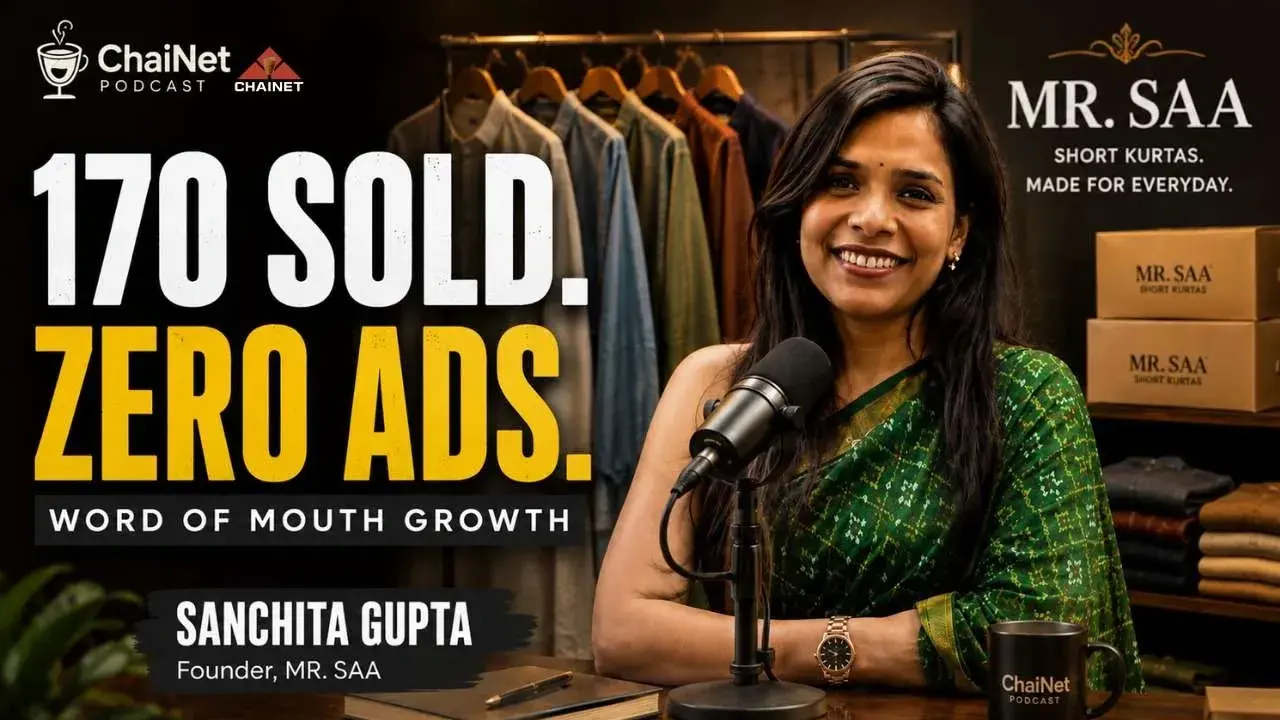
She Quit Meesho Right Before Its IPO to Sell Short Kurtas. Here's Why
Sanchita Gupta left a corporate career that took her from HackerEarth to Exotel to Meesho's CTO office to build Mr. Saa, a menswear brand betting that short kurtas can become daily wear, not just festive wear. She talks about the leap, the 75-day content grind, and why marketing a habit is harder than making a good product.
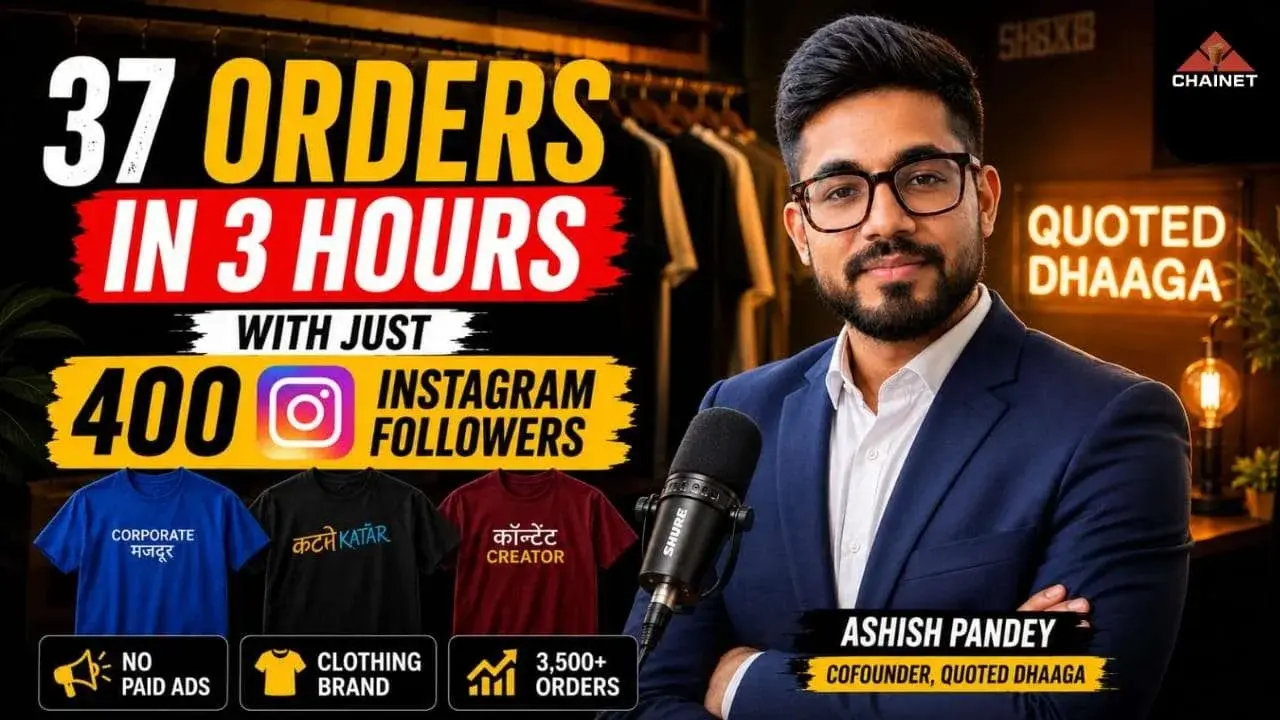
How Two Childhood Friends Built Quoted Dhaaga Into a Bootstrapped Clothing Brand Without Spending a Rupee on Ads
Ashish Pandey, co-founder of Quoted Dhaaga, opens up about starting a relatable clothing brand with his childhood best friend, selling 4,000 pieces with zero ad spend, and the chaotic Delhi vendor story that almost derailed launch day.