on this page
- Introduction
- Key Takeaways: Adapting SEO for an AI-Driven Search Landscape
Q&A (6 questions)
- Is traditional SEO dead, or is this a slow transition?
- You ran a demo tracking visibility of a client’s HVAC brand across AI platforms and they weren’t appearing—why?
- What SEO tactics are still worth investing in?
- What is entity SEO, and how does a startup founder apply it?
- How is keyword research changing?
- Should agencies and professionals abandon SEO?
- Final Thoughts: The Future of SEO
Introduction
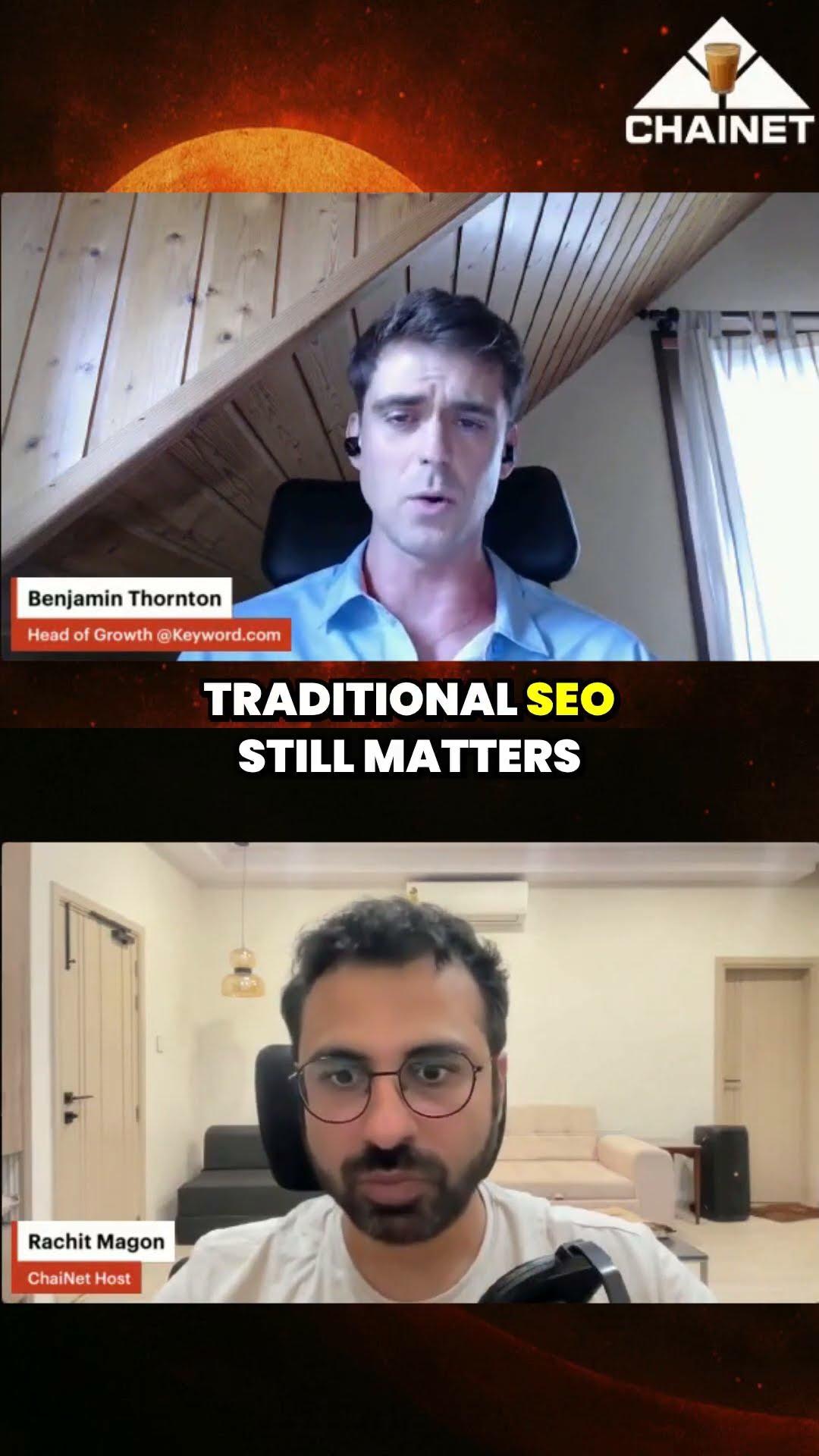
Meet Benjamin Thornton, head of growth at keyword.com. At just six years into his career, Benjamin is at the forefront of tracking search visibility across major AI platforms like ChatGPT, Claude, Perplexity, and more. He’s not theorizing about SEO’s future—he’s using data to show which tactics actually survive the AI revolution.
Key Takeaways: Adapting SEO for an AI-Driven Search Landscape
The Changing Nature of SEO
- Traditional SEO focused on Google rankings and website clicks is evolving
- AI search reduces the importance of rankings but raises the relevance of brand and context
- SEO now prioritizes visibility across multiple AI platforms, not just search engines
Tactics That Still Matter
- Schema markup remains relevant for AI engines to understand content context
- Brand building through earned media, case studies, and social engagement increases AI trust
- Entity SEO focuses on associating companies with relevant industry concepts and influencers
Keyword Research and AI
- Keyword research as known traditionally is losing data sources with AI indexing
- Agencies face pressure as AI tools automate many SEO tasks traditionally done manually
- Websites remain necessary for product info and discovery, but new AI interfaces could disrupt this
q01Is traditional SEO dead, or is this a slow transition?
Benjamin: We're all terrified by what's going on. If we're just focused on Google rankings and clicks to websites like before, then it's pretty bad. AI search is redefining what it means to be online. Clicks and rankings still matter but are becoming secondary.
LLMs crawl the web differently from Google. They rely heavily on context and co-occurrence, pulling info from many sources to answer very specific queries. Traditional SEO still matters a lot but the approach is evolving towards improving brand visibility across AI engines, not just rankings.
q02You ran a demo tracking visibility of a client’s HVAC brand across AI platforms and they weren’t appearing—why?
Benjamin: That client was ranking well traditionally but wasn’t cited in sources frequently used by a specific LLM, like Yelp for ChatGPT. Being missing from a frequently cited source means the brand visibility on that platform suffers.
It shows how SEO tactics like backlinking become less effective alone since LLMs choose info based on citation frequency and trust. Visibility requires presence in diverse, authoritative sources that AI uses.
q03What SEO tactics are still worth investing in?
Benjamin: Schema markup is still super important for helping AI understand your content type—FAQ, product pages, how-tos—and targeting rich results.
Context-building content like comparison articles, case studies, and listicles gives AI a fuller picture of your brand, helping it trust and mention you more often.
Brand building is becoming critical: earned media coverage, high-quality backlinks, social engagement, and fresh content increase AI citations.
q04What is entity SEO, and how does a startup founder apply it?
Benjamin: Entity SEO focuses on building a digital identity connected to key topics, influential figures, and associated organizations.
For example, an email marketing software company might create content on email automation, customer segmentation, featuring quotes from authorities like Neil Patel, and referencing other related companies.
Creating focused content tailored to these interconnected entities boosts your relevance and trust in AI search.
q05How is keyword research changing?
Benjamin: With LLMs not providing traditional keyword data, traditional research is harder. Many SEO agencies face pressure as AI automates repetitive SEO tasks, impacting their business.
However, websites still matter for product information, pricing pages, and discovery. Users often visit sites even after AI helps them find products.
q06Should agencies and professionals abandon SEO?
Benjamin: No, but they must adapt. Skills like schema markup, brand building, and entity SEO are increasingly valuable. Understanding user context and optimizing for AI visibility is the new frontier.
Create content that AI trusts to cite and that users find valuable.
Final Thoughts: The Future of SEO
Benjamin Thornton is guiding us through the seismic shifts that AI search is bringing to SEO. The rules are changing, but the game isn’t over—just evolved.
For startups and businesses, investing in brand strength, delivering contextual content, and embracing new AI-driven visibility metrics are crucial. The goal is not just to rank but to be recognized and trusted by AI engines fueling search today and tomorrow.
Related Shorts
Explore short-form videos that expand on the ideas covered in this blog.