Search Episodes
Search for podcast episodes by title, guest, or topic.
From Being a Showrunner to Pitching to Sharks - Jigar Mehta, HoneyTwigs
Jigar Mehta spent 3 years running 250 performances at Kingdom of Dreams, quit to start a honey brand, and got all five Shark Tank India sharks to make offers. He talks about cold calling Vistara, perfecting machinery from scratch, plastic neutrality, and why single-serve honey is just getting started.
Most D2C food brands start with Instagram ads, influencer deals, and a Shopify store. Jigar Mehta started by cold calling Cafe Coffee Day and pitching honey sachets to airlines.
Before HoneyTwigs even existed as a consumer brand, Jigar had already landed Starbucks, Vistara, and SpiceJet. And before any of that, he was running 250 live performances at Kingdom of Dreams as the showrunner for Zangura - India's premier live entertainment destination. He went to London for his masters in marketing, flew back for the job, and spent almost three years controlling every second of massive live shows.
Then he quit. He had this university dissertation on honey that his professor told him not to let go to waste. His father dealt in cosmetic raw material - beeswax specifically - and honey was the byproduct. Jigar grew up filtering raw honey at the kitchen table with his parents. So when he finally decided to start something of his own, honey felt like the obvious answer. The not-so-obvious part? Their first machine was so bad they sold it for scrap.
A few years later, Jigar stood on the Shark Tank India set, all five sharks made offers, and HoneyTwigs received 3,800 orders before the episode even finished airing. This conversation covers how that journey actually happened - the machinery failures, the cold calls, the B2B strategy nobody expected, and why he thinks competition is actually a good thing.
Key Takeaways: From Live Shows to Squeezable Honey
The B2B-First Playbook:
- HoneyTwigs started as a D2C idea but pivoted to B2B when Cafe Coffee Day walked up to their stall at a trade show
- Aviation was cracked by researching why honey sachets beat glass bottles on planes - weight savings, easy stocking, no breakage
- Cold calling and persistence worked - some clients took two years of follow-up to close
Product Innovation Over Marketing:
- The honey market had zero innovation - the most anyone had done was move from glass to squeezable bottles
- Single-serve 8g sachets solved three problems: messy, not portable, and hard to trust
- Every batch comes with a certificate of analysis - consumers can send any batch number and get the lab report
Sustainability as a Habit:
- HoneyTwigs is plastic neutral - they fund the removal of as much plastic as they produce annually
- They work with Recircle in Mumbai to sort, recycle, and ethically dispose of plastic waste
- They cleared a four-year backlog in one go and now do it every year - "some habits are good when you start inculcating them when you're small"
Q: You were the showrunner at Kingdom of Dreams, running Zangura and massive live events. What was that like, and what made you walk away?
Jigar Mehta: My background before that was primarily a lot in theater and live events. I had 10 years of experience in theater backstage, live events, and I worked as production crew on two or three films. Then I went to London to do my masters in marketing and communications. When I came back, Kingdom of Dreams had just opened and they were looking for a showrunner. I interviewed while still in London, got selected, and they said you'll have to come back to India ASAP. Thankfully my masters had finished, so I just made the move.
After almost two and a half years, I did some great events - I was the showrunner for EFA Rocks in Toronto in 2011, the FIA awards during the F1 racing in India, and a lot of town halls for big companies like MakeMyTrip, Vodafone, NDTV. Then there comes a point where you're looking for something to grow into and you just ask yourself, "now what?" I didn't get an answer at KOD. So I think I got my answer in the form of, it's time for me to leave.
🔥 ChaiNet's Hot Take: "Now what?" is the most dangerous question a high performer can ask. If the company can't answer it, the founder inside you will.
Q: Your dissertation in London was about honey. But you didn't start right after college. Why did you wait?
Jigar Mehta: I quit Kingdom of Dreams in December 2012 and I was not from that space. I had to learn a lot of things myself - perfecting the machine, understanding the processes. I would say I was lucky enough to be taken for a ride by a lot of vendors because that taught me what the correct things were. Our first machine was so bad that we actually sold it for scrap. It used to give us leaks, the product was not perfect.
Honey is a tricky product. You can't overheat it because it goes bad. Every point has to be like a thermostat control. You can't heat honey directly - it has to be in a water bath. Then we realized it's not just the machine but the ancillary that goes with the entire setup - the compressor wasn't correct, things like that. I think to perfect everything, till 2016 we were still struggling. In 2014 I started alone, and in 2015 my partner Paris joined me. We were classmates during our masters.
🔥 ChaiNet's Hot Take: Selling your first machine for scrap isn't failure. It's tuition. The vendors who took Jigar for a ride accidentally gave him a PhD in manufacturing.
Q: For listeners who are in college right now, would you start earlier if you could go back?
Jigar Mehta: If I didn't know anything about that subject, it is better to put in that research to know what you are building firsthand. Because when you build and then you start learning, I think that's a reverse curve - you don't know how to resolve issues. As we were going, we were also learning. I had instances where I put my finger where I was not supposed to and it almost got crushed. Being taken for a ride with the wrong machinery - these are things that teach you. These are lessons when you grow and learn. I don't think I'd change anything.
But for others - find correct people who can help you build what you're trying to build. Me and Paris both were not from the industry. So we were learning as we went along.
🔥 ChaiNet's Hot Take: If you're not from the industry, your research phase isn't procrastination - it's survival. Build first, learn later only works when you already speak the language.
Q: Honey has three problems - it's messy, not portable, and hard to trust. How does HoneyTwigs solve for trust?
Jigar Mehta: Whatever honey comes into our facility comes with a certificate of analysis from a lab. We have a single point vendor who has an in-house lab and gives us a test report. Plus as a precautionary measure, we pick up a random batch every six months and send it for testing on various parameters as laid down by FSSAI.
When we launched, a lot of consumers asked us, "Is your honey pure? Are you mixing it with something?" When we said no, they'd take it on face value because we weren't a legacy brand already present in the market. So all these test reports would help us. We always tell our consumers - if you ever have a doubt, there's a batch number written behind the product, just send us the batch number and we'll send you the certificate of analysis of that particular batch. You know what you're consuming.
🔥 ChaiNet's Hot Take: Transparency doesn't cost extra, but it compounds like interest. Every batch number is a trust receipt.
Q: Most D2C brands chase Instagram virality. You guys had Starbucks, Vistara, and SpiceJet before becoming a consumer brand. How did that happen?
Jigar Mehta: When we started, we thought we're going to be a D2C brand, place our products in the market and it's going to sell - the whole thinking. But then we attended a trade show in Bombay and a gentleman walks up to our stall and says, "Do you supply these to cafes?" We were like, "We've never thought about it."
He said he was from Cafe Coffee Day, which was back then the biggest chain in India. They had a problem of pilferage - these little packs were addressing that problem. So we started going to hotels, more restaurants, smaller QSRs. Then one day it just struck me - why not aviation? We did our research and approached Vistara. Back then they were using bottles of honey. Glass adds weight, and the biggest problem in aviation is weight that consumes more fuel. Stocking was easy, clearance was easy, opening was easy. We were in like instantly.
🔥 ChaiNet's Hot Take: The best market entry isn't always the one you planned. Sometimes your customer finds you at a trade show and redirects your entire business model.
Q: Was it all cold calling? How did you actually get these B2B clients?
Jigar Mehta: Cold call, cold email - it was all of that. I've had clients which I've cracked over a period of two years of just persistently being after them. In that period, you're having a conversation with a certain person, he leaves, another one comes and you have to start from ground zero. Then he leaves and again you start from ground zero.
I still do cold calling. If we feel that's a client we can approach and add value to, that message only I can bring to them. Otherwise I keep waiting for them to discover me. To expedite that process, it's better I just go and approach them.
🔥 ChaiNet's Hot Take: Two years of follow-up to close one client sounds insane until you realize that's exactly the deal that opens an entire channel.
Q: In a commodity like honey, what mattered more initially - product quality, distribution, or storytelling?
Jigar Mehta: What we introduced was a single serve which did not exist in the market. So it was the product itself, and the quality. I would say they both combined were a sort of a message that we had to communicate to our consumer - why this single serve 8 gram sachet and what is the quality of our product. When they started understanding both together, that's when it started picking up.
When you're coming with a new concept, talking about the concept and making sure your entire vision is communicated to the end consumer is very important. And of course stick to your quality. Quality of work always counts.
🔥 ChaiNet's Hot Take: In a commodity market, the product IS the story. A new format plus trusted quality gave HoneyTwigs a narrative that marketing alone couldn't create.
Q: You use plastic sachets but claim to be plastic neutral. What does that actually mean?
Jigar Mehta: Plastic is the most versatile material available. For a product like ours, I could not have opted for any other material - glass or paper wouldn't hold the product. Plastic has a barrier property where oxygen can't interact with your food material, keeping it fresher for longer. And during transport, glass has a lot of breakage - plus 1 kg of glass versus 1 kg of plastic, the weight difference is tremendous.
So we wanted to understand how we can reduce our impact on the environment. There are certain ethical waste management companies - they have a team of sweepers, rag pickers, collectors. We count the amount of plastic we've used in a financial year - our tapes, shrink wrapping, laminates, lids, bottles, anything plastic. Last year we used approximately 12.8 tons of plastic in our production cycle. We fund the removal of that much amount of plastic. We work with a company called Recircle from Mumbai. They sort the plastic and send it to ethical disposal, repurposing, or recycling.
When we did our first neutrality thing, we had a backlog of four years. We said let's just clean that entire four years in one go and then every year we keep doing it.
🔥 ChaiNet's Hot Take: You can't solve the plastic problem with shame. But you can solve it with math - count what you use, fund what you remove, and start before the backlog gets too big to clear.
Q: All five sharks made offers on Shark Tank India. What was going through your mind on that set?
Jigar Mehta: Being on that set was a very surreal moment. In Hindi we say "sapna sach ho gaya" - that was that moment for me. When I used to watch Shark Tank, I'd mentally think, what would happen if I ever went on the show? Would I have a product I could pitch and get a deal? I didn't know it would happen for real.
What you see on Shark Tank is an edited version. We were actually inside for almost one and a half hours to one hour 45 minutes. There were moments where I had cold sweat. It's all live - no cuts, no retakes. One flow. Everyone thinks there might be edits, but it's straight question-answer bombardments. Your numbers have to be by heart.
A couple of sharks had spotted us before - Anupam said he'd seen us at Starbucks. Everyone appreciated the variants and liked the packaging. It was good that we went in with the mindset of, "doesn't matter if we get a deal or not, just going into Shark Tank, let's go with that mindset." If we get a deal, that's cherry on top.
🔥 ChaiNet's Hot Take: Going in expecting nothing and leaving with five offers. That's what happens when your product already has proof points the sharks can't ignore.
Q: What happened after the Shark Tank episode aired?
Jigar Mehta: That was actually our turning point. Even one hour before our episode was over, we had already received almost 3,800 orders on our website. While our pitch was going on, it was not even done. By morning 5 AM, all our Amazon fulfillment centers where we had put our stock were sold out.
We had prepared our factory workers - told them there's going to be a crazy next one month, no holidays in the week and we might be going into overtime every single day. We watched the episode in our factory with our workers.
Except for Lakshadweep, we sold in every other Indian state. Even Andaman and Nicobar - there were eight orders from Andaman and Nicobar. We got queries from almost 18 to 19 countries internationally. Our particular segment on YouTube got over a million views. We opened up two or three countries for export after that. It's a great boost and visibility that you get out of that show.
🔥 ChaiNet's Hot Take: 3,800 orders before the episode finished airing. Every Indian state minus one. That's not a Shark Tank bump - that's a nationwide product-market fit reveal.
Q: For D2C founders who want to get on Shark Tank, any playbook?
Jigar Mehta: You need to be very clear of the market you're operating in. Be very clear with numbers of your cohorts, who your competitions are, your losses, profits over a period of time. Numbers have to be correct. And your story has to be correct as to what you're trying to sell. Don't oversell, don't undersell. Maintain that balance and you'll nail it.
For applications - they open in May or June on their website for the next season. There were four steps when we went. Initial form was basic knowledge about the business. Next was more detailed. Then a video pitch about the product and who you are. Then they call you for an in-person. At every stage people get selected or dropped. It's not a paid activity - a lot of people think you have to pay to get into Shark Tank. No, it's purely on your business merit. And it's not scripted. Everything is unscripted and real.
🔥 ChaiNet's Hot Take: Know your numbers cold and tell your story straight. Shark Tank isn't about performing - it's about proving.
Q: Now there are a lot of companies doing single-serve honey. How do you handle the competition?
Jigar Mehta: I look at it in a positive manner. When we started, the single-serve honey market space didn't exist. With these new players coming in, they're expanding our market space. So it's a good thing for us. It's validation that what we are doing is not wrong. Of course we will be the pioneers of the single serve category.
We keep innovating - we launched a very different flavor called makhana infused honey in the same single serve format. Initially I thought it won't do well but it's picking up now. Most competitors are doing one particular product that's flooded the market and every brand is doing the same thing. We are not following that bandwagon.
Bigger brands came to us saying white label for us, but we made a conscious decision and said no. We were building our own brand. I am not an OEM. I'm not a white label manufacturer.
🔥 ChaiNet's Hot Take: When copycats enter your market, they're not stealing your share. They're proving your thesis. Be the brand people name when they think of the category.
Q: You're now exporting to nine countries. Should small indie D2C brands think about export early?
Jigar Mehta: I don't think it's a thing only for bigger players. You should look at expanding your market to other countries, but be very cognizant of your production capacities. EU has the most stringent norms in terms of food, cosmetics or anything. Never export an under-quality product because once you get crossed, it's very difficult to revive that market again.
Sometimes our product is ahead of time for a particular space but it's already evolved in some other country. When we entered, the stick format of honey was very young for India but it had evolved in the US. Amazon's global selling team took us to Amazon US and said this is a more evolved market for you. We also opened the Amazon UK market. There are now platforms helping Indian brands become global brands.
🔥 ChaiNet's Hot Take: If your product is "too early" for India, it might be right on time somewhere else. Don't wait for your home market to catch up when the world is already buying.
Q: Has AI changed how HoneyTwigs operates?
Jigar Mehta: In production we don't use AI that much. But in terms of managerial work, yes. We've introduced an AI-based platform for attendance where they scan your face - auto calculation of overtime hours, what time they came, what time they left. Even small processes like these save a lot of effort and time.
In social media, post creation uses a lot of AI now. Earlier we had to invest a lot in photo shoots but there are apps now where you just upload the picture of your product and it creates a picture for you to use. And now it's getting difficult to recognize if it's AI or real. We've reached that point.
The one thing I wish AI could do? Reaching out to customers and getting your payments out. I wish the day AI could just pick up the phone and call the person and say your payment's due.
🔥 ChaiNet's Hot Take: AI replaced the photographer before the accountant. In B2B, the last mile isn't logistics - it's getting people to pay on time.
Q: Quick commerce has changed everything. How do you see it affecting retail?
Jigar Mehta: Quick commerce did not exist five years ago. I think it's a COVID baby, a COVID gift to humanity. Today quick commerce has taken the front - every big company's entering. In tier one cities, physical sale is getting hit, but in tier two and three it's still prevalent. But Blinkit has reached 200 cities in India now, and others will follow.
It's also affected unexpected things. Before UPI came in, there was a story about how the toffee business just disappeared because of UPI - that spare change didn't happen. Earlier you'd get a one rupee candy for spare change. Since UPI came, that has disappeared. It affected the confectionery market so hard that their sales just vanished.
🔥 ChaiNet's Hot Take: Quick commerce and UPI didn't just change how we buy - they killed entire product categories that existed only because of friction. Your business model better not depend on inconvenience.
Final Thoughts: When the Pioneer Becomes the Category
Jigar's first-mover philosophy: "Maybe in the future people always say Honey Twigs for single serve. That is the connection of the first mover advantage - introducing something in that category very early."
The bottom line: Jigar Mehta's story is a study in patience. He spent years perfecting machinery he didn't understand, cold calling clients who kept changing their point of contact, and building a B2B business when the D2C playbook said otherwise. The result is a brand that was already in Starbucks and Vistara before it ever needed Instagram virality.
What stands out is the counterintuitive B2B-first strategy. While most food brands burn cash trying to go viral, HoneyTwigs let institutional clients validate the product. When Cafe Coffee Day's pilferage problem became HoneyTwigs' distribution channel, that wasn't luck - that was showing up at the right trade show with the right product. And then doing it again with Vistara by researching exactly why honey sachets beat glass bottles in aviation.
For founders watching, the lesson is clear: you don't always need to build the audience first. Sometimes the audience is already there, buying something worse. Your job is to figure out why your product is better for them specifically, and then cold call until they listen.
Q: How can people connect with you and learn more about HoneyTwigs?
Jigar Mehta: You can find HoneyTwigs on our website and across all major platforms - Amazon, quick commerce, you name it. We're in Starbucks and we export to nine countries now. Follow us on Instagram - there are videos of me visiting our plastic neutrality partner Recircle's facility and a lot of behind-the-scenes content. Our Shark Tank episode on YouTube has over a million views if you want to see the full pitch.
Final words: Jigar Mehta went from controlling every second of 250 live performances at Kingdom of Dreams to selling honey in 8-gram sachets. That might sound like a downgrade until you realize those sachets are now in Starbucks, on Vistara flights, and sold in every Indian state except Lakshadweep. He got taken for a ride by vendors, sold his first machine for scrap, and spent years perfecting a product in an industry he had zero engineering background in. And when all five sharks made offers, it wasn't because of a flashy pitch - it was because the business was already proven. If you're sitting on an idea from a college project that your professor told you not to waste, maybe it's time to take that seriously. The best businesses don't always start with a grand vision. Sometimes they start with a dissertation and a kitchen table full of raw honey.
Related Shorts
Explore short-form videos that expand on the ideas covered in this blog.
Similar Episodes
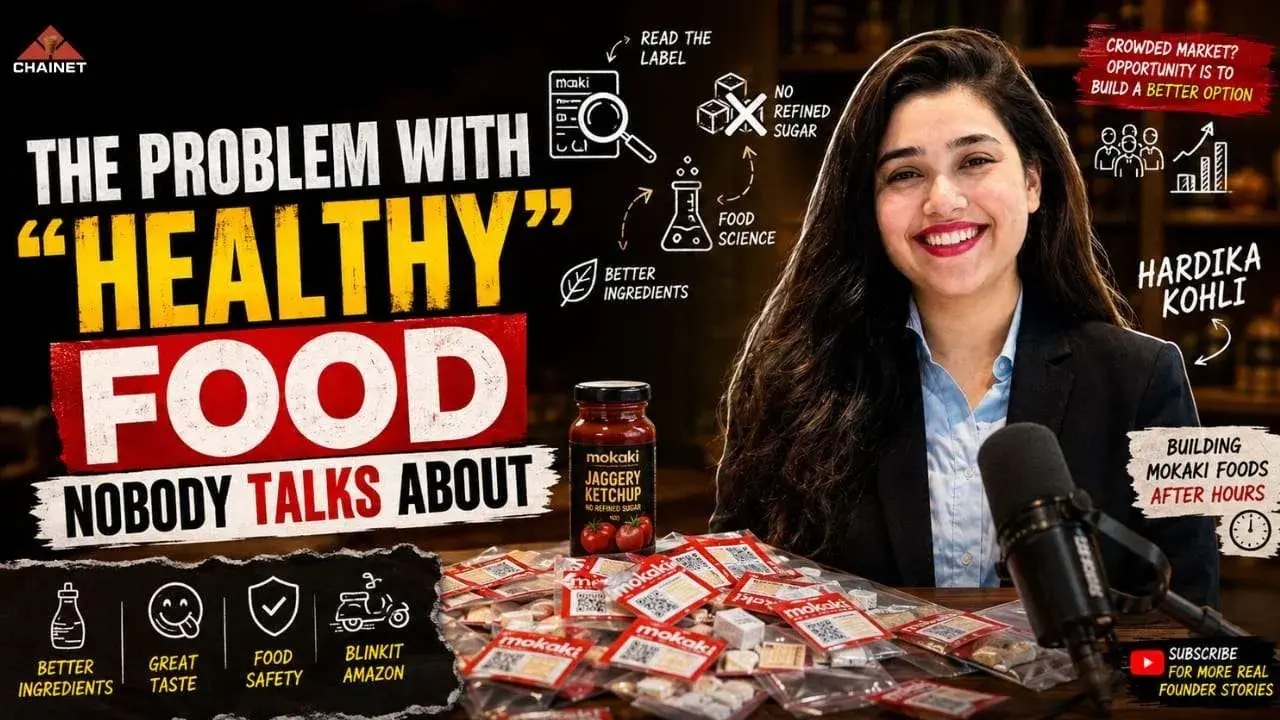
Why Mokaki Foods' Founder Thinks 'Clean Label' Is a Myth
Hardika Kohli, Founder of Mokaki Foods, breaks down why 'clean label' has no legal meaning in India, why a saturated sauce market is actually an opportunity, and what it really takes to get a new D2C food brand onto Blinkit and Amazon.
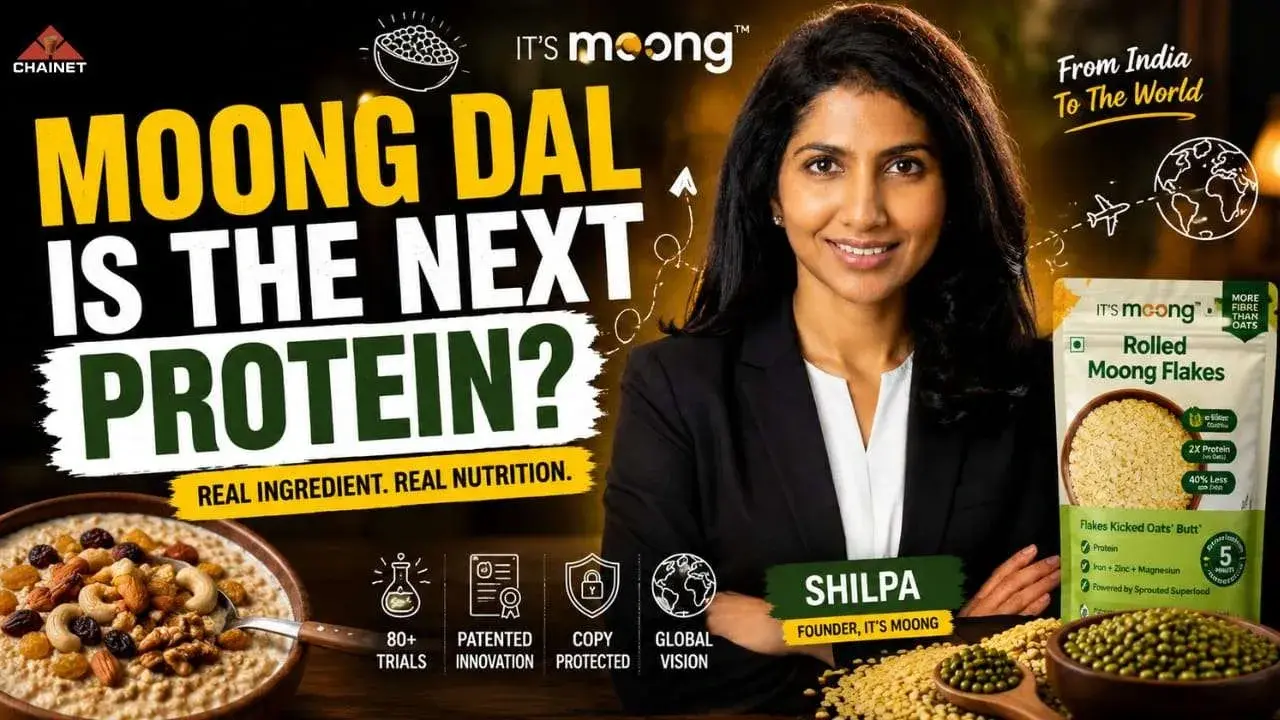
From Jewelry to Moong Protein: How Shilpa Rathi Is Turning India's Humble Dal Into a Patent-Pending Global Brand
Shilpa Rathi, founder of Its Moong, talks about ditching the crowded protein powder race, patenting a moong-based innovation after 70-80 failed trials, and why the West is finally waking up to mung bean protein.
He's Built a ₹3,000 Device That Does What a ₹70,000 One Does - Hunny Bhagchandani, Torchit
Hunny Bhagchandani built Saarthi, an assistive device for the visually impaired, after watching his blind mentor get seven stitches from an accident on the street. Today Torchit has impacted 1.5 million lives, holds a national award from the President of India, runs at 25 crore revenue and is on track for 50 crore. He talks about pricing at 1/20th of the imported devices, walking off Shark Tank Season 1 without a deal, training blind users as micro-entrepreneurs, and the 2 percent weekly growth philosophy that compounded into market leadership.
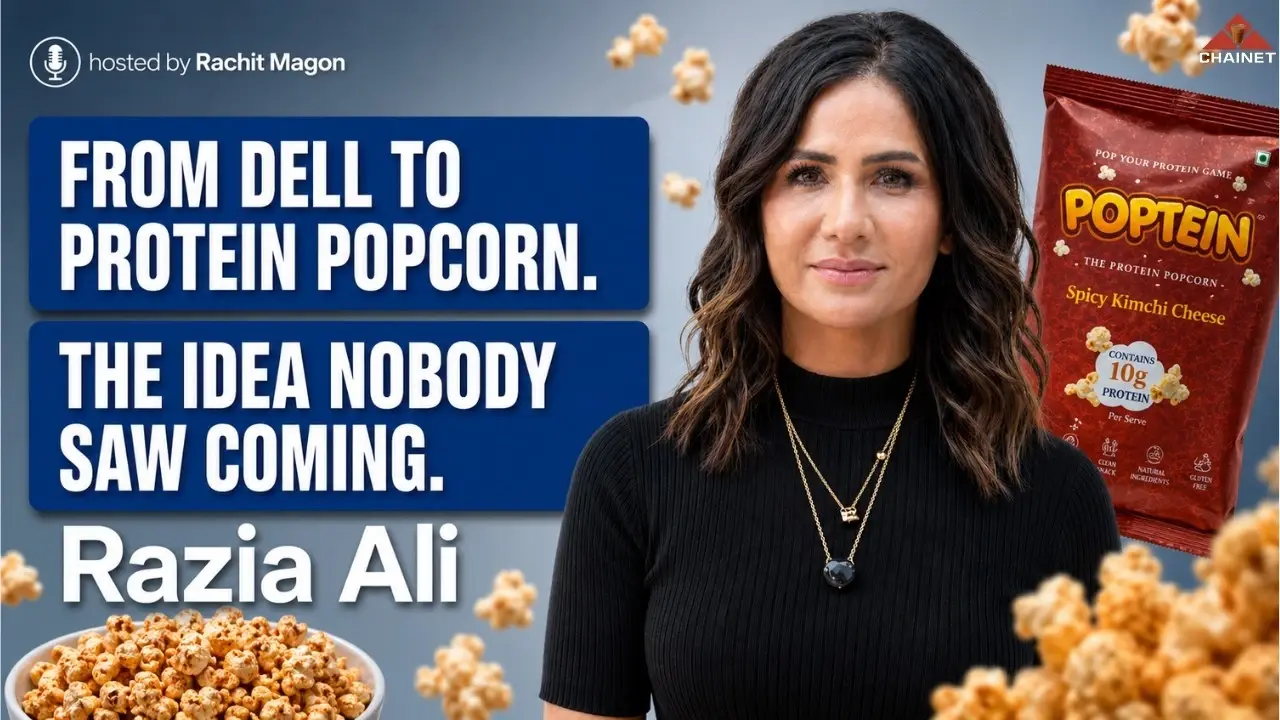
How This Founder Is Bootstrapping a Protein Popcorn Brand in India - Razia Ali, Poptien
Razia Ali spent 19 years building marketing for Dell, AMD, HP and Yahoo. Then she walked away to bootstrap Poptien, India's first whey-free protein popcorn. She talks about why she rejected protein bars, how she set up her own manufacturing line, the reality of getting onto Blinkit and Instamart, and what 90 days of pop-up product testing actually looks like.