Search Episodes
Search for podcast episodes by title, guest, or topic.
From Therapy Room to Startup: How Dr. Kanan Doshi Is Rebuilding Independence, One Hand at a Time
Dr. Kanan Doshi spent 32 years as a pediatric occupational therapist before co-founding The Able Company. She talks about building Hands-On, a patented battery-free adaptive hand device incubated by IIT Madras, and why awareness, not tech, is the real hurdle in India's disability sector.
Most founders we've had on ChaiNet come from business or tech. They pitch decks, they talk TAM and CAC, they've raised rounds. Dr. Kanan Doshi came from somewhere else entirely. She came from a therapy room, where for 32 years she sat across from children who couldn't do the things every other kid and every other parent took for granted. Eating. Combing their hair. Brushing their teeth.
At some point, she stopped recommending solutions that didn't exist and started building one.
Dr. Kanan is the co-founder of The Able Company, an IIT Madras incubated startup that makes Hands-On, a patented adaptive hand device for people with physical limitations. No battery. No app. No training curve. Just a simple handle with seven attachments that let someone feed themselves, write, comb their hair, and brush their teeth on their own.
This was our 73rd episode, and honestly, it was one of the most emotional conversations I've had. Because this isn't a story about disrupting a market. It's about a therapist who spent three decades wishing a device existed, and then, in her fifties, decided to just make it herself.
Key Takeaways: When a Clinician Becomes a Builder
The Origin Story:
- Dr. Kanan spent 32 years as a pediatric occupational therapist before ever thinking about a product.
- The Able Company is just about one and a half years old, but the journey started 10 years ago with her co-founder Mira's daughter, born with a rare congenital disorder.
- The first prototype landed in their hands in May 2021. The final product took roughly 4 years and around 20 prototypes to get right.
The Product Philosophy:
- Hands-On is deliberately fully mechanical - no battery, no app - so it can reach rural and grassroots India where tech-dependent devices simply can't go.
- One handle, many magnetic attachments. Instead of buying 10 separate tools for 10 activities, you buy one system.
- It doubles as a home rehab tool. Even 15 minutes a day of using your hand for one activity keeps it from going unused.
The Real Bottleneck:
- The hardest part isn't manufacturing or design. It's awareness and acceptance.
- Working through NGOs, foundations, and clinicians beats going direct-to-consumer, because faith transfers better through a trusted doctor or therapist.
- The big vision: make Hands-On the reflex answer for hand disability, the way "wheelchair" is the reflex answer for someone who can't walk.
Q: Let's start with your background. Who are you before you're a founder?
Dr. Kanan Doshi: So I am an occupational therapist. I've been practicing with kids for the last 32 years. It's an amazing journey. The day I started working with kids, when I passed out and was looking for a job, I got a job in a children's hospital, and once I started working there, I decided I'm going to work with only kids. And then about 10 years back, Mira, my co-founder, came into my life because of her daughter. And it is her daughter that made us enter into this zone of assistive technology.
🔥 ChaiNet's Hot Take: Thirty-two years of expertise didn't come from a business plan. It came from one child who needed something that didn't exist. The best products aren't imagined, they're witnessed.
Q: What exactly does a pediatric occupational therapist do?
Dr. Kanan Doshi: The main job of an occupational therapist is to make a person independent despite their disability. So even with your disability, how can you be independent in your daily living activities? With adults we call it rehabilitation, but when we work with children it's more of a habilitation. We teach them to be independent. That's the main job.
🔥 ChaiNet's Hot Take: Rehabilitation rebuilds what was lost. Habilitation builds what was never there. Kanan spent three decades in the harder of the two.
Q: When a parent first comes to you, what do they usually get wrong?
Dr. Kanan Doshi: As soon as you come to know your child has a problem that's going to be part of his life, the first thing a parent goes into is shock. How can my child have this problem? Then negativity, then depression. The phase of acceptance is the most important thing, and it has still not come. That's where we enter. We help them see positivity in whatever they're having in their child. Once the acceptance comes, life becomes easy for both of them, the parent and the child. So as a therapist, we don't only work with children, we also work with parents. The parents have to be strong.
🔥 ChaiNet's Hot Take: You can't rehabilitate a child through a parent stuck in grief. Acceptance isn't a soft skill here, it's the actual first treatment.
Q: In 30 years, was there a time you couldn't help a child because the device just didn't exist?
Dr. Kanan Doshi: Yes, a lot of times. Fifteen years back, not much was available in India. Whatever was made was more like a DIY thing, you'd adapt a spoon or adapt some buttons, but nothing extensive. Most of the time the child was completely dependent on a parent or caregiver for day-to-day work like eating or combing hair. So there was nothing available then. Now when I see some of the products, I feel, I wish it would have been there for that particular child. That child could have done so much better.
🔥 ChaiNet's Hot Take: Every "I wish this existed" from an expert is a product waiting to be built. Most people sigh and move on. Kanan kept the receipts for 30 years.
Q: So walk me through Hands-On. What is it and how does it work?
Dr. Kanan Doshi: It's a multitasking hand adaptive device. Mira's daughter has a rare congenital disorder called arthrogryposis, where your joints get affected and can't move beyond certain degrees. I've been seeing her from the time she was 19 days old. As she grew up, she was dependent on her mom for eating and dressing. Now for a girl not to be able to comb her own hair even at 5 years old, she's a girl. So it's a simple handle. You wear it in your hand, and then you attach one attachment, remove it, attach another. To this handle I can attach as many attachments as possible. There's also an extension, so if your hand isn't bending enough, you can still use it.
🔥 ChaiNet's Hot Take: The market sold ten tools for ten problems. Kanan and Mira sold one handle and made the problems interchangeable. That's not a product, that's a platform.
Q: What did it take to go from your co-founder's sketches to an actual manufactured product?
Dr. Kanan Doshi: For me it was a first experience, I had no idea about these things, but Mira is into architecture, so she has the experience of getting things from sketches into 3D. In May 2021 we got our first prototype in our hand, and that was amazing. We tried it on some of the patients, and when we saw it working, that gave us confidence. It wasn't a complete solution, not what we're seeing today, but even then it made a difference in Mira's daughter's life and some of my patients. That's when we decided, okay, this is what we want.
🔥 ChaiNet's Hot Take: A therapist and an architect. No coders, no MBA, no accelerator. Turns out the right two people staring at the right problem beats the right resume every time.
Q: What did that first version look like versus what you have now?
Dr. Kanan Doshi: The handle was similar, but a lot was different. It didn't have these magnetic attachments, it was a screw-in sort of thing. But as we used it on patients, we realized, even if I wear it and I'm independent, if somebody has to join it for me, I'm still dependent. That's where we started changing our designs. We changed the strap, we changed the loops, so even with a mild grip you can wear it. Then the flexi extension got added, which took a lot of R&D. It took another two and a half years to get the final thing in our hand.
🔥 ChaiNet's Hot Take: A device that needs someone else to put it on isn't an independence device. Kanan caught the contradiction and redesigned around it. That's the difference between clever and clinical.
Q: So four years, roughly 20 prototypes. In tech people ship in a month. What's that like?
Dr. Kanan Doshi: You can't do that here. It took a total of about 4 years, I think, to get one final product in our hand that we thought was working very well. After that we went into production, making molds and all. Till then it was only prototypes. We made around 20 prototypes or something.
🔥 ChaiNet's Hot Take: Move fast and break things works for apps. It doesn't work when the thing you're building goes on a five-year-old's hand. Some products earn the right to take four years.
Q: How did the IIT Madras incubation happen?
Dr. Kanan Doshi: I'd say sheer luck. We first went to an occupational therapy hand conference where we presented our prototypes, and somebody told us IIT Madras has something called Empower that works only in assistive tech. So we put up our stall there. Dr. Ashok Jhunjhunwala, the head of the research park, passed by our stall. We asked him to have a look, and he said, this is amazing, we'd like to incubate you. That's how we entered IIT Madras. I never imagined I'd ever get to enter IIT.
🔥 ChaiNet's Hot Take: She calls it luck. But luck doesn't build 20 prototypes or set up a stall at a conference. Luck just walks past a booth that was worth stopping at.
Q: The product is great, but reaching people is hard. What's been the toughest part of selling it?
Dr. Kanan Doshi: The hardest thing is still creating awareness that something like this exists. When you have a disability, or a loved one does, over time you become reluctant to accept something new in the market. You've already spent so much on medical treatment and therapy, maybe you have a full-time caregiver. So you're still hesitant about whether it'll help. That's the most important hurdle we're still crossing. But now I can say the path has become a little smoother. We see that faith coming in.
🔥 ChaiNet's Hot Take: The competition isn't another device. It's exhaustion. Families who've already paid for everything are the hardest to sell hope to, and the ones who need it most.
Q: Between D2C, hospitals, NGOs and clinics, which channel actually works best for you?
Dr. Kanan Doshi: Working with NGOs and foundations is easier than going individually. When I go into a foundation and the people there tell a person with disability that this product will help, or a doctor or therapist suggests it, it has better results. That small factor of faith that comes from a clinic or NGO pushes them to think, okay, this might help. So that channel works better than going direct to consumer.
🔥 ChaiNet's Hot Take: In a trust-starved category, the sale doesn't close on features. It closes on who's vouching. Borrow a clinician's credibility and the product sells itself.
Q: Does this help beyond kids? Parkinson's patients, for example?
Dr. Kanan Doshi: It does. For very severe Parkinson's I'd have my own limitations, but for mild to moderate Parkinson's it does help. You need a bit of training for Parkinson's, but it does help.
🔥 ChaiNet's Hot Take: A device built for one child's joints quietly opened a door to an entirely different condition. That's what happens when you solve a problem instead of a demographic.
Q: There's no battery, it's fully mechanical. Was that deliberate?
Dr. Kanan Doshi: Yes, to an extent, because both of us wanted to reach the grassroots level, even rural areas and the interiors of India. If it has a battery or tech in it, it becomes difficult to reach there. Being completely mechanical, anybody can use it and it can go to the grassroots. And it's not just an adaptive device, in rural areas where actual therapy isn't available, it can be used as a home rehab tool. Even 15 minutes a day of one activity, some eating or combing your hair, helps the hand get exercise. If you don't use the hand, the hand becomes useless. That's why we kept it very simple and mechanical.
🔥 ChaiNet's Hot Take: Everyone races to add an app. Kanan won by refusing to. In rural India, the killer feature is the one that keeps working when there's no charger in sight.
Q: You've spent decades treating patients, now you're selling to them. How do you switch hats?
Dr. Kanan Doshi: I think I've merged those hats. As a therapist, I just love my work, it's been part of my life. But as a founder, when I get out of the four walls of my clinic and see people around, I feel we're making a little bit of difference in so many lives. My role as a therapist is no longer confined to my clinic, it's grown wider. So I've probably merged both the hats.
🔥 ChaiNet's Hot Take: She didn't leave the clinic to become a founder. She founded a company to make the clinic bigger. Same mission, no walls.
Q: What's the biggest risk to a company like yours in the next few years?
Dr. Kanan Doshi: The risk is awareness. We want to reach a level where, if somebody meets with an accident and knows they can't walk, they immediately think wheelchair. We want that same reflex, so someone whose hands aren't working immediately thinks of Hands-On. We're still at the first step of creating awareness in that field.
🔥 ChaiNet's Hot Take: The goal isn't a sale, it's a reflex. When your product becomes the automatic word people reach for, you've stopped marketing and started owning a category.
Rapid Fire Round
Therapist or founder? A therapist who's a founder.
Would you change the word "disability"? No, I wouldn't. It's okay to be disabled. My personal opinion is all of us have some kind of disability, some visible, some not.
One thing every parent of a child with a disability needs to hear? It's possible.
If you built this 20 years back, what would be different? Probably my vision. I'm more mature with experience now, and that's why I could create a much better solution.
One sentence you live by? Everything is possible.
🔥 ChaiNet's Hot Take: "A therapist who's a founder" isn't a compromise between two identities. It's the whole thesis in five words.
Final Thoughts: The Device Is Simple. The Vision Isn't.
Dr. Kanan's closing perspective: "Everything is possible."
The bottom line: Hands-On is, on its surface, an almost absurdly simple product. A handle. Some magnetic attachments. No screen, no battery, no software. But the simplicity is the strategy. Every design decision, from the mild-grip loops to the fully mechanical build, traces back to one goal: reach the person who has been written off, wherever they are, whatever they can afford.
What makes this story land isn't the engineering, it's the sequencing. Kanan didn't build a product and go looking for a problem. She spent 32 years inside the problem, watching kids stay dependent because the market only ever offered a spoon here or a comb there. The product is basically three decades of "I wish this existed" finally cashed in.
The honest challenge ahead isn't manufacturing or even funding. It's the slow, human work of building faith in families who are tired, skeptical, and already stretched thin. That's why the NGO and clinician route matters so much, and why "awareness" keeps coming up as the real risk. If The Able Company can make Hands-On the reflex answer for hand disability the way "wheelchair" is for mobility, it won't just be a business win. It'll change what independence looks like for people who were told to stop expecting it.
Q: How can people connect with you and learn more about The Able Company?
Dr. Kanan Doshi: You can find The Able Company and reach out to us there. If you know a child, a parent, or a therapist who could use this, please send them our way. We'd love to help them find their independence.
Final words: A lot of people look at a broken system, notice there's no device for the problem, and just accept that this is how it is. Kanan and Mira looked at the same gap and refused to wait. When a child who grows up using Hands-On finally tells their own story, Kanan wants them to say it wasn't just her, it was that The Able Company gave them the faith to be independent, and the confidence to become who they are. That's the moral here: don't just recommend a solution that doesn't exist. Build it. Everything is possible.
Related Shorts
Explore short-form videos that expand on the ideas covered in this blog.
Similar Episodes
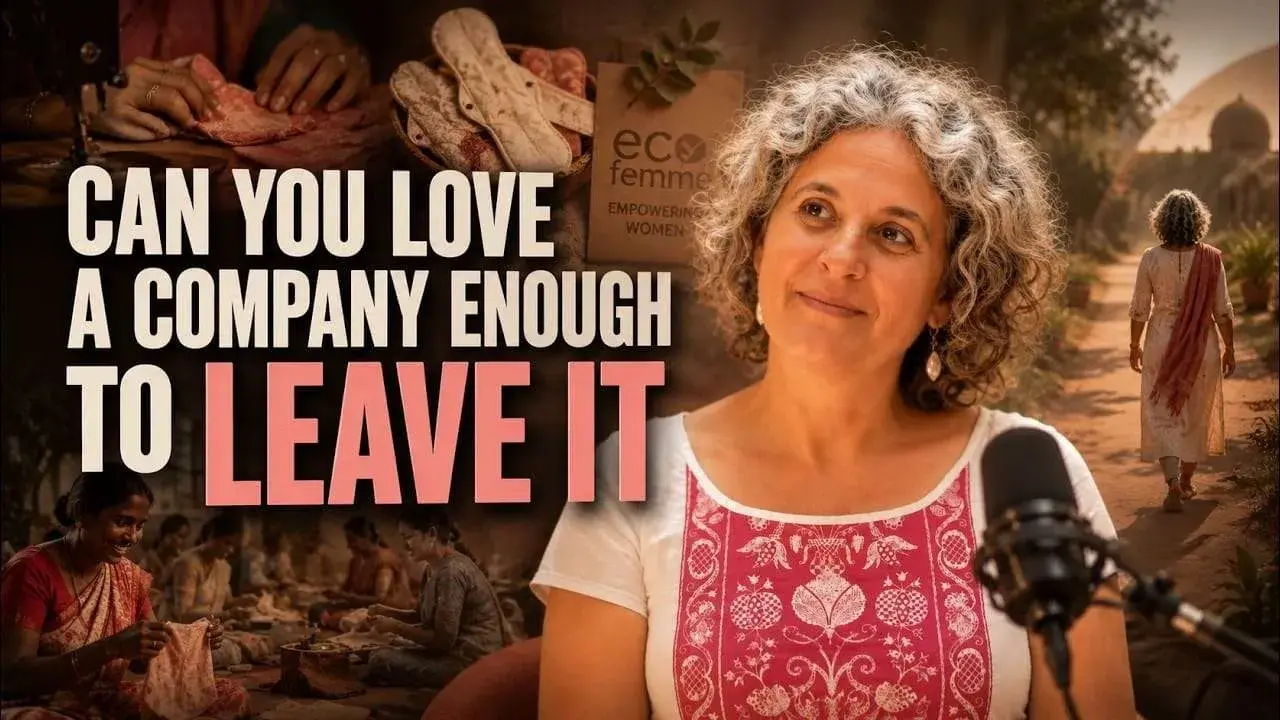
She Built a Movement Around a Taboo, Then Walked Away From It
Kathy Walkling, Co-Founder of Eco Femme, spent 15 years building India's first washable cloth pad brand from a forest in Auroville into a business reaching women in 27 countries. This is the story of that journey, and the harder story of why she chose to hand it over and walk away.
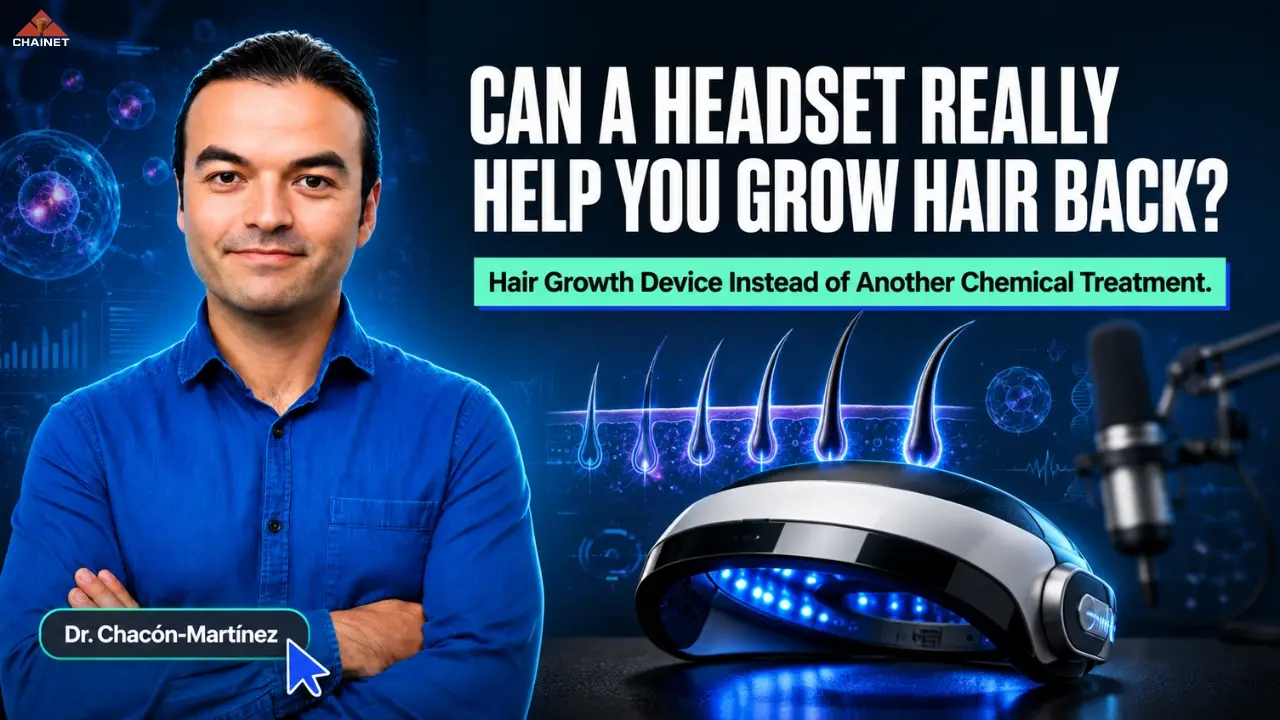
Growing Hair Without Chemicals: How Niostem Turned a Cancer Lab Discovery Into a Wearable
Dr. Chacón-Martínez spent 15 years studying stem cells at the Max Planck Institute before co-founding Niostem, a wearable that uses low-level electrical stimulation to reverse hair loss. In this ChaiNet conversation, he unpacks the science, the founder journey, and why he skipped the billion-euro drug path entirely.
How Brands Should Build a Hiring System with AI
Bella Vasta has spent 20+ years helping service businesses grow. Her latest framework is a 10-step AI hiring system that treats hiring as marketing. She also survived a NICU experience that reshaped how she thinks about business resilience.
Can India's Oldest Medicine Win India's Newest Market? - Sargam Dhawan Bhayana, Planet Herbs
Sargam Dhawan Bhayana studied filmmaking in New York, came back to Dehradun, and joined her grandfather's 20-year-old Ayurvedic manufacturing business. After eight years inside the factory, she's pivoting Planet Herbs from a B2B contract manufacturer to a consumer-facing D2C brand, while also launching The Botanical Theory in skincare. She talks about earning credibility from a 30-year-veteran workforce, why being invisible makes you replaceable, the brutal five-level vetting process to stay listed on quick commerce, and what it takes to optimize for AI discovery in 2026.