Search Episodes
Search for podcast episodes by title, guest, or topic.
Why Most Brands Buy Martech but Never Actually Use It
Burak spent 4.5 years at Insider, Turkey's first software unicorn, watching brands buy marketing tech and never extract value from it. Now he runs Boost Up Solutions, a consultancy that gets brands results 70% faster by working as a team member, not a consultant. He breaks down the gap between buying software and actually using it.
Here's a scenario that plays out in every brand, at least once. They just signed a big marketing tech deal. The deck looked amazing, the demo was flawless. A couple of months later, the platform is live, something is sort of happening, but the team is overwhelmed and nobody is really using it. The ROI that justified the budget? Nowhere close.
Burak Karabulut watched this happen from the inside, hundreds of times. He spent four and a half years as a customer success manager at Insider, which is Turkey's first software unicorn, now a $2 billion martech platform. His job was to make sure brands actually got value out of what they paid for. Not just that the software was installed, but that it was working, driving results, and making someone's numbers go up.
What he learned in that role shaped his worldview about how brands buy, and more importantly, use technology. In January 2024, he co-founded Boost Up Solutions, a boutique consultancy in Istanbul built on a very specific belief: the real work starts after the contract is signed. His clients include some of Turkey's biggest retail and media brands, and his team claims to get brands value 70% faster than their in-house teams.
This conversation is for every brand operator who's ever stared at a marketing platform they're paying for and thought, "Is this actually doing anything?" Because the answer, more often than not, is that the tool isn't the problem. The implementation is.
Key Takeaways: The Gap Between Buying and Using
Why Martech Fails:
- Expectations aren't set right during the sales process - brands expect ROI on day one
- The biggest gap is between IT teams (who implement) and marketing teams (who use it) - they're not talking enough
- Data structure and mapping is where most implementations break before they even start
Creating Value Is Easy but Demands Consistency:
- It's not a one-time setup - you need to change email templates, push notification language, and segments constantly
- If you send the same email every week, people unsubscribe. It's obvious but nobody does it
- The brands that win understand their users differently based on context - same user, different brand, different emotion
The AI Reality Check in Martech:
- Most "AI features" in martech are just machine learning relabeled
- Every year there's a new buzzword - omnichannel, then AI - and CMOs parrot it without understanding
- Nobody has built a truly AI-native martech product yet, but the potential is there for whoever does it first
Q: You spent almost five years at Insider watching brands use martech. What did you see on the inside that brands don't know?
Burak Karabulut: Even if Insider was doing perfect implementation or services, in the backstage, we were doing everything. I wasn't only a customer success manager. I was also a technical consultant, sometimes the sales guy, helping close deals. It was the startup culture. You're working for something you really believe in and you don't realize you're already working 60 or 70 hours a week because you just want to do it. I'd work 15 hours on Wednesday and on Thursday I'm saying, okay, I need to come one hour early so I can do more. You just feel it.
🔥 ChaiNet's Hot Take: 70-hour weeks don't feel like 70 hours when you believe in what you're building. That's not hustle culture. That's alignment.
Q: Was there a moment at Insider that made you realize something is broken in how brands use martech?
Burak Karabulut: I've worked with probably more than 100 clients, every industry. Some of them work with low profit margins, so even when you create value, the numbers aren't huge for them because their profits from those numbers are low. That was the hardest part. But I don't believe that value can't be created. In any sector, any brand, you can create value. If you're not, you need to change your approach. You need to try something very different. Keep trying. Then you can create the value.
🔥 ChaiNet's Hot Take: "Value can always be created" sounds like a motivational poster until you've watched someone prove it across 100 brands in every industry. Then it becomes a fact.
Q: Is creating value from martech actually hard, or do people just miss the obvious?
Burak Karabulut: It's actually easy, but you need to be consistent. It's not like you do one thing and value appears. You need to keep changing the email templates, keep changing the app push language, the wording. You need to change it constantly. Think about yourself as a customer. If a brand sends you the same email every week, you'll unsubscribe. So to sum up, it's easy but you need to do it every time, every day.
🔥 ChaiNet's Hot Take: Martech isn't broken. Consistency is. The tool works fine. The team using it checked out three weeks after launch.
Q: You left a unicorn with a good salary. What made you walk away?
Burak Karabulut: When I was joining Insider, I actually lowered my salary. I just wanted to be part of the story. The unicorn was the goal to achieve, and that's why we were working so hard. Once we got it, we had a huge party, had fun. But after that, I thought, okay, my story has ended here. I was there to be part of the unicorn team. I worked so hard. Now what's the next step? I couldn't find a new motive for my story. So I left.
🔥 ChaiNet's Hot Take: He took a pay cut to join the rocket, then left the moment it landed. Most people stay for the comfort. Burak stayed for the mission. When the mission was done, so was he.
Q: You said the first six months of Boost Up were brutal. How did you survive?
Burak Karabulut: Before we started, we already had contacts with clients because we were the first point of contact at Insider. Once we built Boost Up, I reached out. "I'm here now, I'll be more dedicated." They got excited. But at the end of the first month, there were zero clients. The people who said they'd work with us didn't come through. The first six months were so hard. We talked about it, Alpen and I. Let's complete one year, then we'll make a decision. There was never an option to give up. It was 1 or 0. If you pause, you're done. Some days were just about surviving. Just getting past another month.
🔥 ChaiNet's Hot Take: Everyone promises to work with you when you're starting out. Almost nobody actually does. The first six months of any agency is a gap between warm promises and cold reality.
Q: After the contract is signed, what actually goes wrong? Where do brands fail?
Burak Karabulut: Expectations aren't set right. Brands expect huge ROI on day one or when the integration is complete. When the expectation and realization are very different, they get bored with the tool. They give up. One of the biggest reasons is the data planning. You need to build the data structure like an architect, for your specific needs. Once you set the data mapping right, there's no way you can't benefit from the tool. The biggest problem is that IT teams and marketing teams aren't talking enough. Marketing knows what they want strategically but doesn't know which data to feed. IT knows how to implement but not the strategic purpose. That disconnect is where everything breaks.
🔥 ChaiNet's Hot Take: Marketing knows what they want but not how to get it. IT knows how to build it but not why. The gap between those two rooms is where martech goes to die.
Q: What does Boost Up do differently to deliver results faster?
Burak Karabulut: We don't position ourselves as consultants. We work as team members with the brands. Usually a team of two. One person creates strategy, reports, analysis. For some clients, we even do ERP reports, looking at extra stock amounts, figuring out how to sell the excess. The other person handles daily operations, creating push content, emails, segments, every single day. We don't come in and say "you should do this, you're doing that wrong." We say "we want to try this, are you okay?" If the client says yes, just sit back and we'll report at the end. It might fail, it might succeed, but we'll try. That's our approach.
🔥 ChaiNet's Hot Take: Most consultants tell you what's wrong and hand you an invoice. Boost Up rolls up their sleeves and does the actual work. That's the 70% speed advantage right there.
Q: You said the same user needs completely different communication from different brands. Can you explain?
Burak Karabulut: Burak needs to buy a diaper. Burak can buy a loan from a bank. Burak needs a t-shirt. Same user, different brands. The one who creates value understands the user based on their brand's context. When I go to Nike, I expect a certain vibe, adventurous, motivational. If they talked to me in a corporate, official way, I'd get bored because that's not what I expect. While you're getting insurance, you need to make the user feel safe and protected. When they buy sports shoes, you need to make them feel adventurous. It's the opposite emotion. You need to manage the emotions of the same user across different contexts.
🔥 ChaiNet's Hot Take: Same human, different emotional state, depending on what they're buying. Insurance needs safety. Nike needs adventure. If you talk to both the same way, you've understood neither.
Q: Is AI actually changing martech, or is it just a buzzword?
Burak Karabulut: When I hear AI, it scares me a bit. It seems like a scam because these days they're just doing machine learning and calling it AI. Most clients don't know the difference. What I see here in Turkey is every year the buzzword changes. One year it's omnichannel. All the CMOs hear it from somewhere and start talking about it. Even if they're already doing it. I think AI is different this time because you can actually use it. But I haven't found any company using AI agents efficiently yet. The one who implements it first will be differentiated. The brands want to do something but they don't know what to do, not how, what. And the biggest struggle for AI products is the budget holder question. Is this a marketing expense? IT? Security? Operations? Whose budget pays for it? That's one of the hardest parts for vendors trying to close deals.
🔥 ChaiNet's Hot Take: CMOs adopt buzzwords faster than tools. Last year it was omnichannel. This year it's AI. The technology changes but the pattern doesn't: excitement without implementation.
Q: Have you found any truly AI-native martech product?
Burak Karabulut: I haven't found one yet. Insider just launched content creation with AI. I tried it, liked it a bit, but it needs to evolve. Other than that, I've only seen APIs connected to OpenAI where you ask "how can I do this?" and it gives an answer. It's better than zero, but I haven't found any fully AI-native product. So this is an announcement from here: if you guys have something like this, please DM me.
🔥 ChaiNet's Hot Take: The first truly AI-native martech platform doesn't exist yet. Whoever builds it has an open field. Everyone else is just putting a chatbot on top of decade-old software.
Q: What's the hardest part of being a co-founder?
Burak Karabulut: Making decisions. Every day you need to make decisions. Before, there was someone who made decisions for you. It was comforting. You only needed to do what you were already doing. But as a co-founder, the hardest thing is making decisions every day and moving on. You get used to it though. In Turkey, there's mandatory military service. I loved that time because they tell you what to eat, when to wait, where to go. Someone says "go there and wait." Just wait. I can do that. I don't want to make any decisions. I need a day like that sometimes.
🔥 ChaiNet's Hot Take: Decision fatigue is the founder tax nobody talks about. Some days you'd trade the CEO title for someone to just tell you what to eat for lunch.
Q: You discovered that men are incredibly loyal customers. How?
Burak Karabulut: We ran an A/B test for a client. For male users specifically, we added a button: "reorder from your last order." It worked amazingly. I can also prove that men are so loyal to their brands. If they like you, they come back. They won't think twice. I have the same black t-shirt, probably eight of them. Every six months I go to the store, buy two extra. I know my size, love the cut. It minimizes decisions.
🔥 ChaiNet's Hot Take: The "reorder last order" button for men is basically a cheat code. Men don't browse. They repeat. Build for that behavior and watch retention explode.
Final Thoughts: The Real Work Starts After the Contract
Burak's honest take: "I don't believe that value can't be created. In any sector, any brand. If you're not creating it, you need to change your approach."
The bottom line: Burak's career arc tells a story about what happens when you find your passion inside someone else's company and then realize you need to build your own thing to take it further. At Insider, he was the person who made sure brands got value from their tech investment. He saw the same failure patterns repeat across 100+ clients: expectations misaligned during the sales process, IT and marketing teams not communicating, data structures built wrong from day one, and then the tool gets blamed for not delivering.
The insight that creating value is easy but demands consistency is deceptively simple. Nobody wants to hear that the answer to their $50,000 martech investment is "change your email templates more often." But that's literally it. The tool works. The features work. What doesn't work is the team treating it like a one-time setup instead of a daily practice.
Boost Up's positioning is sharp. They don't advise. They do. The difference between a consultant who tells you what's wrong and a team member who actually creates the push notifications, builds the segments, and runs the experiments daily, that's the 70% speed advantage. It's not a methodology. It's just doing the work that nobody else wants to do consistently.
Q: How can people connect with you and learn more about Boost Up?
Burak Karabulut: You can find us online at Boost Up Solutions. Reach out on LinkedIn. If you're a brand struggling to get value from your martech stack, we're happy to help. And if you're building something truly AI-native in the martech space, please DM me. I'm actively looking for that product.
Final words: The martech industry has a dirty secret. The software works. It's always worked. What doesn't work is the implementation, the consistency, and the bridge between the team that builds the data pipes and the team that runs the campaigns. Burak saw this from the inside at a $2 billion unicorn and decided the gap was big enough to build a company around. His advice is unglamorous but true: stop buying new tools and start using the ones you already have. Change your templates. Talk to your IT team. Check your data structure. And if you can't do it yourself, find someone who'll do it with you, not just tell you what to do.
Related Shorts
Explore short-form videos that expand on the ideas covered in this blog.
Similar Episodes
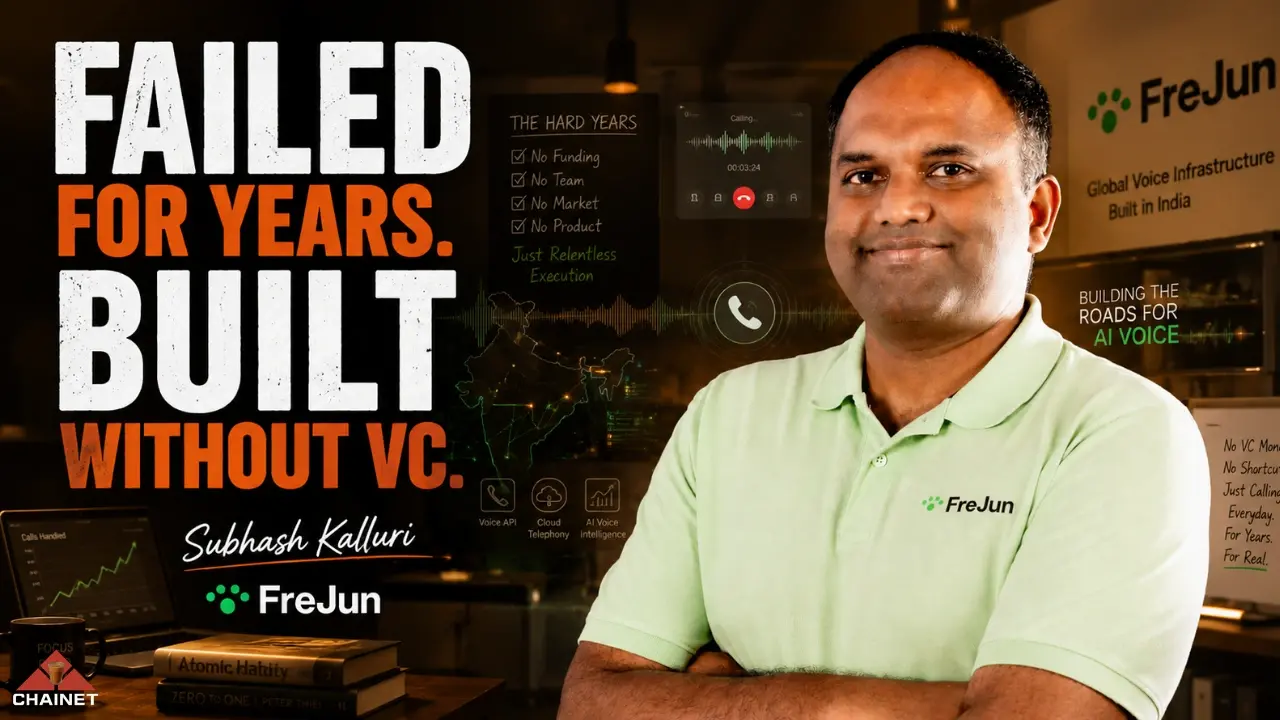
Subhash Kalluri Built FreJun's Voice Infrastructure Without a Single VC Round
Subhash Kalluri, founder of FreJun, on failing to raise funding, building his own telephony infrastructure after a 40-50% margin hit, and why he believes the AI agents will keep changing but the infrastructure carrying them never will.

Your Ads Aren't the Problem, Your Store Is: Shray Arora on Why D2C Brands Are Leaking Revenue at Checkout
Shray Arora, co-founder and CEO of Helium, explains why most D2C brands are optimizing the wrong metric. From cold-emailing free page speed reports to building a Genai personalization engine used by Noise, W for Woman, and Marks & Spencer, this is a masterclass in finding the real leak in the funnel.

Your Shopify Store Is Bleeding Money Every Second. Where Is the Leak? - Sidharth Sahni, Helium
Sidharth Sahni, co-founder and CTO of Helium, explains why your Shopify store is leaking money on every session. He breaks down the asymmetry between PDP, collection page, and homepage optimization, why most brands obsess over ROAS while ignoring traffic quality, the RCA engine Helium built to trace revenue down to a homepage banner, and what brands are completely blind to. If you're running a Shopify store, this is the stack explanation you wish you had two years ago.

Shopify AI Reality Check: 166 Stores, 1 Truth
Shopify just released 150+ AI features. Everyone's hyping sidekick and agentic storefronts. Hitesh Matlani manages 166 Shopify stores and shares what actually works versus what's just marketing noise.