Search Episodes
Search for podcast episodes by title, guest, or topic.
0 Raised, Crores Built. Why This Founder Said No to the Sharks
Lokendra Tomar spent years selling diabetes medication door to door before realizing he was selling management, not solutions. He built Diabexy, India's first low glycemic load food brand, with zero external funding, a 70% repeat purchase rate, and millions of YouTube subscribers. He also walked away from Shark Tank.
India has more than a hundred million diabetics. The medical system tells them to manage the disease with drugs, lifetime medication, insulin, and an acceptance that this is how it's going to be for the rest of their lives. Lokendra Tomar looked at that system from the inside and decided something was deeply wrong.
He spent years as a top-performing pharmaceutical sales rep, selling diabetes medication doctor to doctor, city to city. He won awards, hit targets, earned incentives. But something kept bothering him. He was selling management, not a real solution. The drugs managed symptoms. Nobody was talking about what people were eating. Nobody was fixing the root cause.
So he quit. Started doing nutrition consultations from home. His wife became his first customer and proof of concept. And then, almost by accident, Diabexy was born. Today it's India's first and largest manufacturer of low glycemic load food products. He hasn't raised a single rupee of external capital. He walked away from Shark Tank India Season 2. He's built crores in revenue, millions of YouTube subscribers, and a 70% repeat purchase rate.
But what makes Lokendra's story truly different isn't the business metrics. It's where he started. A Jat community family in a remote village in Chhattisgarh, where there was no bridge over the river. During rainy season, you'd tie your clothes to your head and cross the river swimming. His father was a postman. The desire to build something came not from privilege, but from seeing the neighbor's grocery store owner have two cars while his family waited for the monthly salary.
Key Takeaways: Building from Absolute Scratch
The Desire That Starts Everything:
- Lokendra's entrepreneurial drive came from childhood, watching the gap between his family and the local business owners
- Failed the medical entrance exam, carried the inferiority complex for years before realizing it wasn't about being "not good enough"
- Reading books like "How to Win Friends and Influence People" shifted his entire mindset about success
The Bootstrapping Playbook:
- His wife ran the household expenses for seven years while the business found its footing
- He never took a loan, sold the house, and moved to a rented place to avoid debt
- The 15-year learning journey through pharma sales before starting Diabexy wasn't wasted, it was the foundation
Sales Is the Foundation of Everything:
- "If anyone wants to do business, they should first become a salesman"
- Door-to-door rejection 20 times a day builds a personality that can't be broken
- Good communication isn't speaking English, it's being able to explain science so a common person understands
Q: You grew up in a very remote village. Where did the desire to build something come from?
Lokendra Tomar: I grew up in a place where every bus used to stop at the river bank. There was a river but no bridge. During rainy season, you'd tie your clothes to your head, pick up your bags, cross the river swimming, and put your clothes back on. And then during summer holidays, we'd visit Delhi. At night, the roads were lit, people had cars. I felt as a child that if prosperity is possible, then why not achieve it? The neighbor near our house ran a grocery store. He was a Marwadi businessman. The tribal people would bring forest products, and in return he'd give them soap, oil, shoes, clothes. He had two cars. I thought if someone can have two cars just from a grocery store, then I can also do something. That desire was the starting point.
🔥 ChaiNet's Hot Take: The best business education isn't an MBA. It's growing up watching a shopkeeper with two cars while your father waits for his monthly salary.
Q: You failed the medical entrance exam. How did that failure shape you?
Lokendra Tomar: It was a huge blow on my personality. I thought I was not good enough. People pass entrance exams and I couldn't. I am inferior. For many years I carried that inferiority complex. I never talked boldly, always bowed down, always sat thinking that if they're saying something, it must be right because we are fools. But when I did pharmacy, I studied 8 hours continuously, morning to night. And I became the top student. From there I realized I'm not that stupid. I was fine, but it was a different playing field. Then during pharmaceutical training, I was the top performer again. And then I read "How to Win Friends and Influence People." That book shifted my mind. Success isn't only about school books. There are many other things needed for success. That shift was inside me, that I need more than just physics and chemistry. It took years, it was gradual. But from the bottom, there's only one direction you can go.
🔥 ChaiNet's Hot Take: Failure isn't proof you're not smart enough. It's proof you were playing on the wrong field. Lokendra's "failure" redirected him to a path that now impacts millions.
Q: You were in pharma sales for years. At what point did you feel something was wrong with selling diabetes drugs?
Lokendra Tomar: I was a top performer. It was like a cakewalk for me. But I was selling management, not a solution. The drugs managed symptoms. Nobody was talking about what people were eating. I was selling doctor to doctor, city to city, and I kept thinking there has to be a better answer. When I started doing nutrition consultations, my wife became my first customer. She followed the diet, and the results were real. That's when I knew that food, not just medication, could actually help people manage and potentially reverse diabetes. And from there, Diabexy happened.
🔥 ChaiNet's Hot Take: He sold the problem for years before building the solution. Most founders guess what the market needs. Lokendra knew because he was the one creating the demand for drugs he didn't fully believe in.
Q: Your wife ran the household for seven years while you built the business. How did you manage that?
Lokendra Tomar: I discussed my dreams with my wife before marriage. She's a company secretary, CSLLB. Her family's financial background was slightly richer than ours. Generally, families want their daughter to go to a better family. I told her I have nothing. I have land in the village but I want to sell it. She understood. Her family was against it initially. They thought after marriage I'd quit whatever small job I had. And I did eventually. It took seven years for me to run the family with money earned from the business. Seven years my wife ran the house expenses. There was a lot of turmoil. I was insecure that I couldn't pay for my own family's expenses. But ultimately, I didn't have any other option. If I had stayed in the job, I would have been very depressed. Gradually, as the books were read and ideas improved, things started coming together.
🔥 ChaiNet's Hot Take: Seven years of your spouse carrying the finances while you build. That's not just a startup story. That's a marriage story. Common goals, not just common love, hold it together.
Q: You said love fades but goals remain. Can you explain that?
Lokendra Tomar: Husband and wife is a team. If you don't have a common goal, there will always be a gap. His dream is different, her dream is different. Both pursuing their separate dreams, the problem always remains. One common goal. Like Mahatma Gandhi, one common goal was Swaraj. People came together because of a goal. If your family is your company, are all your people aligned with one common goal? One common goal brings happiness in company and in life also. And the second thing is understanding. In my hostel, we were four roommates from different backgrounds. We made a rule: when one person speaks, the other three listen. Whether he's singing or angry, one person talks, three listen. We never had a fight. Same rule at home. One person needs to take responsibility that peace at home is their responsibility. Once you take that responsibility, you keep quiet when needed and you understand that peace is everything.
🔥 ChaiNet's Hot Take: "Love fades, goals remain." That's not cynicism. That's the most practical relationship advice disguised as a startup lesson.
Q: You went on Shark Tank India Season 2 but walked away. What happened?
Lokendra Tomar: I had the chance to raise capital on Shark Tank, but I walked away. I'm not the type of person who takes someone else's money and builds something. I build with my own hands. It's not that funding is wrong. If you're from IIT, IIM, you have the network, the credibility, the circle. Your junior is my senior, he knows someone who can fund you. That works. Nothing wrong with it. But if you're from a small town, small job, small savings, the best way is to find a small product whose investment is less and start selling. As you sell, the road opens up.
🔥 ChaiNet's Hot Take: Walking away from Shark Tank isn't stubbornness. It's self-awareness. He knew his strength was building with his own hands, not managing someone else's money.
Q: You said there are two kinds of businessmen. What did you mean?
Lokendra Tomar: One type of business requires a lot of funding. Your IT startups, they need two to three years of runway and employees cost 10-20 lakhs each. That's one kind. The second is finding a business where investment is not much, you can start yourself, find a manufacturer and build a USP. First you need to figure out what type of person you are. I am not the type who takes funding and makes a business. I want my own freedom. Give someone from IIM 100 rupees and tell them to make it 1000, they might not be able to. But give them 1000 crores and tell them to make 10,000 crores, they can do it. Different mindset, different skill set. So the person from a small job should start small and grow organically.
🔥 ChaiNet's Hot Take: Some people multiply millions. Others create something from nothing. Both are valid. Know which one you are before you decide how to fund your business.
Q: For someone who wants to start but has no network, no funding, no IIT/IIM background, what should they do?
Lokendra Tomar: First, get experience in selling. If you have the experience of selling, whether it's tires, shoes, life insurance, medicine, kurta, anything, then you should start a business. I came from pharma sales. I'd go shop to shop. You walk into one shop, then another, and say "this is my product, there's something special." They say "get out, I don't have time." It's rejection. You face rejection 20 times a day. And after 20 rejections, you smile and go to another shop and say hello, this is my product, without letting it hit your personality. When you handle rejection and when you finally sell, the customer respects you because you were able to convince them. Sales is very important. If anyone wants to do business, they should first become a salesman.
🔥 ChaiNet's Hot Take: 20 rejections a day and you still walk into the next shop smiling. That's not sales training. That's founder training. Every startup is a door-to-door pitch disguised as a product.
Q: You said good communication isn't about speaking English. What did you mean?
Lokendra Tomar: When I was reading self-help books, I got this idea that speaking well isn't about English. What matters is being able to convey what you want so people understand. I can speak in Hindi and explain science so simply that a person who never studied science, who did arts or commerce, can understand how diabetes works. No high-fi science, no high-fi language. Communication at a level that every common man understands. When I started YouTube, people said make videos in English because the audience will be wider. I said my mission is to help Indians. The Indian who eats like me, I can help him. If I speak in English, how will he understand? Diabexy became successful because it spoke to the common man.
🔥 ChaiNet's Hot Take: He chose Hindi over English and lost "audience width" but gained millions of people who could actually follow his advice. Reach without comprehension is just noise.
Q: How did reading books change your trajectory?
Lokendra Tomar: When I was in pharma, there were advertisements for books in magazines. I'd buy pirated ones for 100 rupees. One author, Brian Tracy, wrote something that changed my life. He said if you want to be a big man in life, find the person who has achieved that success and build their qualities in you. That concept hit hard. Develop yourself, grow yourself, and success will automatically come. I always had a book with me. Waiting for the doctor, reading. In the metro, reading. After dinner, 15 minutes before sleep, reading. People would start noticing that this person has changed. His dressing changed, his communication changed. That internal growth led to everything.
🔥 ChaiNet's Hot Take: Pirated Brian Tracy books from a magazine ad changed the trajectory of a man who now impacts millions of diabetics. Never underestimate where the right book finds you.
Q: What's your advice on how to handle family pressure against starting up?
Lokendra Tomar: People will always be naysayers. They'll say don't do it, 99% fail. They've not seen success. In my family too, people tried business and went back to their jobs or stayed at the lower level. Success is rare. But if you have the confidence and vision, you need a partner who understands. I discussed my dreams with my wife before marriage. My in-laws were against it. But when they saw I was working hard, waking up at 7, never stopping, even though there was no growth, they came around. They criticized but they knew I was a man of hard work. They knew I would do something eventually. So the advice is simple: show them through your actions that even if you're not making money, you're putting in the work.
🔥 ChaiNet's Hot Take: Nobody believes in your startup. But everyone respects hard work. The respect comes first. The belief follows.
Final Thoughts: Your Life, Your Responsibility
Lokendra's closing philosophy: "Your life, your responsibility. By using less work, you can earn more money and live more. But the responsibility is yours."
The bottom line: Lokendra's journey is the kind that makes you rethink what's actually required to build a business. Not funding. Not an IIT degree. Not a fancy network. What he had was a childhood desire born from watching the gap between his family and the local shopkeeper, a willingness to face 20 rejections a day and still smile at the 21st door, and a wife who carried the household for seven years while he figured things out.
The 15 years he spent in pharma before starting Diabexy wasn't time wasted. It was his MBA, his market research, and his sales training, all in one. He learned how to simplify science for common people. He learned that English isn't communication, clarity is. He learned that selling management isn't the same as selling solutions. Every single lesson fed directly into what Diabexy became.
For founders without the IIT/IIM network, without VC connections, without family money, Lokendra's path is the honest one. Start small. Learn to sell. Read everything you can. Find a partner who shares your vision, not just your feelings. And never, ever take on debt to fund a dream you haven't validated yet. The road opens up as you sell. Not before.
Q: How can people connect with you and learn more about Diabexy?
Lokendra Tomar: You can find Diabexy on YouTube where we have millions of subscribers. We make content in Hindi so that every common Indian can understand how to manage diabetes through food. Our products are available online and we're India's first and largest manufacturer of low glycemic load food products. Connect with me on LinkedIn or through the Diabexy website.
Final words: Opportunities are not limited anymore. Everyone has internet, AI, mobile phones, TV. There's a lot going on. And yes, it's a double-edged sword because of AI, jobs are at risk, but it's also easier now to start something. Lokendra's story proves that the starting line doesn't determine the finish line. A village with no bridge over the river. A father who was a postman. A failed medical entrance exam. And from there, a company that's helping a hundred million diabetics eat better. The only thing that was never in short supply was the desire to build something. Everything else, he figured out along the way.
Related Shorts
Explore short-form videos that expand on the ideas covered in this blog.
Similar Episodes
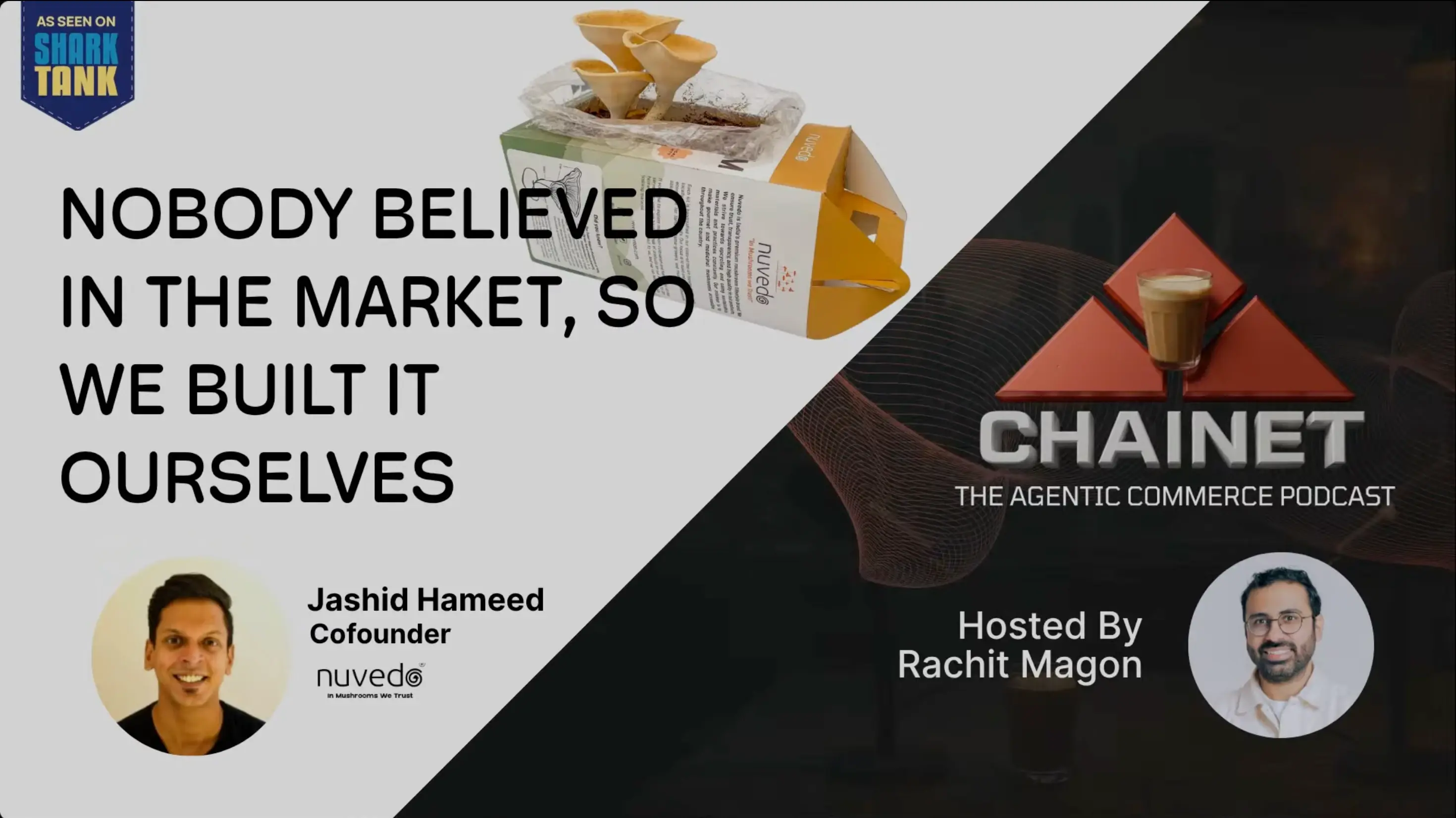
Nobody Believed in the Market, So We Built It Ourselves
Jashid Hameed left a fast-track retail career at Aditya Birla to grow mushrooms. He co-founded Nuvedo, India's first premium functional mushroom brand, fully bootstrapped with a 6-person team. From grow kits as a GTM strategy to using AI agents on the extraction floor, this is a masterclass in category creation.
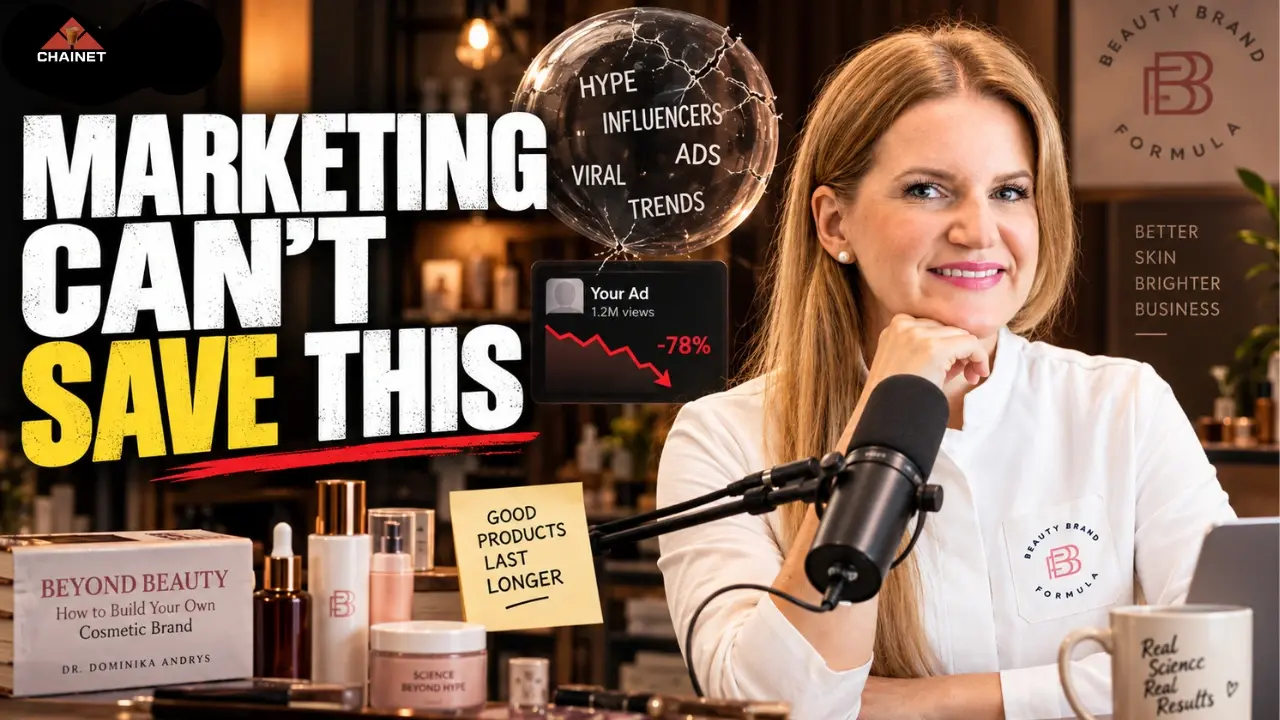
The Chemistry Behind Every Beauty Brand: Dr. Dominika Andrys on What Actually Makes a Product Work
Dr. Dominika Andrys, founder of Beauty Brand Formula and Beauty Brand Hub, has formulated products for hundreds of beauty brands over 15 years. She breaks down what actually goes into a formula, why AI still can't replace a cosmetic chemist, and the launch mistakes that quietly kill new brands.
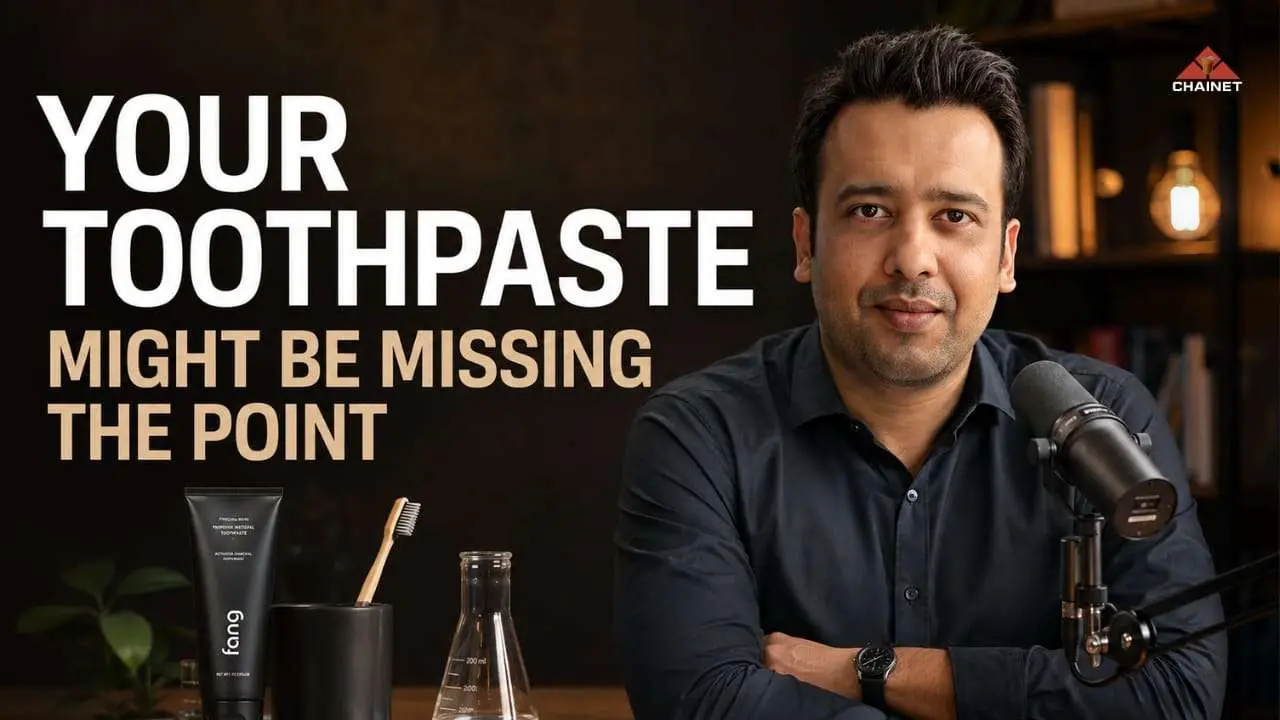
Three Root Canals, Two Implants, and a Toothpaste Brand: Ankit Agarwal's Fang Story
Ankit Agarwal, co-founder of Fang Oral Care, on why oral care has stayed stagnant for decades, what nano-hydroxyapatite actually does to your enamel, and why he thinks toothpaste is about to have its skincare moment.
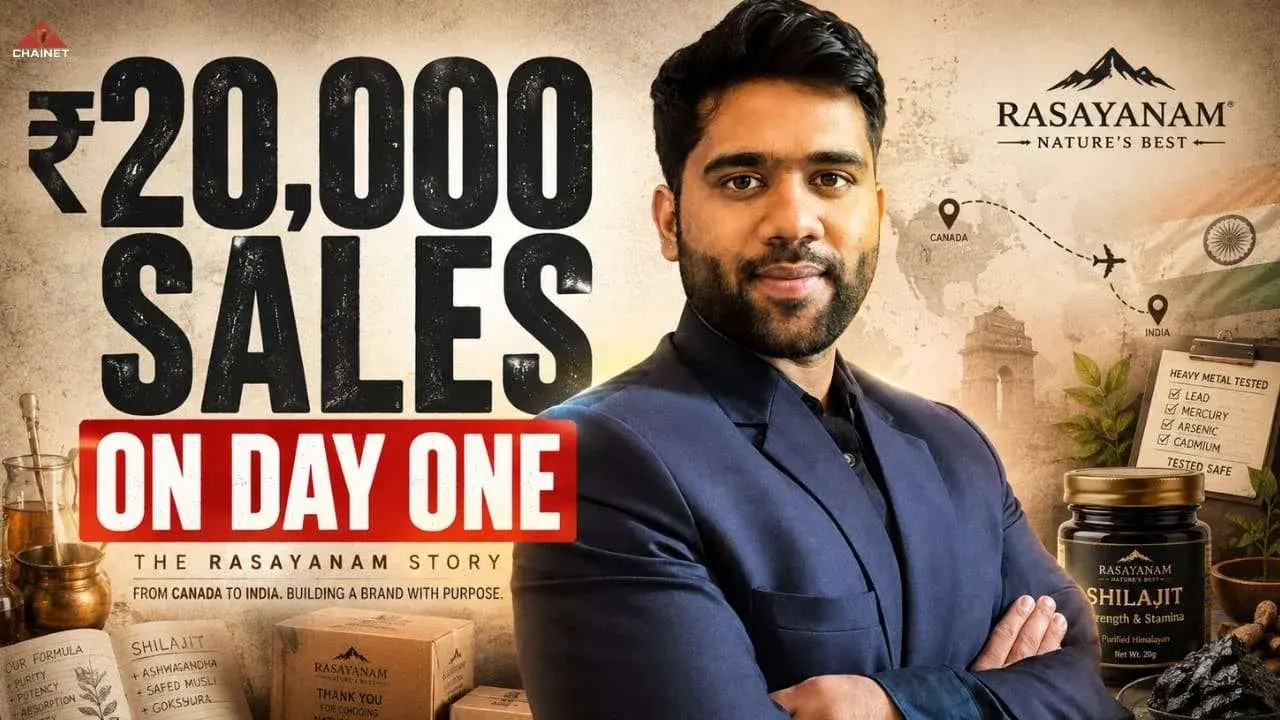
He Left a Stable Life in Canada to Sell Shilajit in His Basement. Now Rasayanam Does 20 Lakh Customers Without a Rupee of Funding
Ayush Agarwal, founder and CEO of Rasayanam, walked away from a stable career and life in Canada to build a science-backed neutraceutical brand from scratch in India. He talks about launching Shilajit from his basement, staying bootstrapped for five and a half years, and why he pivoted from an Ayurvedic identity to a broader neutraceutical one.