Search Episodes
Search for podcast episodes by title, guest, or topic.
From Jewelry to Moong Protein: How Shilpa Rathi Is Turning India's Humble Dal Into a Patent-Pending Global Brand
Shilpa Rathi, founder of Its Moong, talks about ditching the crowded protein powder race, patenting a moong-based innovation after 70-80 failed trials, and why the West is finally waking up to mung bean protein.
Every Indian household has a bag of moong dal sitting in the kitchen. We eat it as dal, we cook it into khichdi when we're down with a cold, and honestly, some of us have eaten it as chakna over drinks with friends. Nobody looks at that yellow lentil and thinks "billion dollar brand opportunity." Shilpa Rathi did.
Shilpa is the founder of Its Moong, India's moong bean protein brand, and also runs I Am Love, a venture she started earlier in her entrepreneurial journey. Her path is anything but linear. She started with street fashion jewelry as a side hustle, moved into nutraceuticals and skincare post-COVID, and then, somewhere in her research on gut health, stumbled onto moong and never looked back.
In just a year and a half, Its Moong has gone from a single protein powder to a full pipeline of products, including one that's currently patent-pending after roughly 70 to 80 failed trials. Shilpa has taken the brand to a US trade expo, watched buyers walk right past the Indian pavilion, and come back with a plan to sell to a market she calls "very forgiving."
This conversation is about what happens when you refuse to follow the obvious playbook, from why she skipped protein bars entirely to how she's thinking about international expansion without giving away equity too early.
Key Takeaways: Building a Category Instead of Competing In One
Product Strategy:
- Its Moong launched with a single mung bean protein powder in April last year and deliberately stayed on that one product for 10 months before launching anything else.
- Instead of following the industry's "obvious next step" into protein bars, Shilpa developed rolled moong flakes, positioned as a replacement for oats rather than another protein powder.
- One bowl of moong flakes poha delivers around 15 grams of protein, compared to 2-3 grams from regular rice poha.
Innovation and IP:
- The patent-pending product took roughly 70 to 80 trials since December of the previous year, with the breakthrough trial finally succeeding in just one week.
- Shilpa didn't set out to build something patentable; she only realized the innovation was unique after exhibiting at a US trade expo and getting feedback from international buyers.
- In her view, a process patent in food is what makes a bootstrapped brand "bankable" to investors who now ask about defensibility before funding.
Global Expansion Reality Check:
- At a US trade expo, the Indian pavilion was placed at the very end of the hall, and Shilpa says buyers largely skipped it, assuming India only offers grains, spices, snacks, and tea.
- US brand Just Egg, a vegan egg company valued around 1.2 billion dollars and built on mung bean protein, has spent nearly a decade educating Western consumers, indirectly paving the way for brands like Its Moong.
- India now holds close to 70% of global mung bean market share, even though the crop itself originally came from China.
Q: Take us back. What were you doing before Its Moong even existed?
Shilpa Rathi: Okay. So I've tried my hand at entrepreneurship for a good eight years now. Like you mentioned, I first started off with street fashion jewelry. It was a side hustle while I was doing a full-time job. And then post-COVID, I got into nutraceuticals, the skin, and everything that was required for you know from within of the body. It was in that journey that I discovered moong during my research. Then I realized that the story of moong was something that was more fascinating to talk about and what all could be made out of that ingredient, and I completely changed the direction of my business idea and my business journey.
🔥 ChaiNet's Hot Take: Most founders chase the trend they can already see. Shilpa found hers buried inside a research rabbit hole on gut health and had the guts to throw out the whole plan.
Q: Protein feels like one of the most crowded categories in India right now. Were you worried about entering it?
Shilpa Rathi: Our first product that we launched was the Its Moong mung bean protein, and I was actually doing just one product for a good 10 months. I knew very clearly that the protein powder market is getting very saturated, and brands just have a very obvious next step after you launch a powder, which is to get into bars. And I realized that if I follow the same path, I am not really going to be adding anything to the industry or to myself. So up till I was not sure what I want to launch, I didn't actually launch anything, even like a soft launch or a try, and we kept working with the ingredients.
🔥 ChaiNet's Hot Take: Ten months of saying no to the obvious next SKU is a masterclass in restraint that most D2C playbooks never teach.
Q: What was that next product, and why did you take a completely different route from every other protein brand?
Shilpa Rathi: The next product that we developed a couple of months later was a rolled moong flakes, where the concept was not to get into the protein powder journey, but rather to naturally make the food that we are already consuming protein-rich. I wanted to probably develop something that is naturally high in protein and you don't have to have any kind of solvent that's required for the extraction of the protein. The concept was actually to replace oats with it, because oats are just high in carbs. You can make poha out of it; it tastes exactly like poha, but just makes your bowl 15 grams of protein compared to 2-3 grams what you get from a regular rice poha.
🔥 ChaiNet's Hot Take: She didn't invent a new snack category, she quietly rewrote the nutrition label on a dish India already eats every morning.
Q: How did the education problem play out for you? Most food-tech brands spend years just explaining the ingredient.
Shilpa Rathi: Obviously Indians are familiar with moong, South East Asia is familiar with moong, so the education was not required. I didn't have to educate people over the benefits of moong, right, because it's just something that's right there in front of you but you never look. The product did very well; it picked up consumers.
🔥 ChaiNet's Hot Take: The smartest go-to-market move here wasn't marketing spend, it was picking an ingredient that already had decades of trust built in.
Q: You mentioned you're patent-pending on a product. What actually goes into getting a patent for a food product?
Shilpa Rathi: The patent application was actually accidental. The development was completely accidental. We have been actually working on this product since December last year, must have taken at least 70 to 80 trials and we did not succeed. But the trial we succeeded was actually done in a week. It's got nothing to do with things happening overnight. When we were developing it, I did not see any scope for developing anything that was patentable, to be very frank. I obviously traveled to the US and exhibited in June, and while I took one of my products there, I realized that it was actually a product that nobody had ever worked on.
🔥 ChaiNet's Hot Take: Innovation rarely announces itself. Sometimes you have to fly halfway across the world just to hear a stranger tell you what you already built.
Q: Why does having a patent matter so much when you're trying to raise funding as a bootstrapped brand?
Shilpa Rathi: I realize that the patent is something that's going to make me bankable, right. People have changed the basis of funding, they've moved from revenue to now profitability. They clearly want to know how much money are you actually making. And the first question anybody asks you while giving you funding is that what will stop a big brand from copying it? And that is where I tell them that this document stops them from copying it.
🔥 ChaiNet's Hot Take: A patent isn't just legal paperwork, it's the answer to the one question every investor is dying to ask but rarely says out loud.
Q: Does a patent actually protect you completely, especially with markets like India and China?
Shilpa Rathi: India doesn't have a utility patent, but it does have a process patent. So if you have taken control of that then you at least know that nobody is going to be able to copy it and create a brand out of it. Obviously India and China have loopholes where white labeling is possible, because the downfall of a patent is the entire procedure is right there for anybody to copy. But at least nobody can create a brand out of it itself, because that comes into the mainstream and you can see there. A small brand in a small town can copy it, but once they think of crossing the border, then the patent is the stopping point.
🔥 ChaiNet's Hot Take: A patent won't stop every copycat, but it draws a line between a local knockoff and a brand that can actually scale.
Q: Moong is such a familiar, everyday ingredient. Did you ever struggle to get consumers to see it as premium?
Shilpa Rathi: When I launched my flakes, moong is one of the most expensive dal actually to buy in the market. It is priced above 100 rupees a kilo, compared to oats which is actually 30 rupees a kilo. I cannot have any adulteration possible in that because it's in dry form and it's full form, not even a powder. Our moong flakes even surpass steel cut oats when it comes to their nutrition. I have had a lot of comments about this is only for the top 1% of the population, they can only afford this kind of pricing, and I understand the fair point. But let's be honest, all protein is for the top 1%, because the people below that are already fighting for daily food.
🔥 ChaiNet's Hot Take: She didn't dodge the pricing criticism, she reframed it: premium isn't a marketing choice here, it's just what honest sourcing costs.
Q: You recently exhibited at a US trade expo. What was that experience actually like?
Shilpa Rathi: There were various podiums created as per countries, right? Canada, Turkey, Korea, Italy, France, all of them were there. The Indian podium was almost at the end of the hall, and we were right ahead of Italy, and people would come and they would stop at Italy and take a turn back. Nobody was entering the Indian podium except Indian buyers. The concept is that India is only known for four things: grains, spices, Indian snacks, and tea. I am not joking, I didn't have the disappointment that people are not coming to my booth, I had anger that they are treating India like that.
🔥 ChaiNet's Hot Take: The hardest part of building an export brand from India isn't the product, it's convincing the world's buyers to even walk over and look.
Q: How did you push past that and actually get people to try your product?
Shilpa Rathi: Since not a lot of people were coming to our booth, we were taking our products into the other podiums, taking a tray and getting people to try it and letting them know that India is not only this, it is also this, we do some kind of different products. When I took it to the western people, I was surprised that they were already aware of mung beans. I owe it a lot to a brand in the US called Just Egg. They have been there since 2015, they hold 99% of the market share for vegan eggs, and they're valued at around 1.2 billion dollars. Their vegan egg is made from mung bean protein. They took on the burden of educating the western consumer, which benefited me.
🔥 ChaiNet's Hot Take: Sometimes your best marketing partner is a competitor you've never met, one who spent a decade and millions of dollars softening the ground for you.
Q: Did you know moong wasn't originally an Indian crop?
Shilpa Rathi: I don't know what is an Indian product to be very frank. There are a lot of things to say that even turmeric is not Indian. India got mung from China, it was never grown in India first, it was grown in China. But now obviously India is 70% holder of the largest market share for mung production. So yeah, tides have changed, and it's highly possible that Just Egg is also sourcing their mung bean from India.
🔥 ChaiNet's Hot Take: Origin stories are messy everywhere. What matters isn't where an ingredient came from, it's who controls the supply chain today, and right now that's India.
Q: Once orders start coming in from places like Singapore or Indonesia, what does fulfillment actually look like?
Shilpa Rathi: I use Shiprocket, actually, I use that international arm. These are retail orders that I am primarily doing, the reason being that I started this because I wanted to understand which country would be good for me to officially launch in. I mean I'm glad it's only been a year and a half, which has given me that insight. The brand has more often export focus than domestic focus because in India if you want to grow a D2C brand, it's difficult. It is not easy to grow, you need external funding, you need to give away a good amount of equity in the start, and that is not something that I really wanted to part with.
🔥 ChaiNet's Hot Take: Cross-border shipping was never the hard part. The real strategy was using exports as a cheap, low-equity way to test the market before committing to it.
Q: Why do you think the US market has been more forgiving toward a brand like yours than India has?
Shilpa Rathi: I think US is a very forgiving market, very forgiving. And there it's not 1% of the consumers, it's everybody. Which is why if your product works then I don't think they really care about whether it's from India or not, to be very frank. If it is something that is talking to them in their language or not in their language, they are more than happy to give it a shot.
🔥 ChaiNet's Hot Take: In a market obsessed with novelty, being Indian stopped being a limitation the moment the product started doing the talking.
Rapid Fire with Shilpa Rathi
One word for moong: Sustainable.
Whey protein or plant protein: Moong protein.
One overrated D2C advice: That you should secure funding as early as possible if you are looking for growth. I think tides have changed. If you know that you are doing a very unique product, then don't give up your equity very quick.
One underrated D2C advice for Meta growth: Don't scale your budget, scale your ads. If you have understood the pulse of your target group, then just scale in the same direction. More ads are the only way to get a better ROAS on D2C and Meta, increasing your budget alone is not the way.
A founder mistake you won't repeat: I won't hire left, right, and center ever again. It is not the strength of the team, it is the kind of people in the team. Start lean, always start lean.
If a global brand launches moong protein tomorrow, happy or scared: I will be very happy. There was a time I used to be very worried about competition, but competition is required because then the burden of education is not on one shoulder, everybody is educating, so you reap the benefits.
Final Thoughts: Betting on What's Already in the Kitchen
Shilpa's closing perspective: "I am obviously very young, we are a very young company, and I am still to grow up, you know? But I am glad that I will be very happy if any of the information or advice that I have shared just turns out to be meaningful and helps anyone."
The bottom line: Shilpa's story isn't really about protein powder or even about moong. It's about what happens when a founder refuses to copy the playbook just because it's the obvious next step. Ten months on a single SKU, 70 to 80 failed trials before a patent-worthy breakthrough, and a willingness to sit through an ignored trade show booth instead of packing up early, none of that is glamorous, but all of it compounds.
There's also a sharper lesson here about defensibility. In a category as crowded as protein, the moat isn't the ingredient itself, it's what you do with it and whether you can legally protect that process. Shilpa's process patent, still pending, is less about keeping competitors out entirely and more about buying herself the time and credibility to scale before the copycats catch up.
Looking ahead, Its Moong's export-first approach is worth watching. Rather than raising early domestic funding and giving up equity to fund a hard D2C growth story in India, Shilpa is using international retail orders as a live market test, letting real buyers in Singapore, Indonesia, and the US tell her where to double down next.
Q: How can people connect with you and follow Its Moong's journey?
Shilpa Rathi: Thank you so much, Rachit, for inviting me over and helping me share my thoughts. I am obviously very young, we are a very young company, and I am still to grow up, you know? But I am glad that I will be very happy if any of the information or advice that I have shared just turns out to be meaningful and helps anyone.
Final words: The next time you spot a bag of moong dal sitting in your kitchen, remember that someone built a patent-pending, export-ready business out of it, not by chasing what everyone else was doing, but by staying stubbornly curious about one ingredient everyone else had stopped noticing.
Related Shorts
Explore short-form videos that expand on the ideas covered in this blog.
Similar Episodes
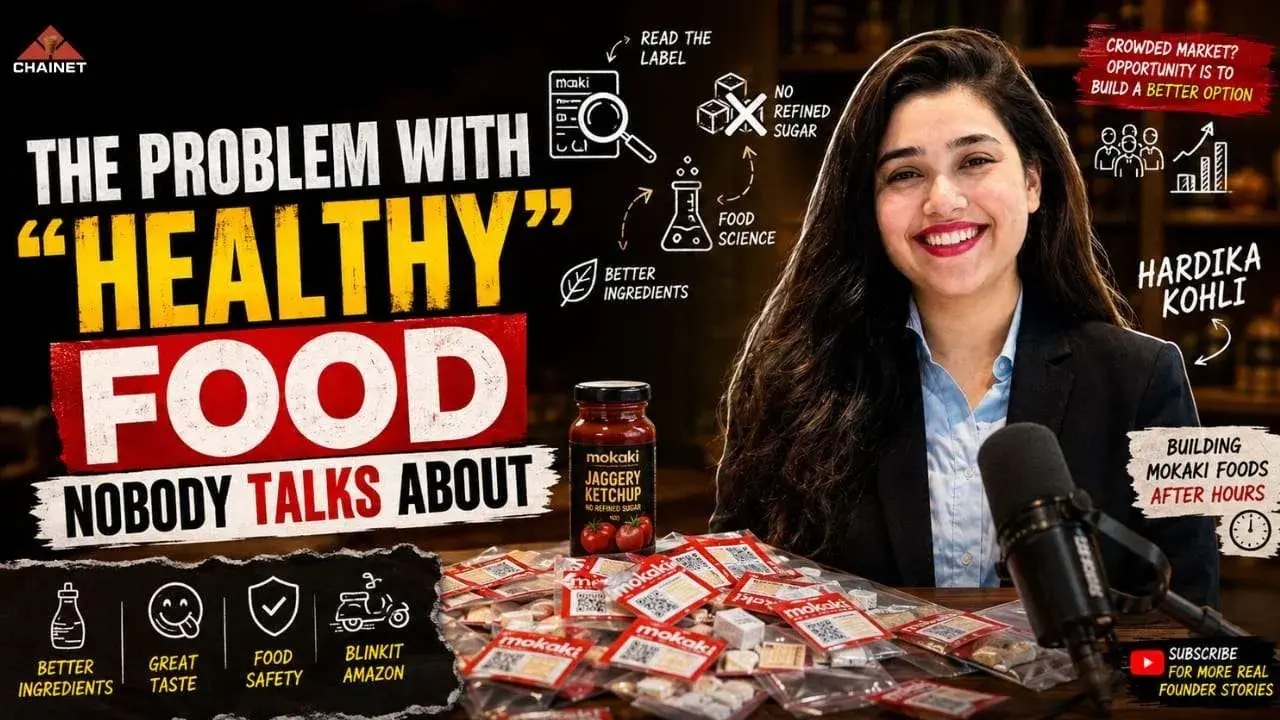
Why Mokaki Foods' Founder Thinks 'Clean Label' Is a Myth
Hardika Kohli, Founder of Mokaki Foods, breaks down why 'clean label' has no legal meaning in India, why a saturated sauce market is actually an opportunity, and what it really takes to get a new D2C food brand onto Blinkit and Amazon.
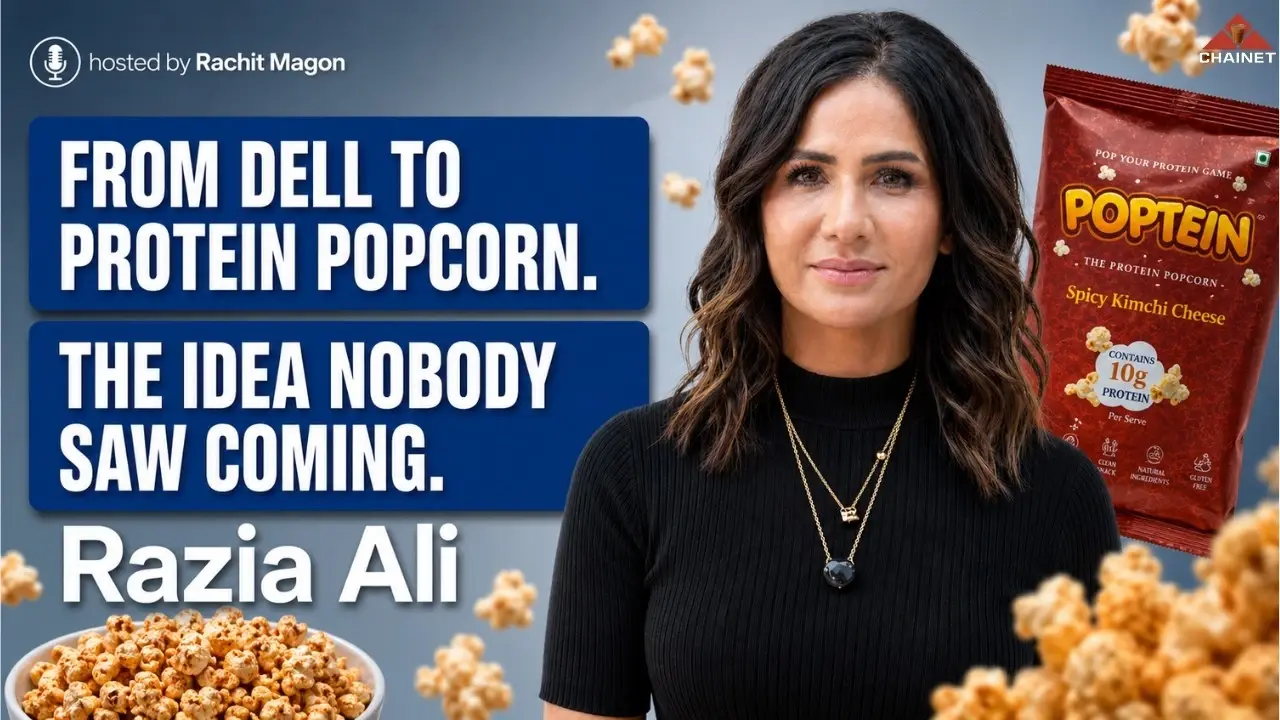
How This Founder Is Bootstrapping a Protein Popcorn Brand in India - Razia Ali, Poptien
Razia Ali spent 19 years building marketing for Dell, AMD, HP and Yahoo. Then she walked away to bootstrap Poptien, India's first whey-free protein popcorn. She talks about why she rejected protein bars, how she set up her own manufacturing line, the reality of getting onto Blinkit and Instamart, and what 90 days of pop-up product testing actually looks like.
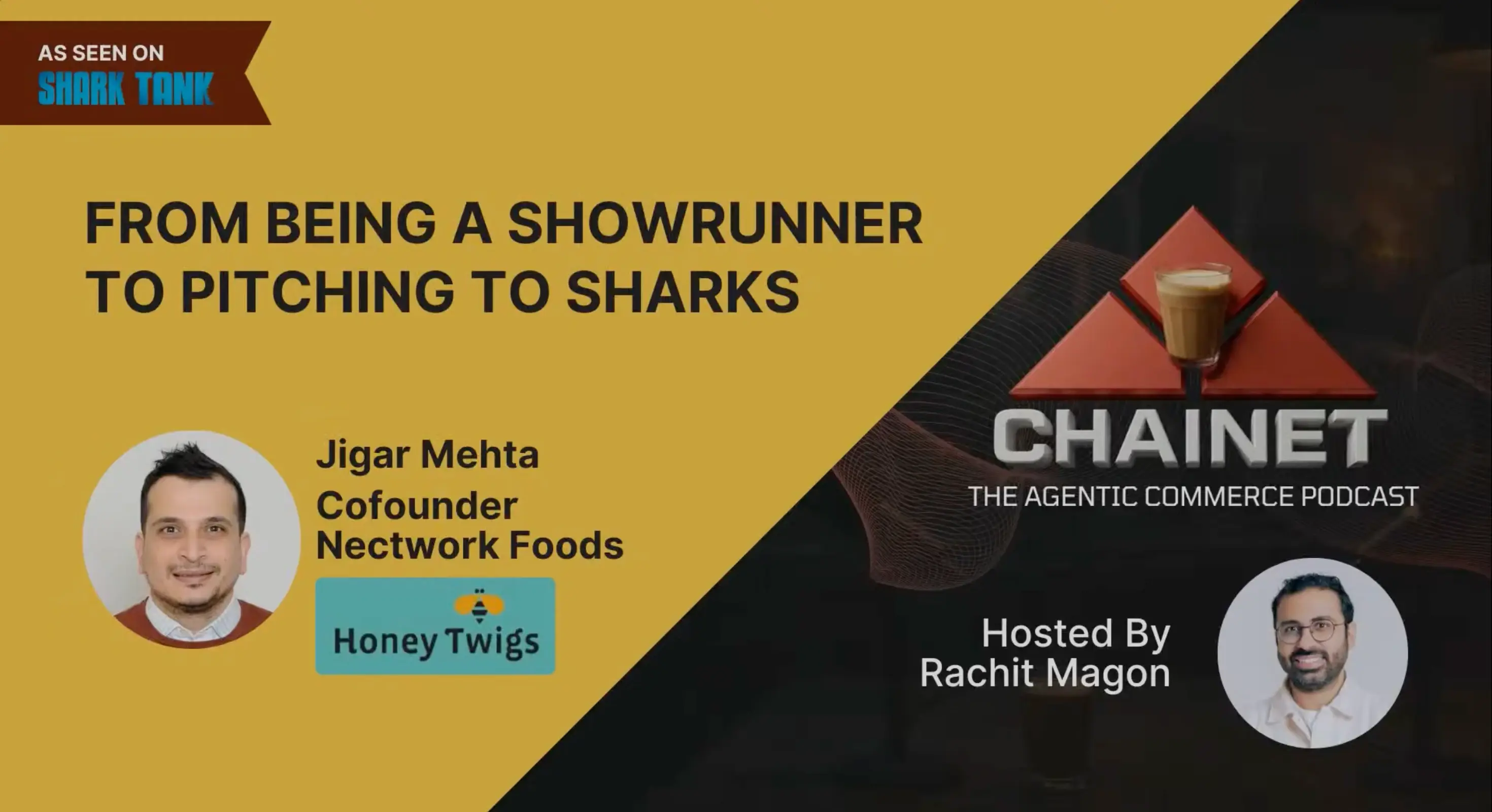
From Being a Showrunner to Pitching to Sharks - Jigar Mehta, HoneyTwigs
Jigar Mehta spent 3 years running 250 performances at Kingdom of Dreams, quit to start a honey brand, and got all five Shark Tank India sharks to make offers. He talks about cold calling Vistara, perfecting machinery from scratch, plastic neutrality, and why single-serve honey is just getting started.
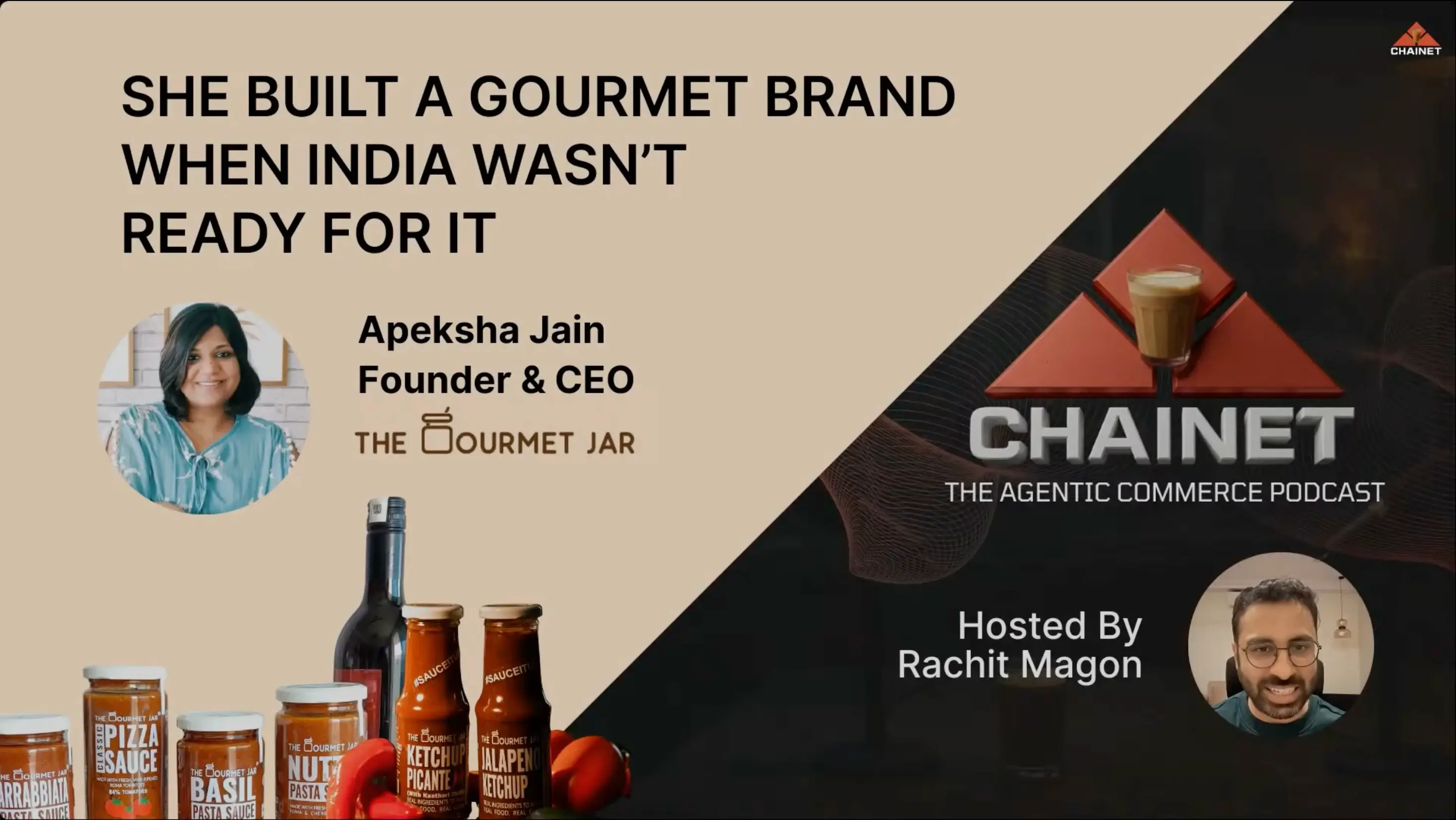
She Built a Gourmet Brand When India Wasn't Ready for One
Apeksha Jain started The Gourmet Jar by accident after her husband brought home a pasta maker from Italy. 12 years later, she's done 60 crores in lifetime sales on just 2 crores of total funding. The journey wasn't glamorous - it was painfully slow.